
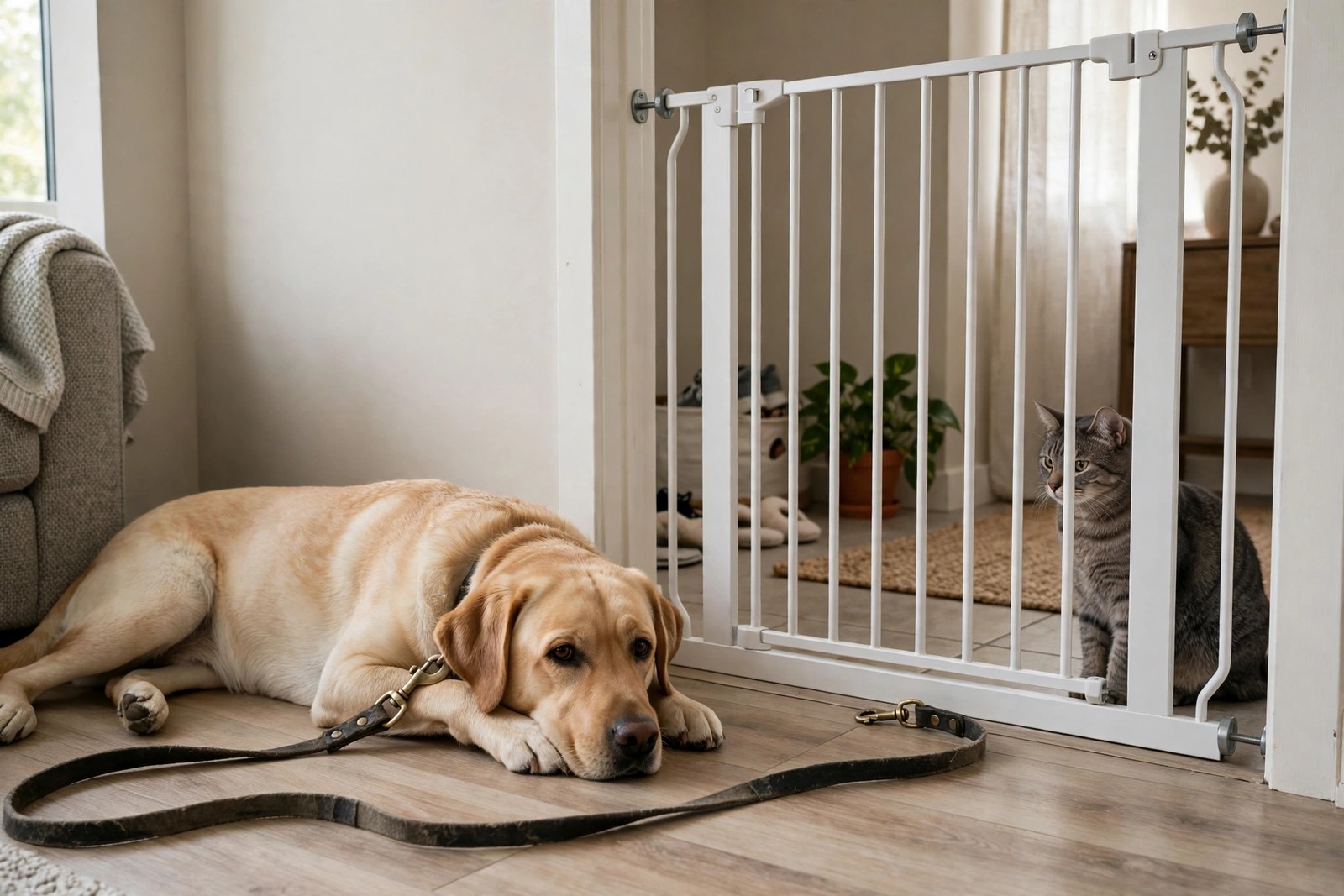
Yes, in many homes adopting a cat when you already have a dog works beautifully — provided the dog is reasonably calm around cats, the cat is chosen with dogs in mind, and introductions are done slowly: scent first, then short, supervised meetings where the cat always has an escape route.
Start with the dog you actually have
Be honest about your dog's history. A dog who has lived peacefully with a cat before, ignores cats on walks, and can settle on command is a strong candidate. A young, boisterous dog with a strong chase instinct is a harder project — not impossible, but one that needs management, training, and realistic expectations. If your dog has ever injured a small animal, talk seriously with the shelter and a trainer before proceeding; safety for both animals comes first.
Choose a dog-savvy cat
Shelters often know exactly which of their cats have lived with dogs, and those cats are worth waiting for. A confident cat who will hold her ground and swat a rude nose teaches a dog manners far faster than a cat who bolts, because bolting triggers chasing. Kittens raised with dogs can also adapt well, but an adult with a known dog history removes the guesswork.
The slow introduction plan
Rushing is the classic mistake. Instead:
- Keep the cat in one room with everything she needs, and let the animals smell each other under the door
- Swap bedding so each sleeps on the other's scent
- Feed both near the closed door so the smell means good things
- After several calm days, use a baby gate or cracked door for visual contact
- Move to short, leashed, supervised meetings in the same room, rewarding calm behaviour from both
Sessions should end while things are still going well. Expect weeks, not days, before leaving them unsupervised together, and always give the cat high perches and at least one dog-free room she can retreat to.
Safety rules for the first months
Never let the dog corner the cat, keep litter boxes and cat food somewhere the dog cannot reach, and supervise around high-value items like bones and chews. Watch body language on both sides: a stiff, staring dog is not "being friendly," and a cat whose ears are flat and tail lashing needs space immediately. Separate the animals whenever you go out until you have months of calm evidence, not one good afternoon.
Keeping the whole household in sync
Introductions fail when one family member lets the dog into the cat's room "just to see." KinsLe Messenger is the per-pet communications hub, so everyone at home can share introduction notes, agree the next step, and log how each meeting went in one thread tied to your pets. A KinsLe Messenger hub on KinsLe gathers each meeting's outcome in her thread, letting the next handler check the gate plan before opening any door.