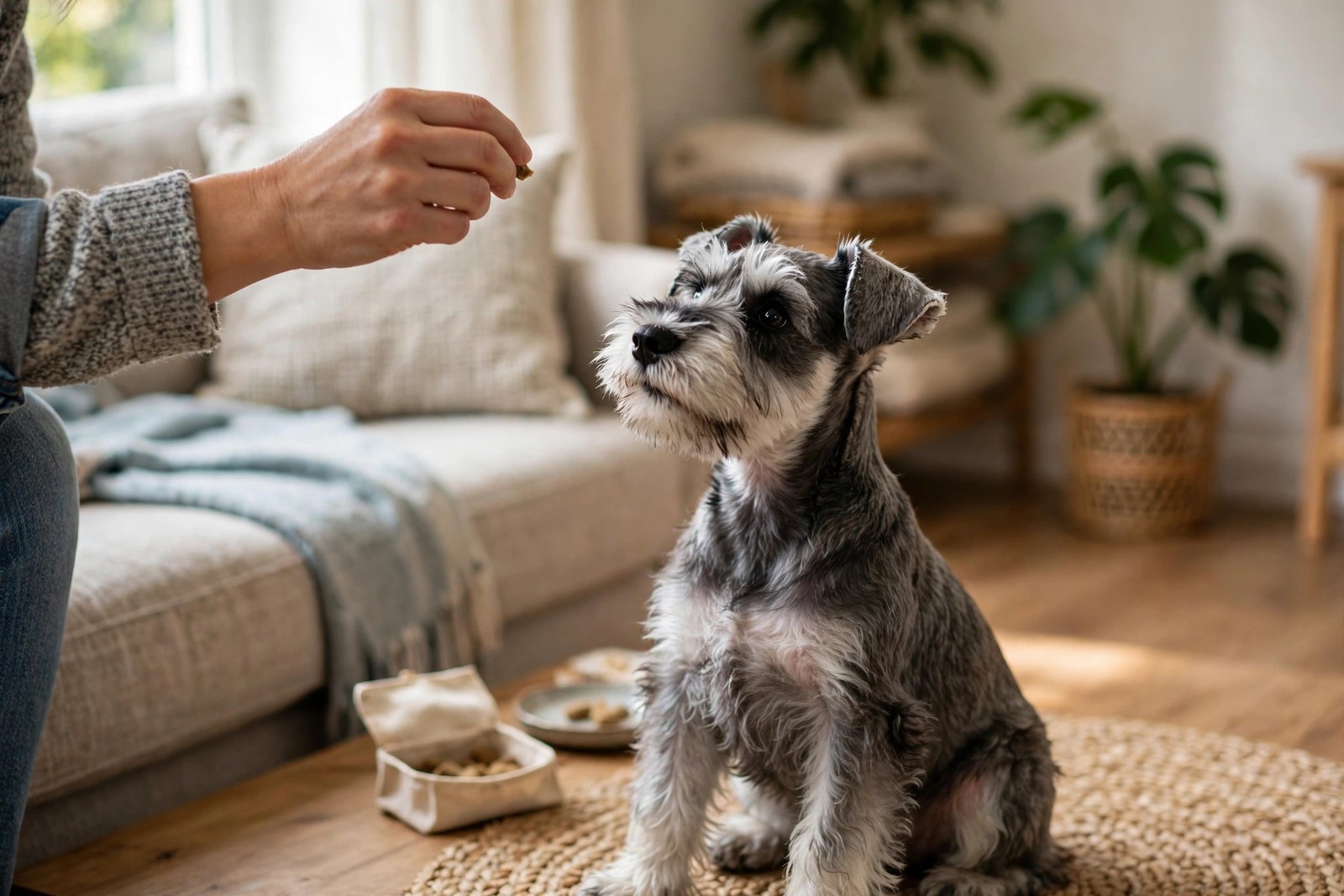
For a prepared beginner, yes. The Miniature Schnauzer is one of the more forgiving small breeds to train: intelligent, food-motivated, sturdy enough for real walks, and keen to be involved in whatever the family is doing. Puppies usually pick up routines fast and enjoy learning tricks. The caveat is temperament. This is a terrier-influenced watchdog in a small body, alert to every sound at the door, quick to voice an opinion, and entirely capable of training you if the household rules keep changing.
Where Beginners Find It Easy
House routines, sit, down, recall indoors, and lead walking all tend to come quickly when you reward what you like in short, frequent sessions. Five minutes several times a day beats one long lesson, and this breed's love of being centre stage makes training feel like play. Crate and toilet training follow the usual pattern of regular trips outside after waking, eating, and playing, with praise delivered the moment the puppy performs outdoors. Most Miniature Schnauzers also enjoy having a job, so scatter feeding, sniffing games, and simple scent searches burn mental energy that a walk alone leaves untouched.
Where Beginners Get Caught Out
Barking is the big one. A Schnauzer puppy left to practise shouting at passers-by from the window will become an adult who does it daily, so manage the view, reward quiet attention, and teach a settle cue before the habit sets. The second trap is socialisation. Under-socialised Schnauzers can become sharp with strangers and reactive toward other dogs on the lead, so steady, positive exposure to people, traffic, handling, and calm dogs during puppyhood is not optional decoration. The third is grooming. That wiry coat, beard, and leg furnishings need regular brushing and professional trimming every few weeks, and a puppy should learn early that standing on a table, having feet handled, and hearing clippers are normal and safe.
A Sensible First Month
Book a reward-based puppy class before the puppy arrives if you can, and use the same cue words across the whole family from day one. Keep a toilet and sleep routine, practise handling for a minute or two daily, and reward calm behaviour around the doorbell rather than only reacting once barking starts. Expect around an hour a day of walks, play, and sniffing once grown, less for a puppy in short bursts, and protect sleep, because tired Schnauzer puppies get mouthy and frantic.
A first-time owner who wants a clever, devoted companion and accepts the barking, grooming, and socialisation bill usually thrives with this breed. KinsLe's Care Teams turns that bill into shared, visible tasks, letting you assign the morning walk, evening training practice, and weekly beard and coat care to named people, each marked complete so nothing quietly slips.