
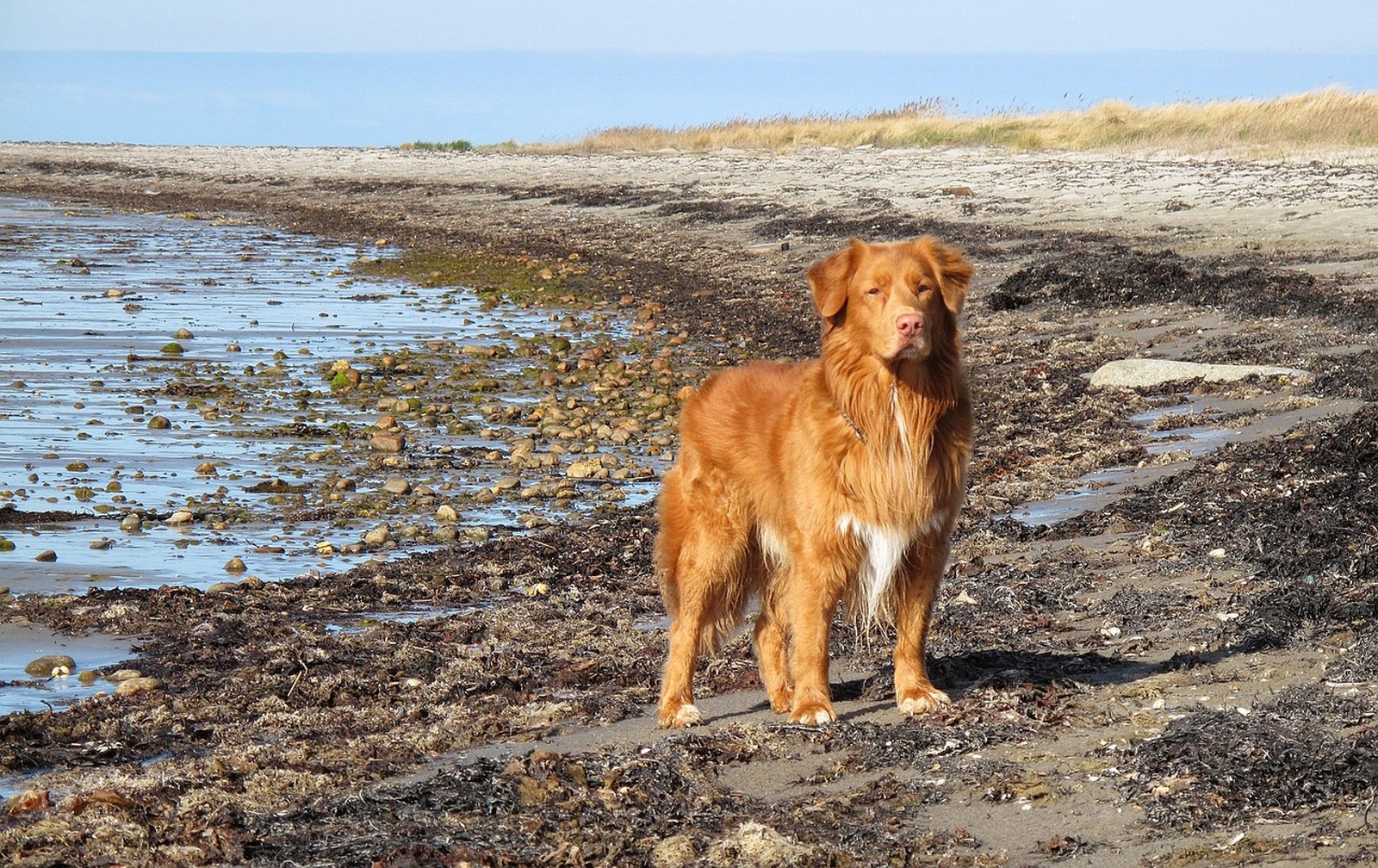
An Intense, Clever Dog Who Notices Your Absence
Nova Scotia Duck Tolling Retrievers can certainly develop separation anxiety, and young Tollers are a recognised risk. This is a high-drive working breed, developed to toll — dancing along the shoreline to lure ducks within range — then retrieve from cold water. The work demands intensity, intelligence, and close cooperation with the hunter, and the pet Toller brings all three home: he bonds hard, learns fast, and notices immediately when his person and his job both disappear for the day.
A bored Toller and an anxious Toller can look alike at first glance, because both can be spectacularly vocal. Understanding which one you have shapes everything that follows.
The Toller Scream and Other Signs
Tollers are famous for a high-pitched scream they produce when excited or aroused. In a separation context, sustained screaming, whining, or barking that starts as you leave and continues through the absence — especially with pacing, panting, and door-focused behaviour on camera — signals distress rather than mischief.
Other signs include chewing focused on exits and your belongings, indoor toileting in a housetrained dog, refusing food puzzles he would normally attack, and greetings so frantic he cannot settle afterwards. A merely bored Toller, by contrast, usually screams a little at the injustice, then naps, then finds his own entertainment and is relaxed when you return.
Filming departures is especially worthwhile with this breed, because the scream alone does not tell you whether he settled two minutes later.
A Plan Built for a Working Brain
Exercise a Toller properly before any long absence: retrieving, ideally with swimming where safe, plus training that makes him think — Tollers tire faster from problem-solving than from plain distance. A walk alone rarely touches the sides.
Teach alone time as its own exercise. Begin with departures so short he stays relaxed, repeat them until they are dull, and extend the time gradually. Scatter your leaving cues through the day without going anywhere. Leave problem-solving food toys that appear only when you go out. Keep departures and returns flat and unemotional, however theatrical the welcome.
Smart dogs learn patterns quickly, including patterns you did not intend — if every long absence follows the same distinctive routine, vary it, so he cannot wind himself up in advance. On full workdays, a midday training walk or a visit from someone he knows breaks the absence into manageable halves.
When the Distress Needs a Professional
Contact your veterinarian if your Toller screams and paces through whole absences on camera, injures himself on doors or barriers, drools heavily, will not eat while alone, or seems to be getting worse despite careful gradual practice. A vet can check for pain or other medical factors and, where needed, connect you with a behaviour professional for a structured desensitisation programme.
One Toller-specific trap is the wind-up before you even leave. This breed reads routines brilliantly, so the work bag, the particular shoes, and the car keys can start the screaming before the door opens. Practise picking those items up at random moments and then staying home, until the cues become boring background. Pair that with genuinely calm departures and the dog who once performed at the sight of a coat learns there is nothing to perform about.
In KinsLe, Care Teams helps a Toller household assign the morning retrieving session, the midday break, and each round of practice departures to a named person, with tasks marked complete so his training stays consistent day after day.