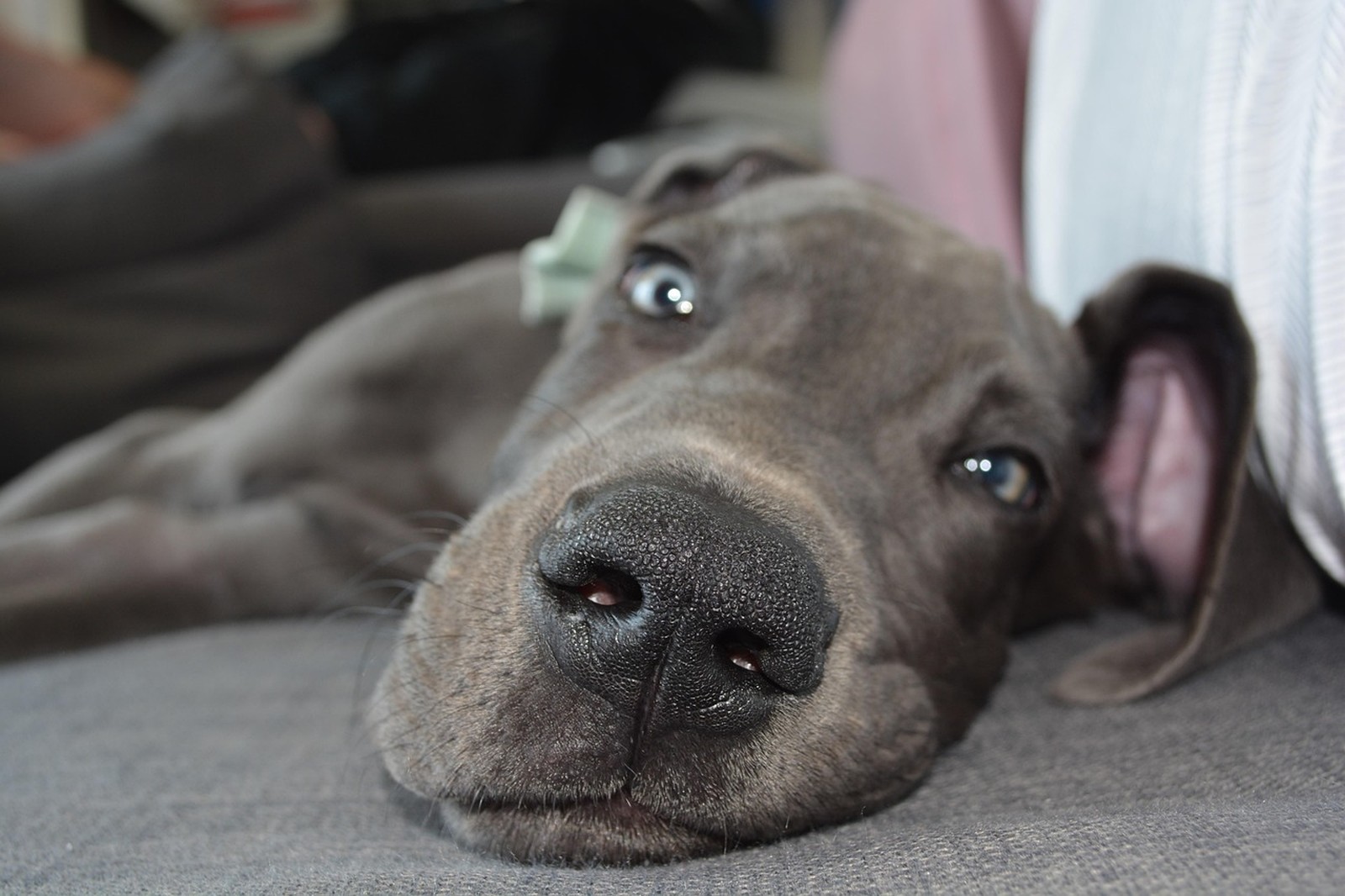
Great Danes break the usual barking pattern: low frequency, very high impact. This is a breed developed in Germany as an estate guardian and large-game hunter that matured into a famously gentle housedog, and its vocal style matches — most Danes ignore minor household noise entirely and reserve the bark for arrivals, surprises, and things that genuinely do not belong. When a Dane does bark, the sound rolls out of a huge chest with a depth that rattles windows and wakes the house, which is why owners describe the breed as quiet and startling in the same sentence.
What Sets a Great Dane Off
The classic trigger is the door: a knock, a bell, a delivery, a guest arriving. A few deep barks, a look to the owner to confirm the situation is handled, and the episode is usually over — Danes tend to accept reassurance quickly because their alertness is measured rather than frantic. Novel sights near the home, such as scaffolding appearing next door or a strange dog lingering at the gate, earn a similar report. What a settled Dane rarely does is bark at passing life on walks or keep up a running commentary from the garden, so persistent barking in this breed is a useful signal that something in the dog's day needs attention.
Volume Is the Real Apartment Question
If you live in a flat or a terraced house, the honest issue is not how often a Dane barks but how far one bark travels. Two warning barks at a midnight noise can carry through several walls, and a dog who weighs more than 100 pounds (45 kg) shifting and whining at night is audible too. Reduce the triggers rather than the dog: keep the bed away from the front door, use a doorbell routine where the dog is sent to a mat before you open up, and introduce the dog calmly to regular visitors such as a cleaner and familiar delivery drivers so they move from stranger to fixture.
Boredom Barks in a Giant Body
A young Dane with too little to do is a large, strong dog inventing its own entertainment, and frustration barking can be part of that picture alongside chewed door frames. Danes need moderate daily exercise — they are not marathon dogs, and growing youngsters need joint-friendly, steady outings rather than pounding runs — plus training games and company. Short, frequent play and sniffing sessions suit them better than one exhausting weekend effort, and a tired Dane's default setting is horizontal.
Teaching the Door Routine Early
Start the mat routine while the dog is still a puppy you can physically guide, because an adult Dane who rushes the door barking is a lot of dog in a small hallway. Practise when nothing is happening: knock softly yourself, send the dog to its mat, reward heavily, release. Build the trigger up over weeks. The goal is not silence — a warning bark is part of what many owners quietly value — but a dog who reports once, looks to you, and stands down. Barking that suddenly increases in an older Dane, especially with restlessness or changed sleep, is worth a vet visit, since pain makes many dogs quicker to react.
Because a Dane's calm depends on daily walks, feeding, and door practice happening whoever is home, spreading those jobs out matters. KinsLe's Care Teams lets you assign the morning walk, the evening sniff-and-settle session, and the door-mat practice to different people in the household, each marked done in turn, so your Great Dane's quiet routine survives workdays and busy weekends alike.