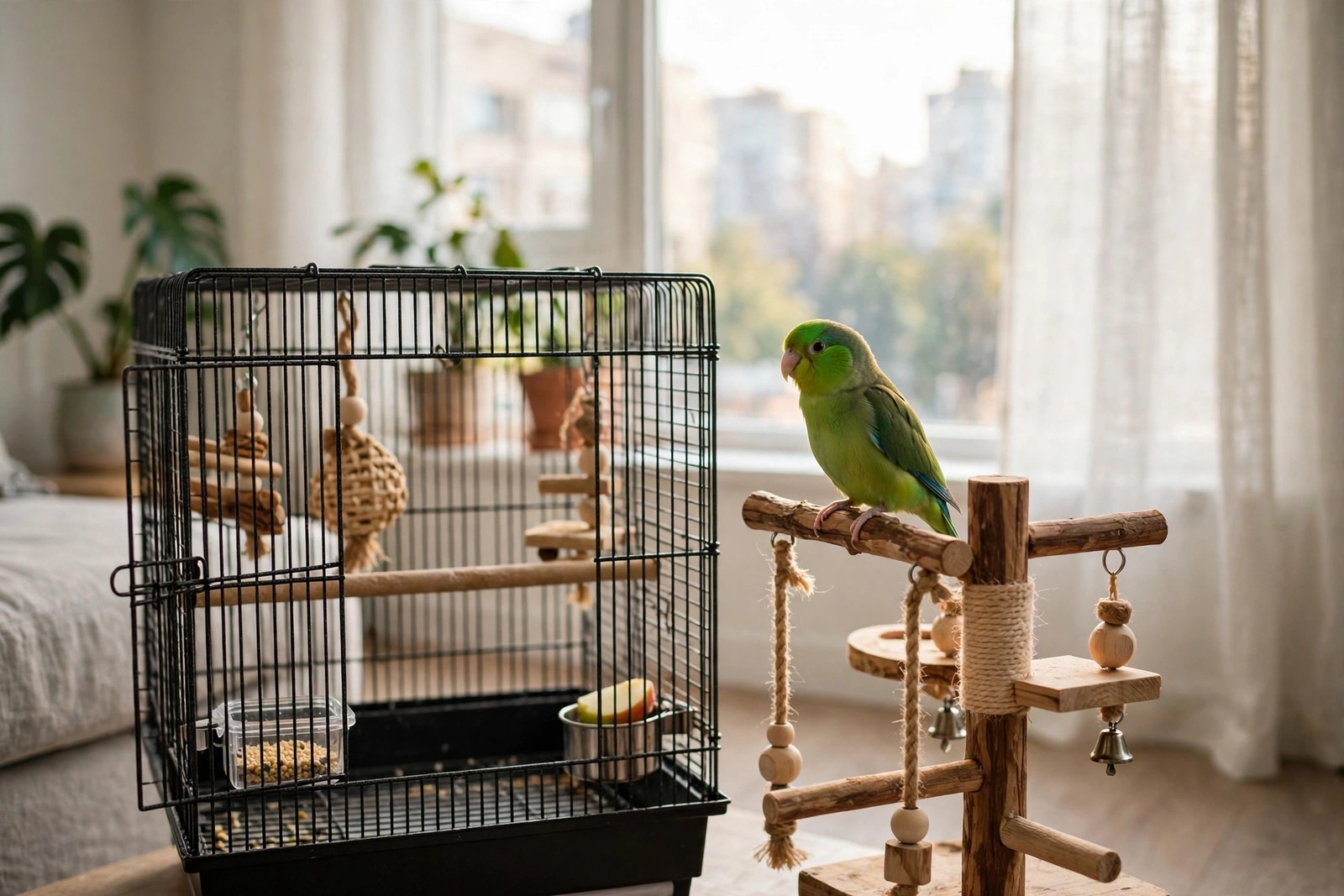
Parrotlets can be good apartment birds, and they are frequently chosen for flats precisely because they are tiny. A Pacific parrotlet is only a few inches long, needs a cage a single person can carry, and makes mess on a budgie scale rather than a macaw scale. But apartment suitability turns on three things that have little to do with size: noise, temperament, and the hours of attention a small, intelligent parrot expects every day.
How Loud Is a Parrotlet, Really?
A parrotlet does not scream the way larger parrots do. Its normal voice is a stream of chirps, clicks, and chattering contact calls, and many owners find the volume easy to live with. Judge it honestly, though. Those calls are sharp and high-pitched, they peak at dawn and again toward evening when the bird calls to its flock, and in a small flat with thin walls a determined bird can be heard next door. A single, well-occupied parrotlet is a different proposition from a pair calling back and forth. If your building has strict noise rules or a neighbour who works nights, that morning chorus is the deciding factor, not the bird's size.
Temperament in a Small Space
Parrotlets are famous for acting like much bigger parrots. They are bold, curious, and strongly territorial about the cage, and an untrained bird may lunge and nip at fingers reaching inside. That is manageable with training: let the bird step onto a hand or perch at the open door instead of grabbing it from its own territory, reward calm stepping up, and keep handling sessions short and positive. Single birds bond intensely to one person and can become jealous of partners or visitors, so socialise yours gently with everyone in the flat. A bored parrotlet left alone all day will call, chew, and sometimes pluck, and no cage size fixes loneliness.
The Daily Routine an Apartment Must Fit
Plan on several hours out of the cage each day on a play stand or bird-safe room, with windows, mirrors, ceiling fans, and cooking fumes managed before the door opens. Parrotlets chew enthusiastically for their size, so supply destructible toys and replace them as they are shredded. Sleep matters for noise and mood: around ten to twelve hours in a covered, darkened cage keeps most birds quieter in the morning and less nippy by day. Keep the cage away from a party wall if you can, and schedule out-of-cage play for the hours when noise matters least next door.
Choose a parrotlet if you want a pocket-sized parrot personality and can offer company, training, and out-of-cage time in a home where moderate chatter is acceptable. KinsLe's Care Teams makes that routine reliable in a shared flat, assigning morning feeding, evening cover-up, and supervised play-stand time to named people, with each completed task time-stamped for the next person.