
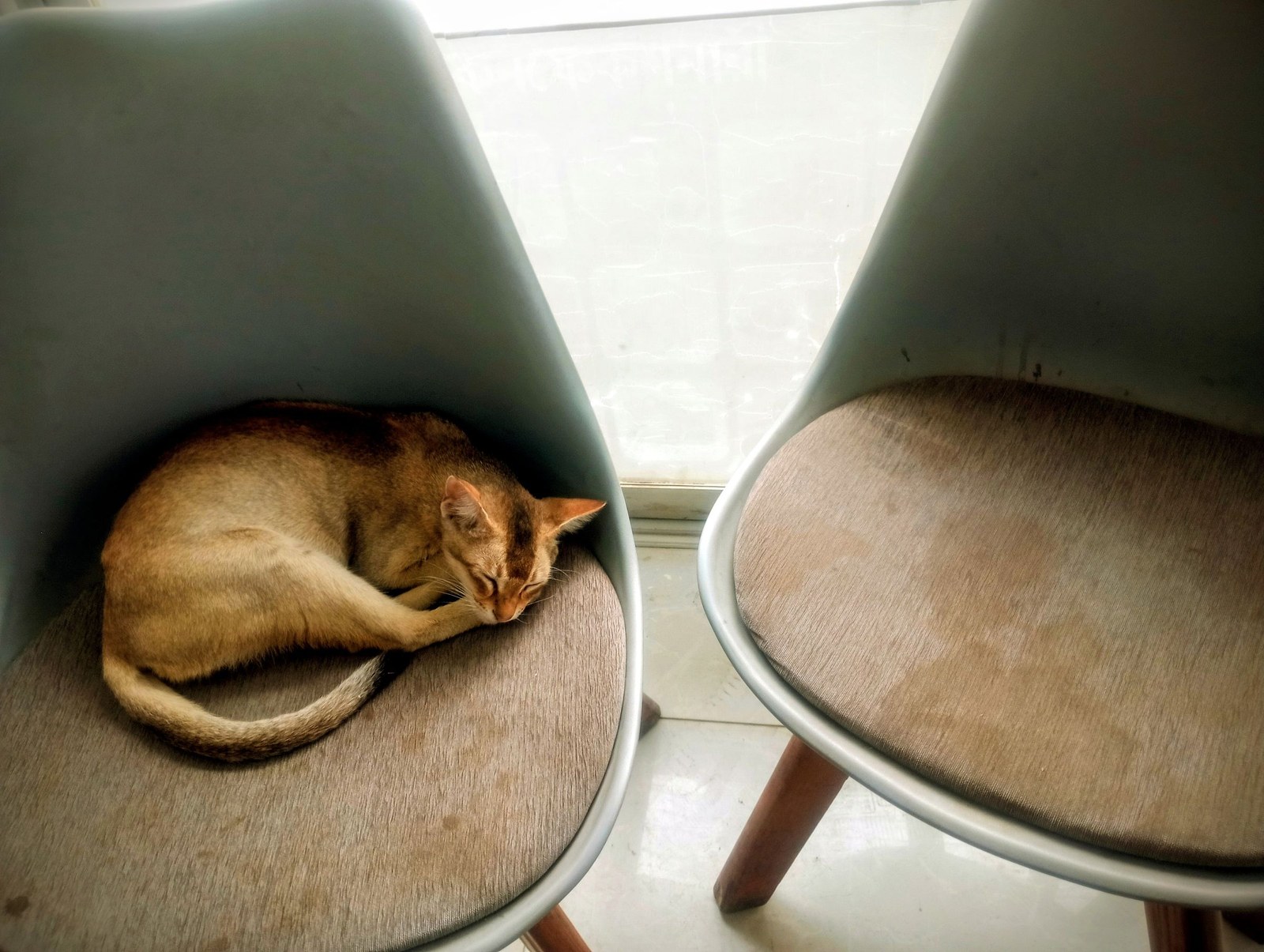
Yes, recliners and rocking chairs can be genuinely dangerous for cats, because cats love to nap underneath and behind them, where the moving mechanisms, hinges, and rocking rails can badly hurt a cat tucked out of sight as the chair opens, closes, or rocks. The fix is simple and absolute: look underneath and behind the chair every time before you use it, and teach everyone in the house to do the same.
Why Cats Choose Exactly the Wrong Spot
Under a recliner is prime cat real estate: dark, warm, enclosed, close to their favourite human, and smelling of the household. Cats do not perceive the gap beneath a chair as machinery space; they perceive a den with a person attached. Kittens can slip into remarkably small openings in the frame, and adult cats flatten themselves under the footrest or behind the back cushion, silent and invisible from above. A cat asleep there will not necessarily move when the chair does — deep sleep, age, deafness, or simple trust can keep her still until it is too late.
Rocking chairs and gliders carry the same risk at floor level: a tail, paw, or whole kitten under a rocker rail can be crushed by one absent-minded rock.
The Check-Before-You-Sit Routine
Build the same kind of automatic habit used for laundry machines:
- Look underneath and behind the recliner before sitting, reclining, or closing the footrest.
- Move the chair gently and slowly if you have not been able to check fully.
- Check before rocking, every time — not just the first rock of the evening.
- Teach children and guests explicitly; visitors cannot follow a rule nobody mentioned, and kids should never operate a recliner's mechanism with pets around.
- If your cat has a favourite chair spot, relocate her to a proper bed nearby before you settle in, rather than gambling that she moved.
When buying new furniture, some modern recliners have more enclosed bases that leave less room underneath — helpful, but never a replacement for the look.
Making the Safe Spot More Attractive Than the Risky One
You will win more often by competing than by banning. Put a genuinely appealing alternative right beside the chair: a heated or fleece-lined bed, a box with a blanket, or a low cat tree in the same warm corner of the room. Cats choose the under-chair den for warmth, darkness, and proximity, so match all three in the safe option. A cardboard box with a worn t-shirt in it, placed by your feet, beats expensive beds for many cats — and it is nowhere near any hinges.
If your cat persists, gently block access under the recliner with a fitted board or stored items so the den simply ceases to exist, rather than relying on training alone.
If a Cat Is Caught in a Chair
If you suspect a cat has been injured by a mechanism — crying out, limping, hiding, a trapped limb, or a cat found pinned — free her gently without forcing the mechanism further, keep her still and warm, and call an emergency veterinarian immediately. Internal injuries and fractures are not reliably visible from the outside, and a cat who walks away may still be hurt. Watch closely for the next day or two for appetite loss, hiding, or reluctance to jump, and mention the incident at any vet visit that follows, however minor it seemed.
How KinsLe Family Sharing Opens Her Profile to Family
Household safety rules fail when only one person knows them. Tell the relatives who share your home the look-under-every-chair check in person — check under the recliner, shut the dryer door, cords stay covered — and repeat it until it becomes their habit too. The grandparent who visits weekly needs that warning just as much as the people who live with her every day.
A spoken reminder still beats a forgotten one, so keep repeating the rule aloud at home. Through KinsLe's Family Sharing, you can share her profile with the family members you choose, so each relative you pick can open her profile themselves.