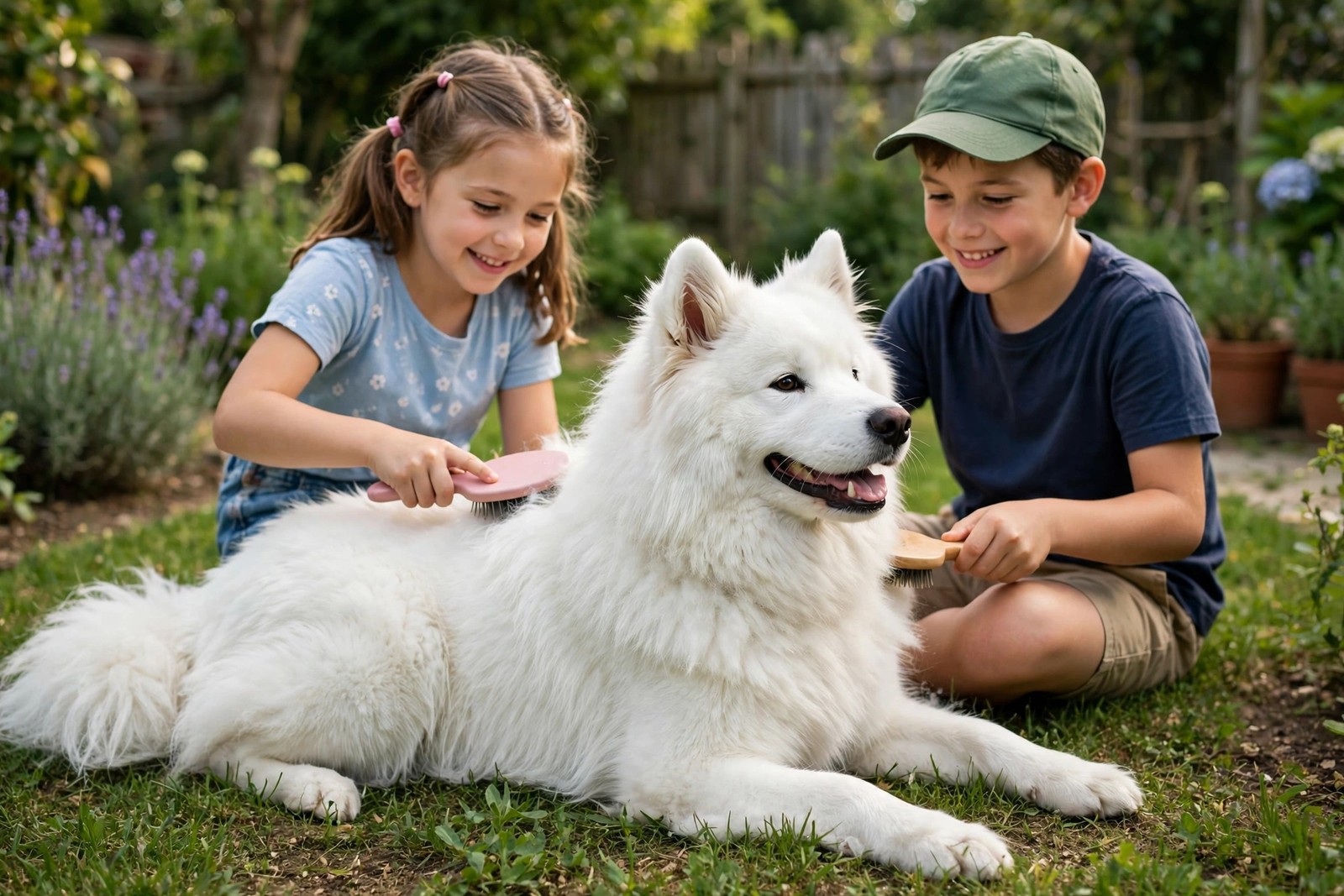
Yes. If you list large breeds that suit family life, the Samoyed belongs near the front of the conversation. Samoyeds worked alongside families as herding and sled dogs, living in close quarters with people of all ages, and the temperament that history produced is friendly, patient, and notably tolerant of children. The famous Sammy smile comes with a dog who usually wants to be in the middle of whatever the children are doing, not watching from another room.
Temperament With Children
A well-bred Samoyed is typically soft-mouthed, sociable, and slow to take offence, which makes ordinary childhood noise, dropped toys, and clumsy stroking easier for this breed than for many. Samoyeds also tend to greet visiting children with the same enthusiasm as their own, so the management problem is usually exuberance rather than suspicion. That said, breed is a tendency, not a guarantee. Choose a puppy from lines known for steady temperaments, socialise thoroughly with children of different ages, and still supervise, because any large dog deserves that respect.
The Physical Reality
Adolescent Samoyeds are strong, bouncy, and delighted by everything, and a dog of this size launching into a joyful greeting can flatten a toddler purely by accident. Teach a four-feet-down greeting and a settle on a mat from puppyhood, and let small children interact with the dog seated or lying down rather than mid-game. Puppy mouthing is pronounced in this breed, so redirect teeth onto toys consistently and end play calmly when it escalates. Samoyeds also dig, bark when excited, and pull hard toward anything interesting, so children should not hold the lead of a grown dog on a walk; an adult keeps the lead while the child helps with training games at home.
Coat, Heat, and Time
The double coat is the family's standing commitment. It sheds continuously and blows out in clouds a couple of times a year, needs thorough brushing several times a week to stop the undercoat matting, and turns mud into a decorating scheme. Older children can genuinely help here, turning a brushing session on the floor into calm contact time the dog enjoys. Samoyeds also feel heat more than most breeds, so summer play with children should happen in the cooler parts of the day, with shade and water always available, and a hot dog must be allowed to stop even if the game is fun.
Weigh those costs and the verdict stays warm: for an active family that can fund the exercise, training, and grooming, a Samoyed is a joyful, affectionate companion for children. KinsLe's Care Teams makes the workload visible and shared, assigning daily walks, coat care, and greeting practice to named family members with completions time-stamped, so the dog's needs do not rest on whoever happens to remember.