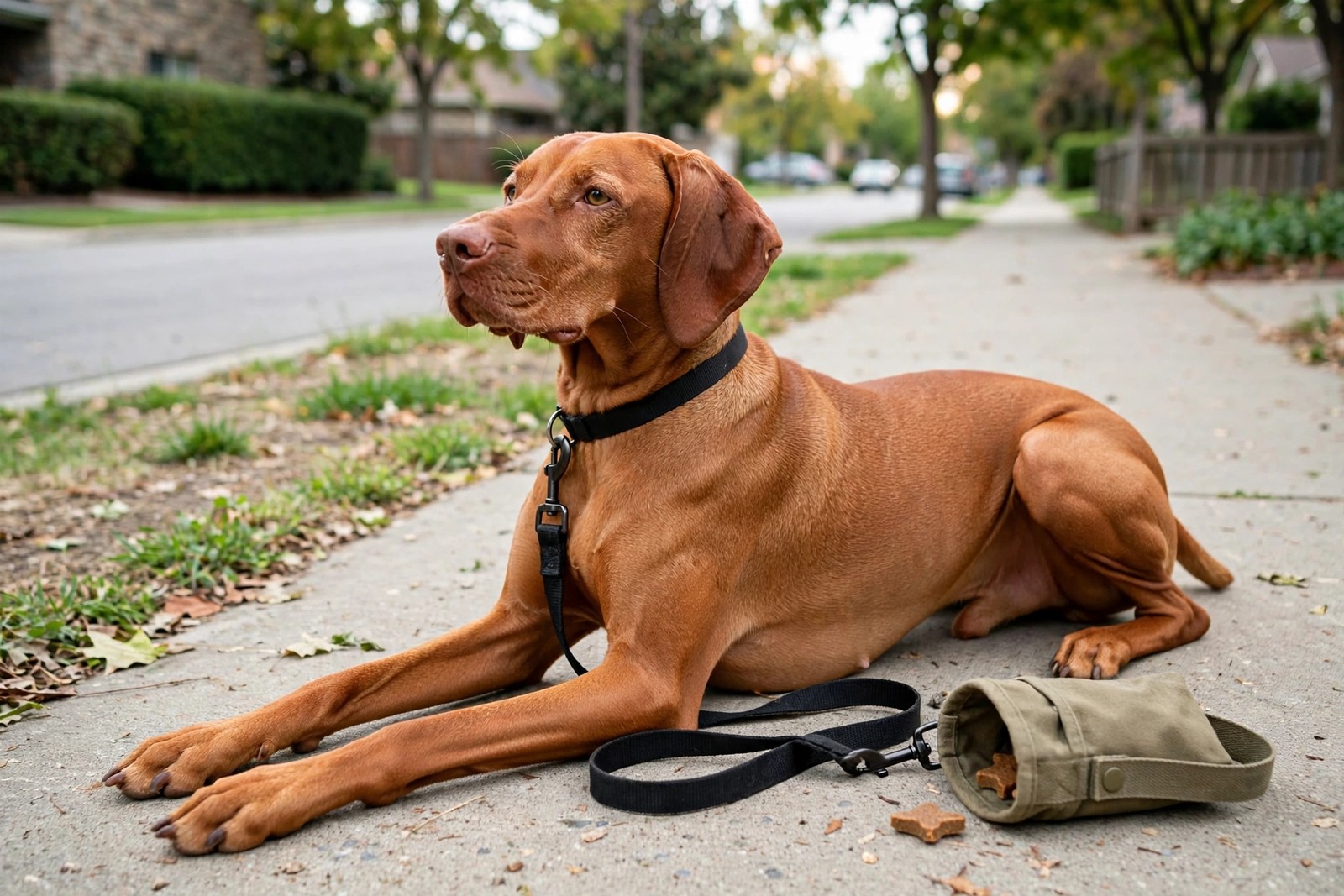
Vizsla days divide sharply between motion and contact. A healthy adult typically needs one and a half to two hours of exercise and training: a long morning run or off-lead session in a secure area where the dog can stretch into a proper gallop, training woven through the outing, and a second active walk before evening. This is a pointing breed built to work fields with a handler, quartering ground, freezing on scent and ranging widely, so a lead-only amble around the block rarely satisfies either body or brain. Recall, whistle cues and check-in games deserve daily practice from puppyhood, paid generously, because a Vizsla locked onto birdsong needs a rehearsed reason to turn back. Puppies, by contrast, need short, frequent play and rest in rotation while joints develop, with the long distances built gradually over the first year or more.
The Velcro Half of the Contract
Indoors, the breed's other famous trait takes over. A Vizsla typically wants contact: leaning against legs during washing-up, sharing the sofa with a head on a lap, and sleeping within touching distance where house rules allow. Alone time is therefore a trained skill rather than an assumption, built in short, calm departures from puppyhood and extended gradually, since a sensitive, under-exercised Vizsla left suddenly for hours may bark, fret or dismantle something soft. Households where somebody is home much of the day, or where the dog joins work and errands, tend to suit the breed far better than empty-house routines. Sensitivity also governs training tone, because harsh handling tends to worry this dog into avoidance, while clear, kind, consistent teaching produces a partner who works hard to stay in tune with you.
Minimal Coat, Real Maintenance Elsewhere
At 44 to 60 pounds (about 20 to 27 kilograms), a Vizsla is a lean, muscular dog whose short rust-coloured coat genuinely needs little: a weekly rub-down with a grooming mitt removes loose hair and distributes oils, and bathing is occasional. Attention shifts to nails, which need regular trimming because active dogs on soft ground still grow them faster than they wear, and to ears, which should be checked and cleaned after swimming or wet, muddy outings. The thin coat offers limited weather protection, so cold, wet days may call for a fitted dog coat on slower walks, and summer running should move to cooler hours with water carried. Food portions should track workload and rib feel rather than appetite, since an athletic dog in hard work and the same dog during a quiet week need visibly different bowls.
Evenings Without Personal Space
Evenings resolve into the breed's preferred arrangement: exercised, fed and installed against or on top of a person until bedtime. Visitors typically receive an enthusiastic, whole-body greeting before the dog reattaches to its own household, and children should expect joyful, sometimes bouncy companionship that benefits from taught settling routines. A final short outing, a settle cue and a consistent sleeping arrangement close the day. Owners who run, train outdoors and want a constant companion usually find the Vizsla contract close to perfect, while owners guarding their personal space tend to feel the arrangement differently within a week.
Work patterns decide Vizsla happiness more than house size does. A compact flat with an owner who runs daily, works partly from home and takes the dog along on errands usually outperforms a large house where the dog waits alone behind a patio door for ten hours. Holiday planning follows the same logic, favouring dog-welcome stays, trusted sitters the dog already knows or trips built around outdoor days, because kennel stays without heavy exercise and human contact can leave this breed genuinely miserable.
Alone-time milestones, whistle cues and seasonal portions stay written for this Vizsla inside KinsLe Transferrable Profiles, available to any future carer.