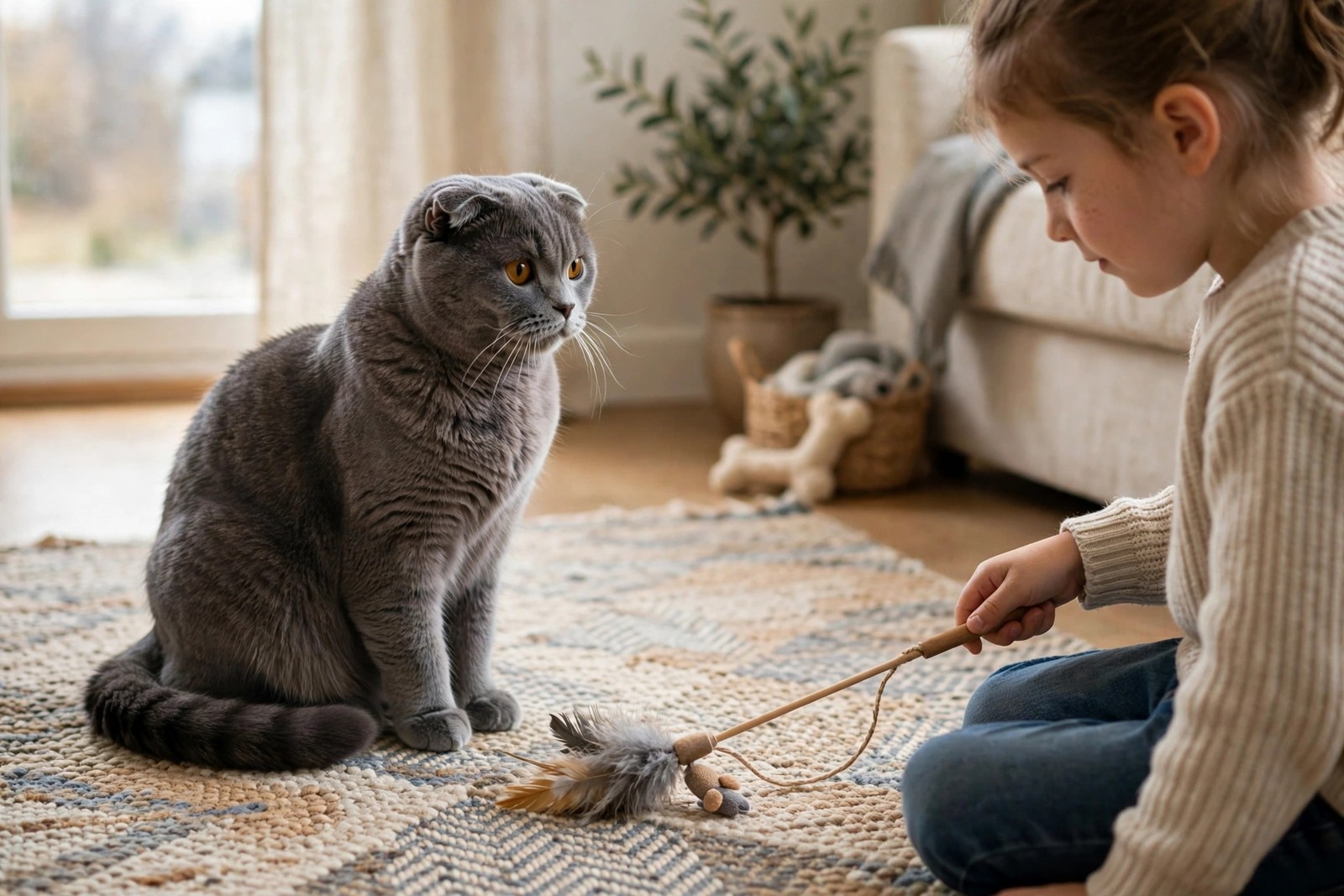
Scottish Folds are sweet-natured, placid cats who often adapt well to family life and calm children. They are not typically nervous or sharp, many enjoy sitting upright in their famous buddha pose to watch the household, and they tend to bond quietly and stay nearby. On temperament alone, the answer would be an easy yes. With this breed, though, the responsible answer has to go through their joints first.
The Health Fact That Changes Handling
The folded ear is caused by a gene that affects cartilage — and cartilage is not only in ears. The same gene affects joints throughout the body, which is why Scottish Folds are prone to a painful joint condition that can stiffen the tail, ankles, and spine, sometimes from a young age. Severity varies: some Folds stay comfortable for years, others develop obvious stiffness, a thickened inflexible tail, reluctance to jump, and pain on handling. There is no way to promise a kitten will be one of the lucky ones.
For children, the practical meaning is direct. A Fold must never be grabbed by the tail or legs, swung, dropped from a child's arms, or encouraged into rough wrestling games. What counts as boisterous fun with a sturdy breed can be a genuinely painful experience for a Fold with sore joints — and a cat in pain who cannot escape a child's game may eventually scratch, which then gets misread as bad temperament instead of a welfare problem.
The Children and Games That Suit a Fold
Calm, school-age children are the match. Teach floor-level play as the household standard: wand toys trailed on the carpet, rolling balls, treat puzzles, and short gentle games that end before the cat tires. Stroking should focus on the head and shoulders, with a simple rule children can remember — if the cat goes still, flattens its ears, or moves away, hands off immediately. Lifting, if an older child is allowed it at all, means seated, brief, fully supporting the body, and never for a Fold who is known to be stiff or sore.
Children can help in kind ways: refreshing water, serving measured meals, and being the person who offers the evening treat at the usual time. Those quiet rituals suit this home-loving breed and build a bond without any physical strain.
Watching for Pain, Together
Adults — and older children, appropriately — should know the early signs that joints are troubling a Fold: jumping less or hesitating before jumps, a tail that feels stiff or is carried oddly, reduced play, sleeping more, or grumpiness during handling that was once accepted. None of that should be managed at home with human painkillers, which are dangerous for cats. It is a prompt vet visit, a conversation about comfort and weight — extra kilos load sore joints heavily — and an adjustment to the home: lower perches, steps to favourite spots, litter trays with a low entry side.
If your family can commit to gentle handling as a non-negotiable rule and honest, ongoing vet care, a Fold and calm children can do well together. If your household's play style is loud and physical, choose a hardier breed instead. KinsLe's Pet Passport helps the whole family stay on the same side of that promise by keeping your Fold's vet findings, joint notes, and handling guidance in one records packet anyone caring for the cat can open.