
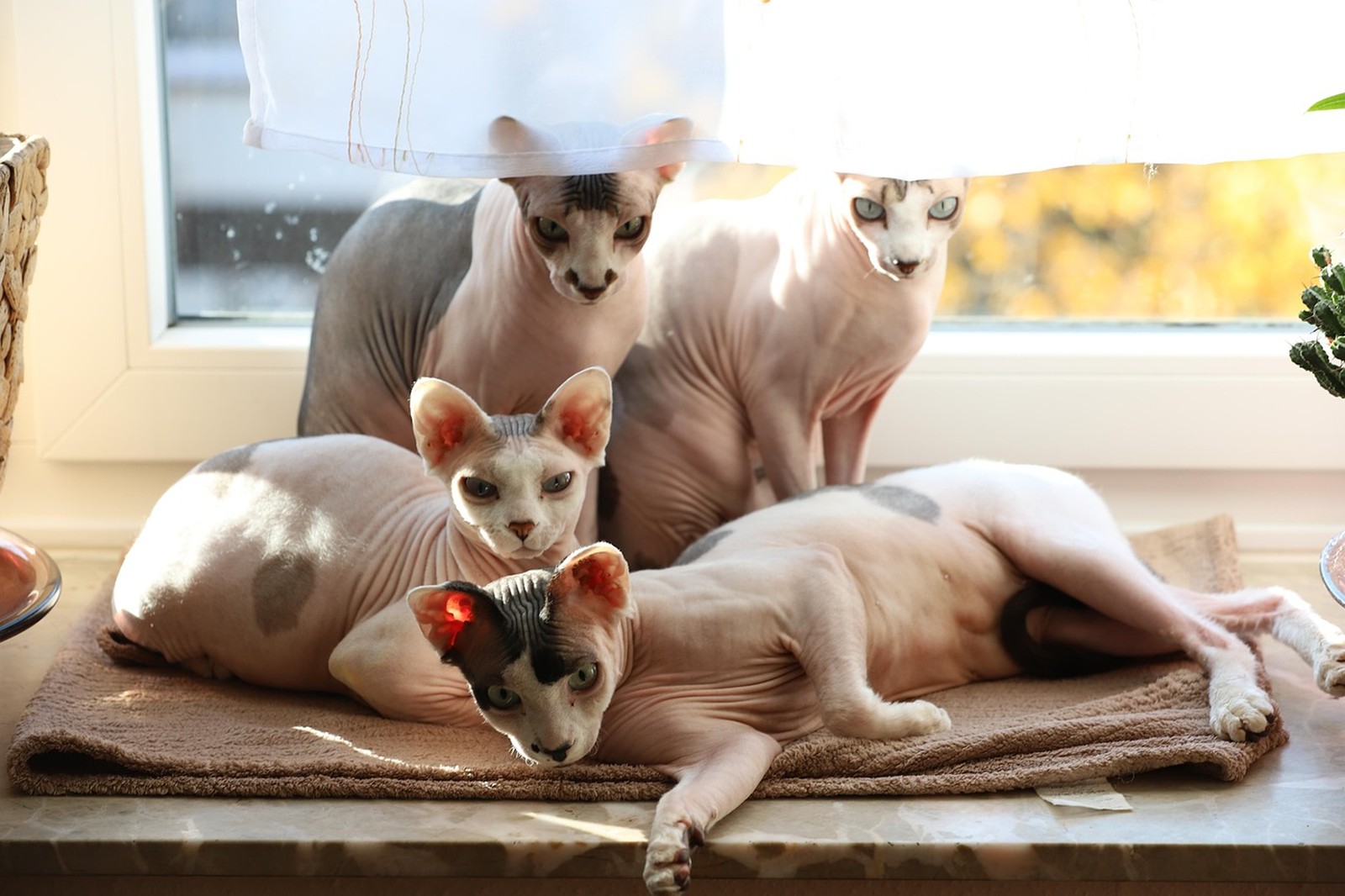
Yes — and for the Sphynx this is the least optional answer in the cat world. A Sphynx is not a coated cat who happens to prefer the sofa. It is a hairless animal whose body is genuinely unsuited to outdoor life, and it flourishes indoors precisely because indoors is where warmth, softness, and people are. Set the home up around heat and skin, and a Sphynx is not merely content — it is in its element.
Why Outdoors Is Not an Option
Skin first: with no fur, a Sphynx sunburns readily, and repeated sun exposure damages skin just as it does ours. Outdoors adds scratches from rough surfaces and vegetation that a coat would shrug off, biting insects with nothing to slow them down, and exposure to other cats' diseases through close contact and fights.
Temperature is the deeper problem. Fur is insulation, and without it a Sphynx loses body heat quickly. A chilly night that a coated cat sleeps through comfortably can leave a Sphynx dangerously cold, and even a cool, windy afternoon drains warmth fast. They burn extra energy simply staying warm, which is why the breed eats heartily and hunts heat with such determination. Add an trusting, people-seeking temperament with little road sense, and roaming is not a lifestyle choice for this breed at all. Any outdoor access should be enclosed, supervised, shaded, warm-weather only, and brief.
Building a Warm Indoor World
Think like a creature who is always slightly cold. Offer several sleeping options with real insulation: padded beds away from draughty floors, covered hideaway beds they can burrow into, and blankets in the spots they already favour — the top of the radiator shelf, the sunny chair, your bed. Many Sphynx learn to love a knitted jumper, introduced gradually and never forced; others hate clothing and should simply be given warmer rooms and more blankets instead.
In winter, keep the rooms your Sphynx lives in comfortably heated around the clock rather than letting the house go cold overnight — the hours you are asleep under a duvet are the hours your cat is looking for a heat source. Check cold ears and a curled, tense posture: your cue to add warmth. In summer, reverse the thinking and manage sun: limit long direct-sun window sessions for a cat who will happily bake past the point its skin should.
The Indoor Skin-Care Routine
Without fur to absorb oils, a Sphynx's skin produces a visible build-up that transfers onto bedding and furniture, and the breed needs regular bathing — many owners settle into roughly a weekly to fortnightly rhythm depending on the individual cat — using a gentle cat-appropriate wash and thorough rinsing. Ears also collect more wax without hair to protect them and need regular gentle cleaning, and even the nail beds gather grime that needs wiping. Build these into a calm routine with warm water and treats, keep bedding washed frequently, and watch the skin: persistent redness, spots, or itchiness is a vet conversation, not something to scrub harder at home.
Company completes the setup. A Sphynx is a heat-seeking shadow who wants its people home; long empty days are the commonest cause of an unhappy indoor Sphynx, ahead of any lack of garden. Interactive play twice a day, food puzzles, and a household that lets the cat join in everything suits the breed perfectly.
Warmth, skin care, and constant companionship: deliver those three and an indoor Sphynx is living exactly the life it was built for. KinsLe Care Teams helps a household deliver them without gaps by assigning baths, ear checks, laundry, and daily play to named people, so your Sphynx's warmth and skin care never depend on one person's memory.