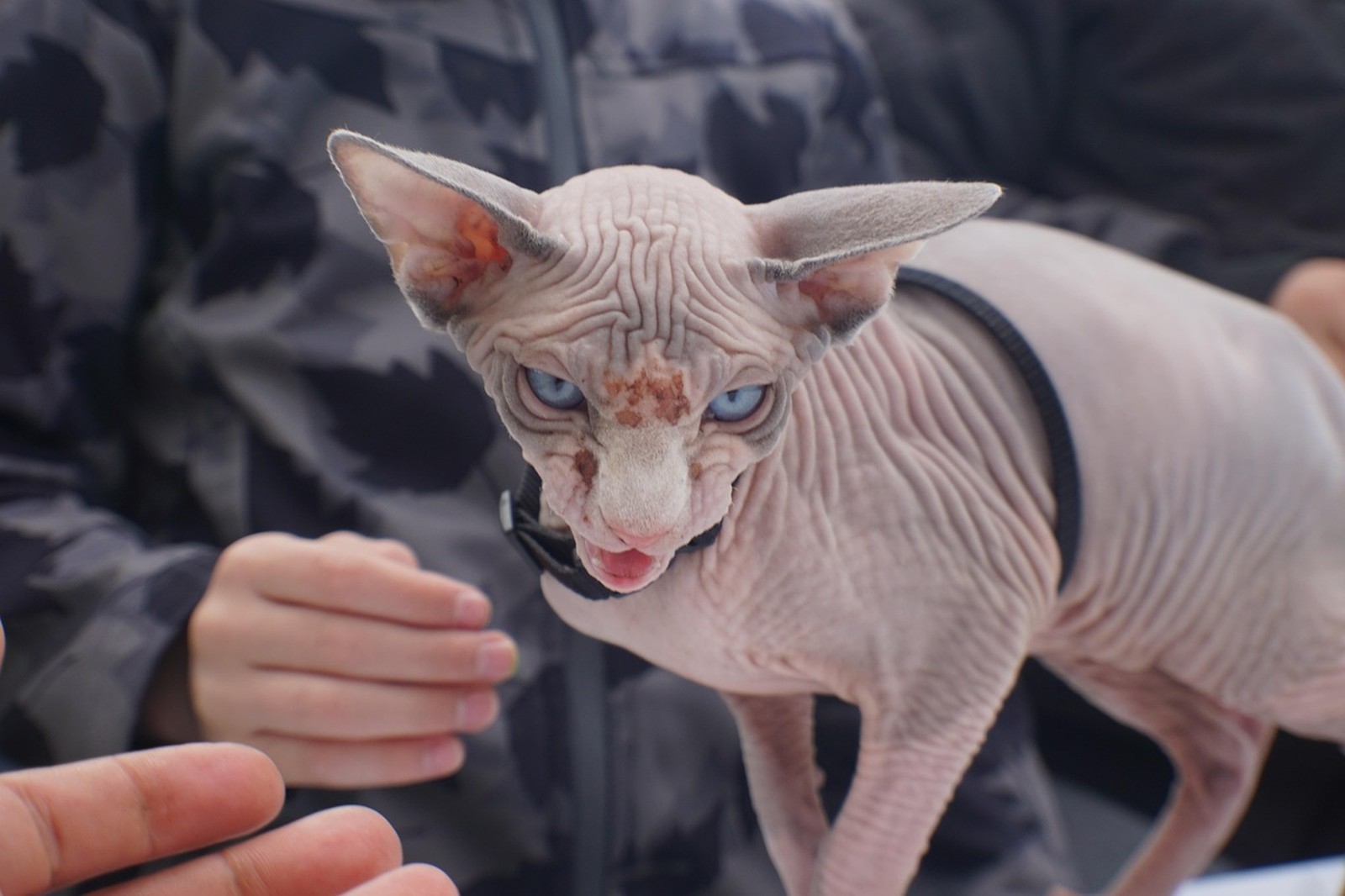
Yes. If you want a quiet, independent cat who mostly keeps to herself, a Sphynx is probably the wrong breed. Most Sphynx are frequent, deliberate vocalisers who direct their calls at their people, follow them around to deliver them, and expect an answer.
What a Sphynx Actually Sounds Like
The Sphynx voice is distinctive. Many owners describe it as raspy, slightly hoarse, and surprisingly varied: short chirps and trills when greeting you, a rising, questioning meow at the food cupboard, longer complaining calls when a lap is unavailable, and soft chattering during play. Volume varies by individual, but persistence is the breed trait. A Sphynx who has decided she wants something will often repeat the call, move closer, tap you with a paw, and call again, escalating politely until you respond.
They are also situational talkers. Expect a commentary at predictable moments: when you come home, when a meal is late, when a favourite blanket is in the wash, when the house cools in the evening, and when you are on the phone or in a video call and your attention is visibly elsewhere. Because they are so people-focused, much of the noise is social rather than anxious.
Why This Breed Talks So Much
The chatter is tied to how dependent the breed is on its humans. Without a fur coat, a Sphynx seeks body heat constantly, so many calls translate simply to let me under the blanket or pick me up. They are also intelligent, energetic cats who get bored in a quiet, empty house, and vocalising is one way they recruit company and play. In most homes the pattern settles once the cat learns the household reliably answers: regular feeding times, scheduled play, and warm sleeping spots she can reach herself all reduce demanding calls without reducing the friendly greeting chirps most owners love.
When Talking Is a Warning Sign
A change in the pattern matters more than the volume itself. Book a vet check if a normally chatty Sphynx goes unusually quiet for a day or more, if calls turn to yowling at night — especially in an older cat, where vets will want to rule out pain, thyroid problems, or raised blood pressure — or if vocalising comes with pacing, appetite change, hiding, or litter-box changes. Sudden loud calling in a cat who is also drinking and urinating much more deserves prompt attention rather than a wait-and-see week.
Also distinguish contented talk from stress talk. Calls paired with flattened ears, a twitching tail tip, dilated pupils, or attempts to hide usually mean the cat wants space, visitors to back off, or a quieter room, not more fussing.
Living Happily With the Noise
Most owners adjust quickly, but be honest before adopting: thin walls, a night-shift sleeper in the house, or someone who works calls from home all day can turn charm into friction. Help the cat by answering needs before they become demands — a worn sweater left on her heated bed, ten minutes of wand play before your morning calls, and a last feed and play session late evening so dawn requests start later.
Note which calls mean what for your individual cat over the first month; Sphynx vocabularies are personal, and the household member who learns them gets pestered least. KinsLe's Care Teams lets the whole household record those triggers and tick off feeding, play, and blanket checks with timestamps, so your Sphynx gets her needs met by everyone — and her raspy running commentary stays conversation, not complaint.