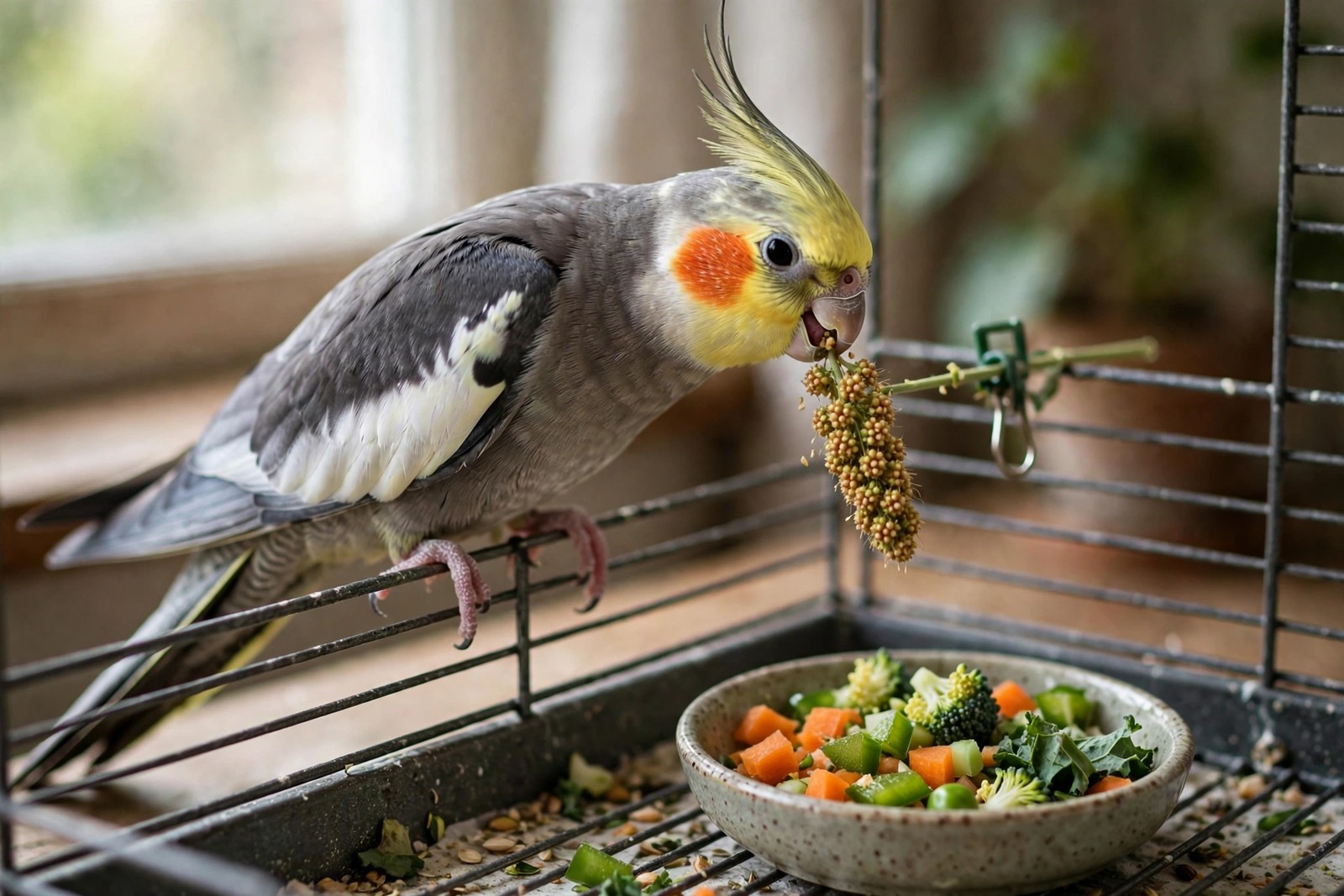
Yes, in the right amount, and the amount is the whole question. Spray millet is simply a natural seed head, and cockatiels are seed-eating grass parrots by ancestry, so few treats delight one more. Millet is also the treat most likely to quietly unbalance a cockatiel's diet, because a bird will cheerfully eat it in place of almost everything else you offer. Daily millet works when it is measured like a treat. It fails when a full spray hangs in the cage from morning to night as an all-day buffet.
What Millet Does and Does Not Provide
Millet seed is appealing, easy to husk, and energy-rich, but on its own it is a narrow food: filling and starchy, short on the range of vitamins, minerals, and protein a cockatiel gets from a balanced base diet of formulated food or a varied seed mix alongside chopped vegetables and leafy greens. A cockatiel who fills up on millet eats less of those foods, and over months that pattern, combined with too little exercise, is one of the common routes to a soft, overweight bird. None of that makes millet bad. It makes millet a dessert, valued precisely because the bird will work for it.
A Sensible Daily Portion
Think in sprigs, not sprays. A short piece, roughly thumb-length, or a few individual clusters pinched off the spray, is a generous daily treat for one cockatiel, and on a training day those clusters are better spent one at a time as payment for stepping up, entering the travel carrier, or returning to the cage. Hang a sprig in a different spot each day, clip it inside a foraging toy, or weave it through cage bars so the bird spends time extracting seeds rather than demolishing a spray in one sitting. Remove husks and any leftover spray at the end of the day rather than leaving it to soil, and store the rest dry and sealed, because stale or musty seed should be thrown away, not fed.
Using Millet Where It Earns Its Place
Millet's real value is behavioural. A newly arrived cockatiel who backs away from hands will often accept a held sprig at a distance it finds safe, which makes millet the classic bridge in taming: the bird eats near you without being touched, and trust builds over days. It is equally useful for weighing sessions, vet-visit carrier practice, and recall to a play stand. What it should not become is a peace offering poured in whenever the bird screams, because that teaches the bird exactly which noise produces millet. Offer it on your schedule, for calm behaviour or completed training steps.
Watch the whole bird rather than the treat alone: droppings, energy, and body condition over weeks tell you whether treats are crowding out the main diet, and any sustained appetite change is worth raising with an avian vet. KinsLe's Care Teams closes the commonest loophole in multi-person homes by letting whoever feeds the cockatiel record the day's millet as a completed task, so the bird's pleading face cannot collect the same sprig from three different people.