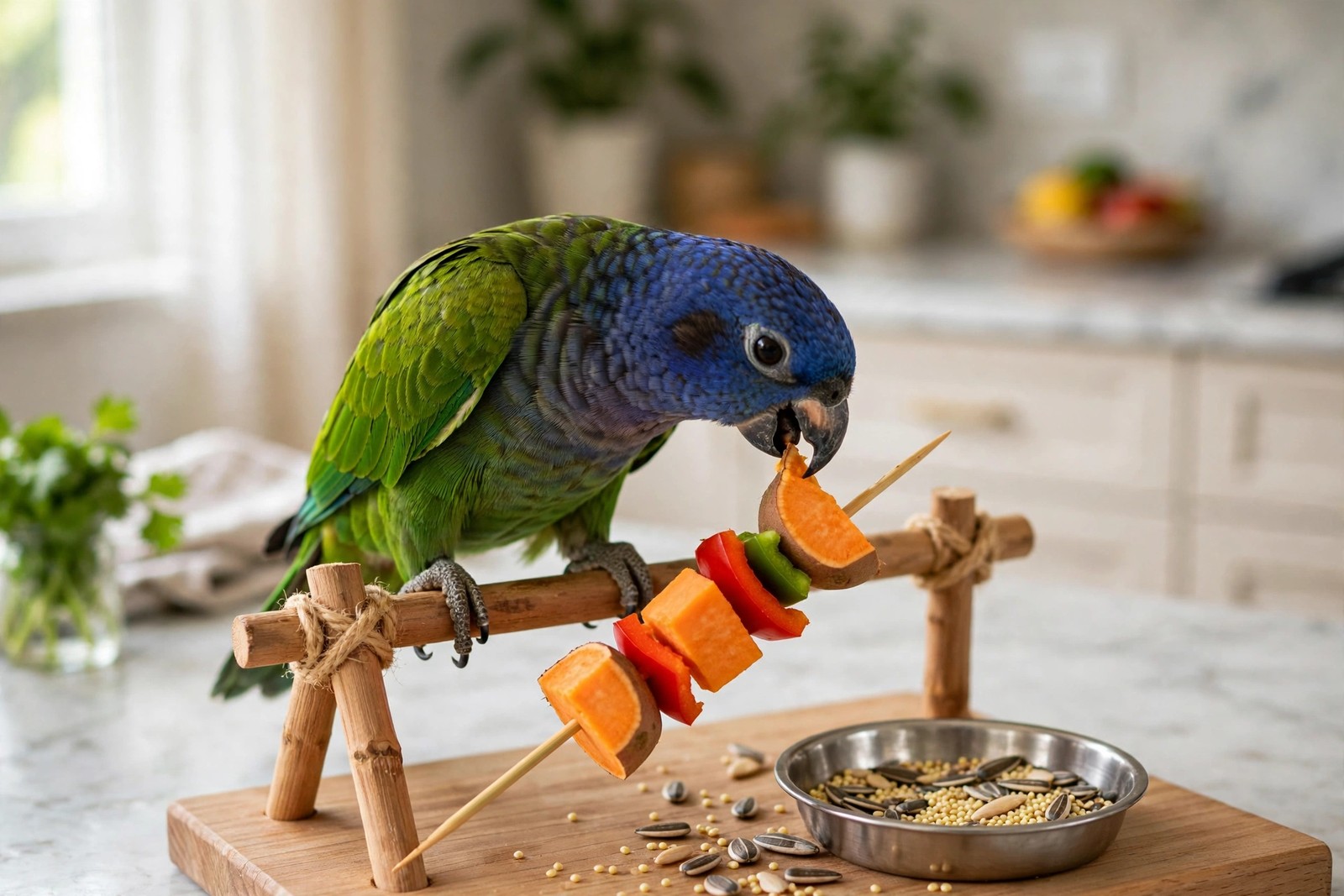
Pionus parrots are steady, thoughtful birds, and a seed-only pionus is rarely being difficult. Seed is energy-dense, familiar and easy to eat, while a bird raised on it may genuinely not recognise a pellet or a piece of broccoli as food at all. An all-seed diet is typically heavy in fat and light in several nutrients a pionus needs over a long life, so conversion is worth doing — at the bird's pace. A parrot who refuses new food does not get hungry enough to experiment safely; he simply eats less, which is why this process runs over weeks, monitored by scale and droppings, not by hope.
Set up the safety checks before you change anything
Weigh your pionus weekly, at the same time of day, on a gram scale with a perch, and write the figure down before you alter the diet — that number is your baseline. Learn his normal droppings too. During conversion, steady weight and normal droppings tell you he is eating enough; a downward weight trend, fewer or smaller droppings, or a fluffed, quiet bird sitting low means restore the previous seed share at once and slow down. Sick or moulting birds should not be converted at all; stabilise health first, with an avian vet if anything seems off.
Use the bridge foods he already trusts
Sprouted seed is the classic bridge. Seed that has been soaked and just sprouted looks and smells familiar but is fresher and more nutritious, and most seed-eaters accept it readily. From sprouted seed, the step to finely chopped vegetables mixed through it is much smaller than the leap from dry seed to a bowl of greens. Serve the mix warm if he prefers it; many pionus investigate warm food more willingly.
Pellets go in by proportion, not by takeover. Start with a small handful of pellets mixed into his usual seed so he must move them to reach what he wants, and he will mouth some by accident. Raise the pellet share gradually over several weeks while the seed share shrinks, keeping total food available generous. Offer a second small dish of pellets alone beside the mix; some birds begin eating from the plain dish once pellets have become a familiar sight and smell.
Time and stage the fresh food cleverly
Offer fresh vegetables first thing, before the seed mix, when overnight appetite makes him most willing to investigate: chunks on a skewer, leafy greens clipped beside a favourite perch, sweet potato, pepper, broccoli and peas in pieces he can hold. Eat your own vegetables beside the cage, visibly enjoying them — pionus are social eaters and copying a trusted flock member is powerful persuasion. Leave fresh food for a few hours, remove it before it wilts or spoils, and repeat the same item for many days running; a vegetable ignored for a week is often tasted on the eighth day once it stops looking new.
Keep it pressure-free: never withhold seed to force tasting, never leave him with only unfamiliar food while you are out, and return the familiar mix later in the day during early weeks. Count any beak contact — a lick, a nibble — as progress worth repeating.
Judge the conversion honestly
Real success looks gradual: pellets disappearing from the mix rather than all being billed out onto the floor, one or two vegetables eaten reliably, weight steady across a month. Most pionus settle on pellets, vegetables, some fruit and a modest amount of seed kept as a treat, preserving his love of seed without letting it run the diet. If weight falls despite a slow pace, or he refuses everything new for many weeks, an avian vet can check for health barriers and help you pace the change.
Because a conversion runs over weeks and often involves several people feeding the bird, a written daily record of mix ratio, new food offered, what was tasted and the weekly weight keeps the pace consistent, and KinsLe Care Teams lets your household assign those feeding and weighing duties with timestamps, so the pionus gets one steady plan instead of three people's different guesses.