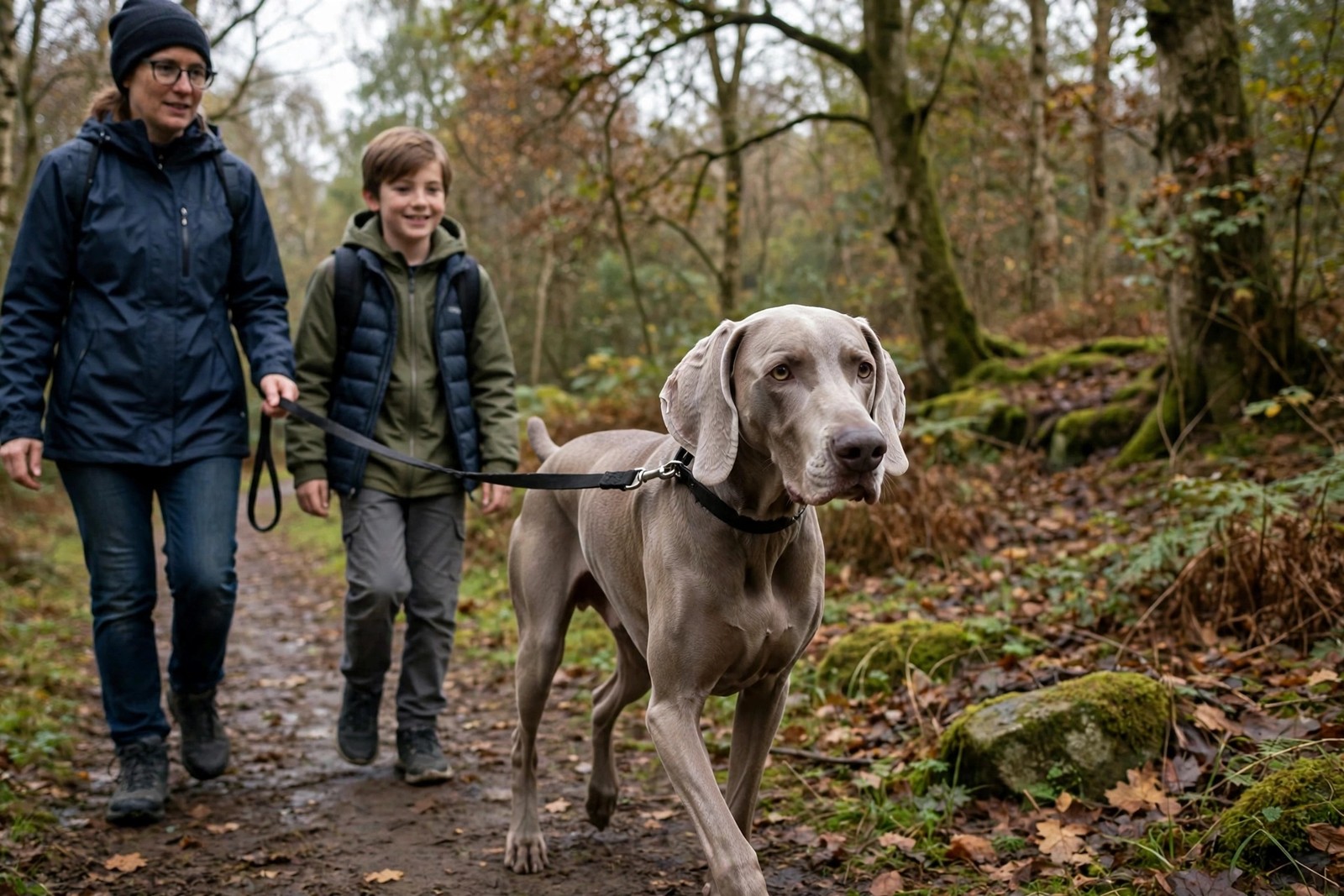
A Weimaraner raised with children is often intensely loyal to them — this breed bonds hard and likes to be in the middle of family life. That devotion, however, comes in a big, muscular, high-drive body. Whether a Weimaraner is good with children depends less on affection, which is rarely lacking, and more on size, arousal, and how well the adults manage both.
Size and boisterousness are the real issue
Adult Weimaraners are tall, powerful dogs, and adolescents are famously rowdy. A dog of that weight turning quickly in play, jumping up in greeting, or chasing a running, squealing child can injure a small child by accident. For that reason this breed is usually a better match for households with children old enough to stand their ground, follow instructions, and not treat the dog as a climbing frame — and a poor match for anyone hoping a puppy and a toddler will simply grow up together without a lot of separation and supervision.
Use gates to create child-free and dog-free zones, keep greetings calm and on the floor, and never leave a Weimaraner alone with young children, however trusted the dog seems.
Exercise and training decide the behaviour you get
Weimaraners were bred to hunt all day and think independently. They typically need substantial daily exercise — long walks, running, and training or scent work that engages the brain — and an under-exercised dog becomes destructive, demanding, and hard to interrupt around children. This is not a breed that fits a family whose weekdays allow only two short walks.
Start training early: a reliable recall, leave it, settle on a bed, and loose-lead walking matter more, not less, because of the dog's strength. Socialise a puppy carefully with calm children, rewarding relaxed behaviour, and stop while the puppy is still coping well rather than flooding it with a noisy group.
Visiting children and guarding
A Weimaraner may be wonderful with its own children and still be watchful or unsettled by visiting children who run, shout, and handle the dog unfamiliarly. Manage visitors actively: the dog on a lead or behind a gate for arrivals, structured introductions, and a quiet room the dog can be sent to with a chew before excitement builds. Watch for stiffening, hard staring, or growling over toys and food, and involve a qualified behaviour professional promptly if you see them — growling is information to act on, never something to punish away.
The honest fit check
Choose this breed only if the adults genuinely want a demanding sporting dog whose needs come first in the daily plan. If the appeal is mainly the striking grey coat, a calmer breed will make family life easier.
KinsLe Family Sharing helps because it keeps your Weimaraner's exercise log, child rules, and handling notes in one profile the whole household can see, so a grandparent, sitter, or older child follows the same approach you set.