
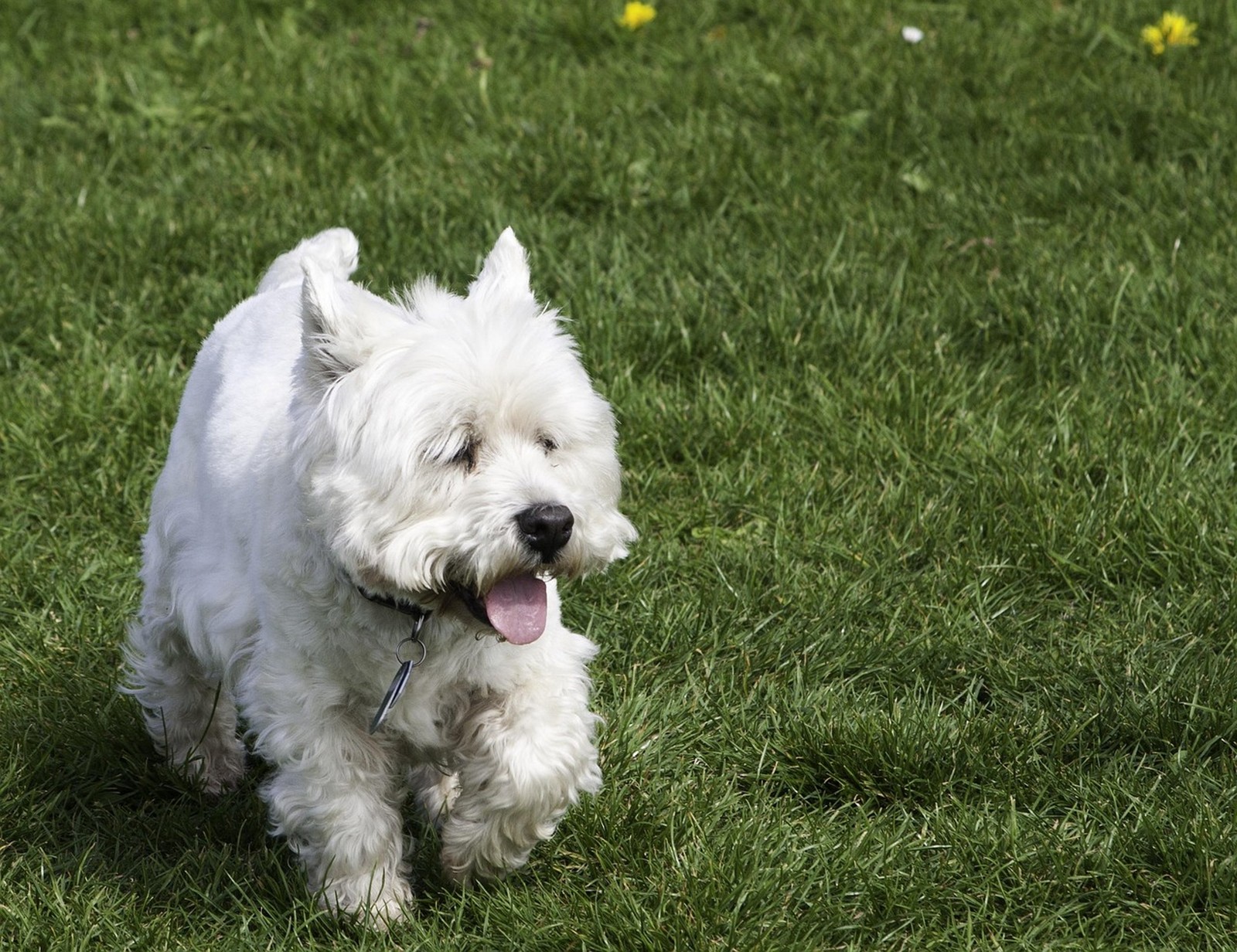
The honest answer: companionable, not clingy
West Highland White Terriers land in the middle ground that suits many households. A typical Westie wants to be where his people are, will follow you from room to room to supervise whatever is happening, and will claim the sofa cushion nearest you in the evening. What he usually does not do is demand physical contact every minute or panic the moment you leave his sight. Compared with the true velcro breeds who lean, climb, and shadow at touching distance, a Westie is affectionate company rather than an appendage.
That balance comes straight from the breed's working past. Westies were bred in Scotland to hunt vermin and go to ground more or less under their own direction, working with a handler but thinking for themselves. A dog designed to make decisions underground does not grow up to ask permission for everything, and the modern Westie's cheerful self-confidence is that independence in pet form.
What Westie independence actually looks like at home
Independence in a Westie rarely looks like aloofness. It looks like a dog who takes himself off to patrol the garden, investigates a noise without checking in first, decides the walk should go the interesting way, and occasionally regards a recall as a suggestion when something smells better.
This self-possession is part of the breed's charm, but it does mean training runs on negotiation more than devotion. A Westie works for what he finds worthwhile, gets bored with drilling, and responds far better to short, playful sessions than to repetition. Owners who want a dog who hangs on every word should look elsewhere; owners who enjoy a small comedian with his own agenda will find him endlessly entertaining.
The company side: how much togetherness a Westie needs
Do not mistake self-reliance for a dog who is fine alone all day. Westies are social, people-focused terriers, and long daily isolation tends to produce barking, digging, and inventive mischief rather than quiet independence. Most do well in homes where someone is around for a good part of the day, or where workdays are broken up by a walker, a visiting family member, or a dog-friendly workplace.
Individual dogs vary along the scale. Some Westies are devoted shadows who do sit on feet and follow to the bathroom; others are noticeably more cat-like in doling out affection. Breeder insight, meeting the parents where possible, and honest thought about your own lifestyle matter more than the breed average.
Helping any Westie feel secure without creating a shadow
Whatever his natural setting, teach alone time deliberately from the start. Practise brief absences behind a door, leave and return without ceremony, give him a chew or puzzle to work on while you are in another room, and let him choose his own bed for a nap rather than always yours. A Westie who learns early that being alone is boring but safe grows into exactly the balanced adult the breed is known for.
Equally, build the together time he thrives on: games that use his hunting instincts, like searching for hidden toys, walks with time to investigate, and training woven into play. If a previously settled Westie suddenly becomes clingy, following anxiously and refusing to rest alone, treat it as information rather than a phase, because pain, failing senses in an older dog, or a household change often sits behind it, and a vet visit is the right next step.
A dog whose needs are spread kindly across a household rarely has to cling to one person. With KinsLe, Family Sharing keeps your Westie's profile, routine, and care details visible to everyone who helps look after him, so whether you are home or not, the people he depends on are all working from the same page.