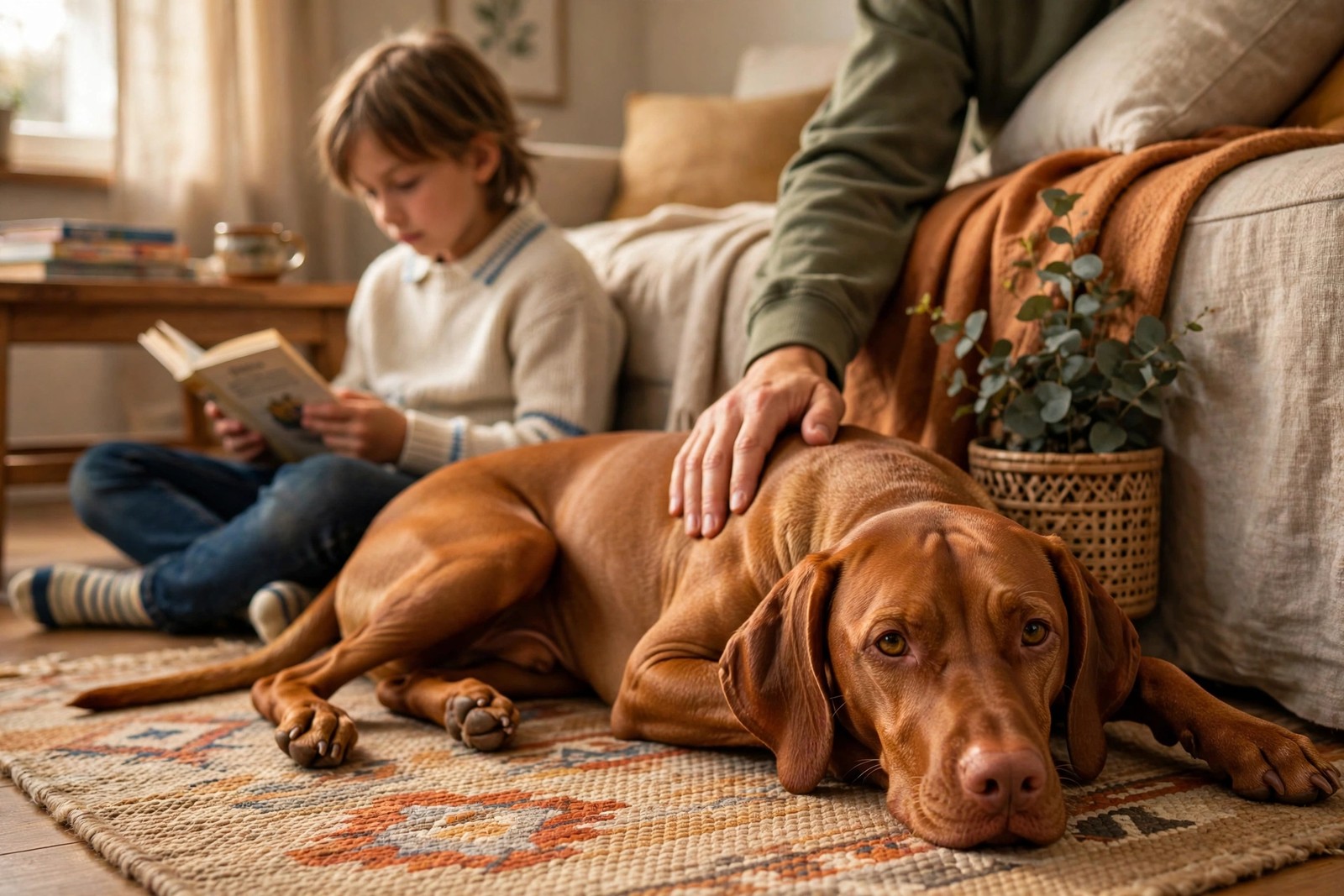
Vizslas are usually good with children, and the reason is temperament: this is a soft, people-hungry breed that wants physical closeness and wilts when excluded from family life. A Vizsla will typically follow children around the house, lean against them on the sofa, and join games willingly. The risk is not aggression as a breed trait — it is physics and exuberance.
The toddler problem is energy, not character
A Vizsla puppy or adolescent is springy, mouthy, and still learning where its body ends. In excited play it may jump up, grab at sleeves, or spin into a small child. Toddlers, in turn, grab ears, fall against sleeping dogs, and shriek at face level. That combination needs management, not hope. Families with children under about five should expect baby gates, separated play zones during the dog's wildest evening hour, and constant supervision until the dog is a settled adult.
School-age children who can follow rules are usually a much easier match, especially if they are given real jobs — holding the lead on part of a walk with an adult, scattering treats for a find-it game, or helping with training cues.
Exercise is the safety measure
A tired Vizsla is a gentle Vizsla. Adults typically need well over an hour of exercise a day, including some off-lead running in a secure area and training or scent games that work the brain. A Vizsla who has only had a short lead walk will invent entertainment in the house, and that is when mouthing, racing, and knocking children over happen. Plan the big exercise before the busiest child time, such as the after-school hour, not after it.
Rules that protect both sides
Teach children to let the dog approach them, to stroke the chest or side rather than reaching over the head, and never to hug around the neck, ride the dog, or disturb it when it is sleeping, eating, or in its crate or bed. Teach the dog a solid leave it, a settle on a mat, and a hand-target so you can move it away from a situation with a cue instead of grabbing its collar.
Watch body language honestly. A Vizsla who freezes, shows the whites of its eyes, licks its lips repeatedly, or keeps moving away from a child is asking for space — grant it at once and review what happened, rather than praising the dog for tolerating discomfort.
Choosing the individual dog
Meet the individual, not just the breed. Ask a breeder or rescue how a puppy or adult has responded to children, noise, and handling, and favour a confident temperament that recovers quickly over the boldest puppy in the litter. A nervous Vizsla needs a quieter home than an average family with young children can offer.
KinsLe Care Teams helps by putting your Vizsla's walks, training practice, and child-supervision rota in one shared plan, so the exercise that keeps this breed steady around children never depends on one person remembering it.