
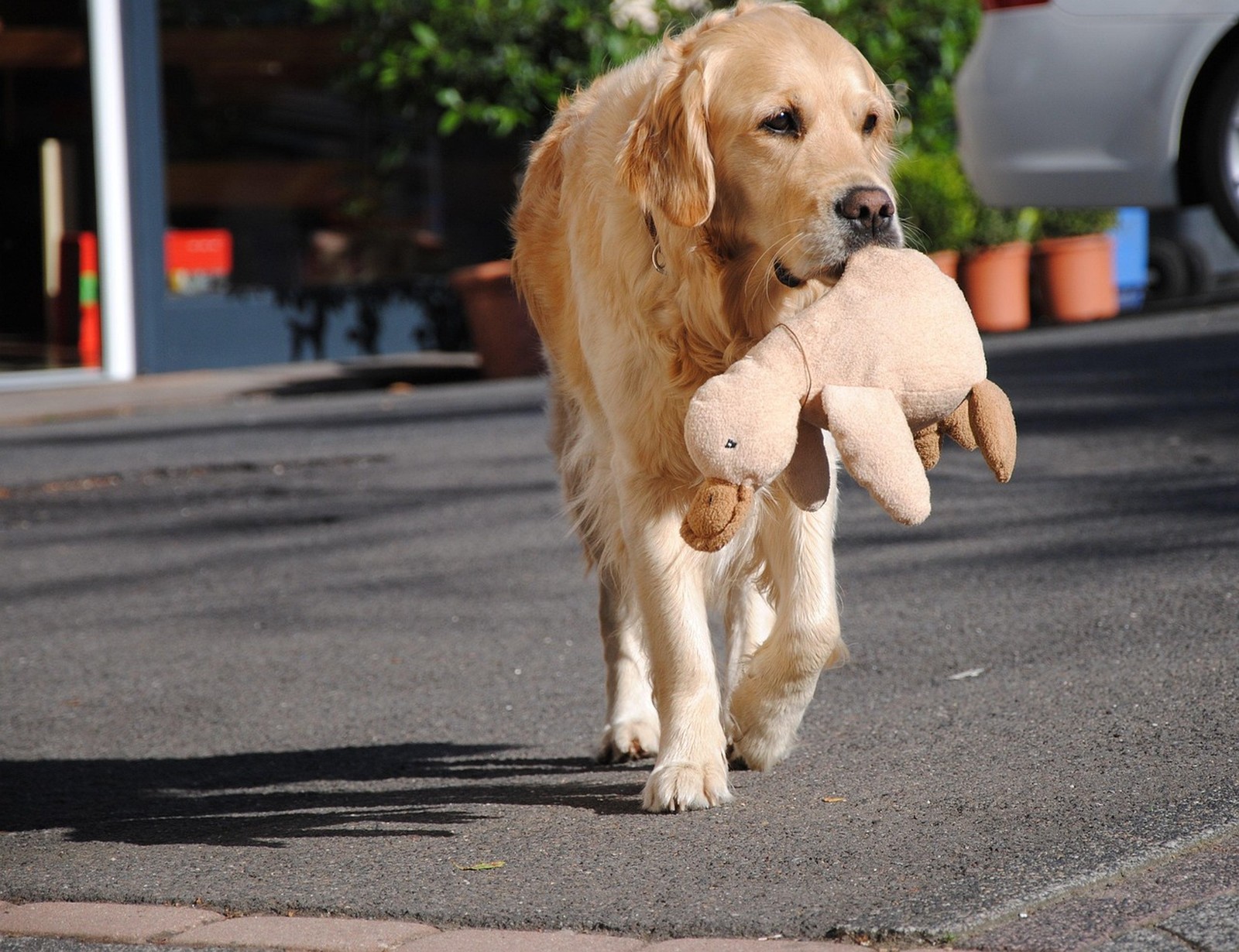
A typical day with a Golden Retriever is sociable, active, and dusted with hair. Goldens were built to retrieve game through a working day and then live as family dogs, and the modern pet version still wants both halves: real exercise outdoors and near-constant inclusion in whatever the household is doing indoors.
Morning: out the door and something to carry
The day usually starts with a proper walk — forty minutes or more — with retrieving built in, because carrying a ball or dummy home satisfies something deep in this breed. Goldens who swim will vote for any route past safe water, so towels live by the door in most Golden households. Breakfast follows, measured with some discipline: this is a famously food-loving breed, and a Golden allowed to eat to appetite will quietly become a heavy dog whose joints carry the cost.
The middle of the day is about company
A Golden left entirely alone for a long working day is a dog working against his nature. Households manage this with staggered schedules, a lunchtime walker, or the dog simply accompanying someone — Goldens settle well in home offices, at feet, once exercised. Training fits naturally into these hours in short, cheerful bursts: lead manners, a reliable drop for the endless objects this breed picks up and parades, and calm greetings, because a full-grown Golden launching himself at visitors in joy is a genuine household problem.
Grooming is a standing appointment, not an event
That glorious double coat sheds steadily and blows out heavily with the seasons, so most owners brush two or three times a week in short sessions rather than battling a matted coat monthly. The feathering behind the legs and under the tail tangles first, and the ears — long, floppy, and often wet from swimming — need checking and drying, since a warm, damp ear is where trouble starts. Bathing follows mud and swims rather than a calendar, and floors in a Golden household are vacuumed on a rhythm non-Golden homes would find excessive.
Evenings: another outing and full family membership
A second walk or play session before or after dinner burns off the day's remainder, and then the Golden takes up his evening post in the middle of the family's activity. These dogs mature slowly — a two-year-old may still behave like an oversized puppy — so evening management includes keeping socks, toys belonging to children, and food waste out of a mouth that explores the world by carrying and sometimes swallowing it.
Weighing up the Golden day
The daily commitment is roughly an hour and a half of exercise, regular grooming time, and very little true alone time — but almost no difficulty: few breeds are easier to train or more forgiving of a novice owner's mistakes. A Golden who swallows a sock, chews something toxic, or develops a hot, head-shaking ear needs a veterinarian promptly, and a dog who suddenly cannot manage walks he loved last month deserves the same visit. Because so many hands share this dog's care, KinsLe's Family Sharing puts the Golden's profile, portions, and care notes in front of every family member who helps, so the morning feeder and the evening walker are never working from different assumptions.