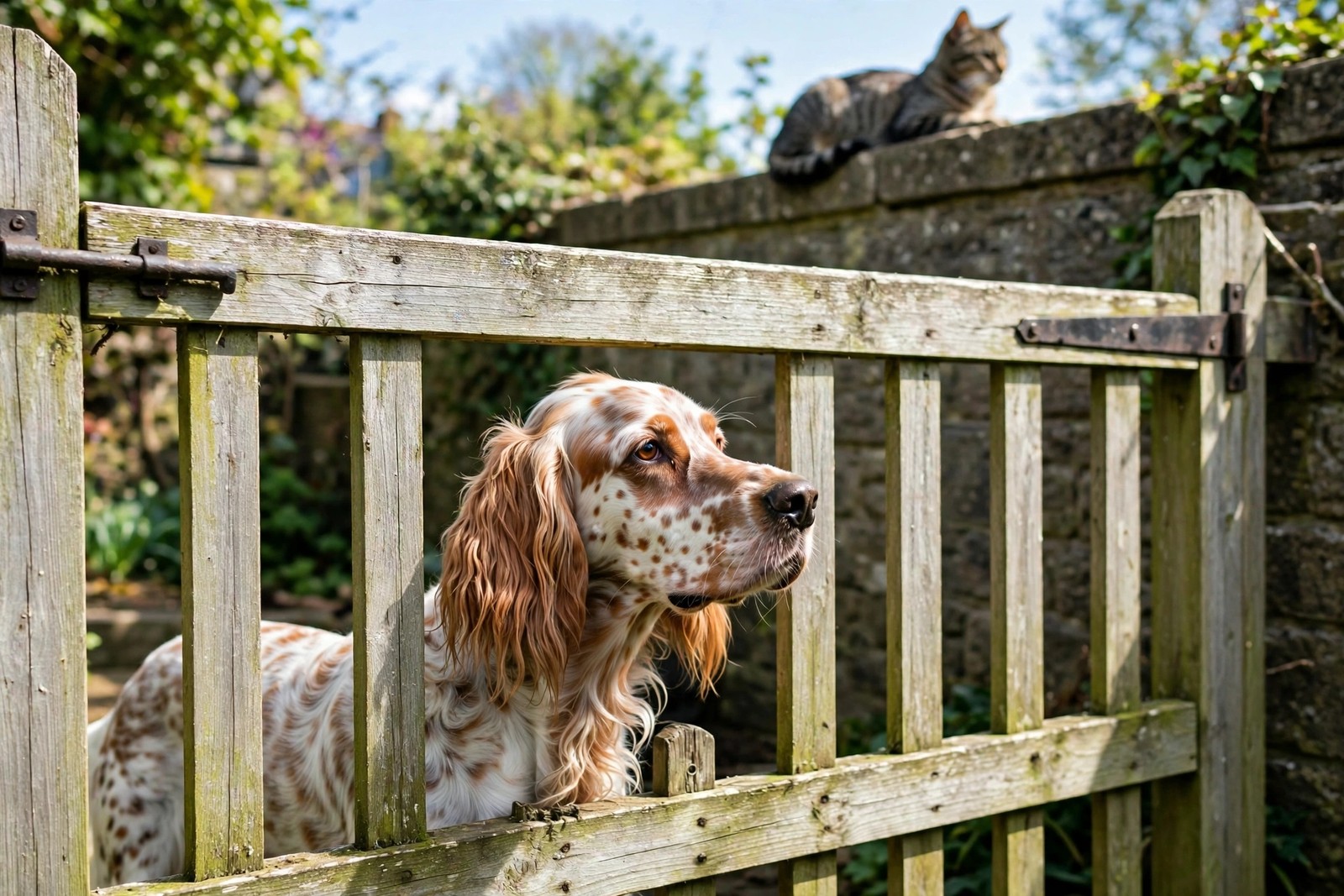
An English Setter was bred to find game birds by scent, freeze into a point, and work closely with people, and that heritage shapes how the breed behaves around other animals at home. The prey drive is real, but its shape surprises new owners: the main pull is toward birds and fast, fluttering movement, while a familiar household cat often occupies a different category in the dog's mind. Planning should rest on that distinction, plus secure management for the animals a setter will always view as quarry.
The Household Cat: Familiarity Changes the Picture
Many English Setters live peacefully with a cat they were raised alongside, because the cat is part of the home group rather than a fleeing stranger. That outcome is built, not assumed. Introduce a puppy or new dog to the cat in stages: scent swapping through bedding, meetings through a gate or a crate with the cat free to leave, then supervised time together on a lead. The cat needs escape routes in every shared room, meaning a cat flap, a gate a dog cannot pass, or furniture routes to high resting places where the dog cannot follow. Feed the animals apart, keep early meetings short and calm, and end them before excitement builds. Months of relaxed behaviour should pass before the pair is left alone together, and some owners never leave a large young setter unsupervised with an elderly or frail cat.
Watch body language rather than hope. A setter who softens, looks away, and settles near a cat is showing acceptance. A setter who freezes, stares hard, trembles, or creeps forward in a stalking posture is showing predatory focus, and that meeting should end with distance restored and professional guidance sought.
Small Pets Need Permanent Separation
Rabbits, guinea pigs, hamsters, and caged birds sit in a different risk class, and the safe rule is separation that does not depend on anyone remembering a door. Small mammals should live in a room the dog does not enter, in housing a dog cannot tip, chew through, or open, because a moment of unsupervised access can be fatal even with a gentle dog. A running, squeaking animal triggers chase and grab responses that bypass training, and a setter's soft mouth, bred for carrying birds, offers no protection to a small pet seized in excitement. Bird cages belong out of reach and behind a closed door when the dog is loose, since fluttering against bars can hold a setter's fixation for hours and stress the bird badly. Children should be taught that small pets are never carried into the dog's space for introductions.
Outdoors: Pointing, Stalking, and the Vanishing Recall
On walks, expect the full sequence: nose working the wind, a sudden point toward cover, creeping steps, then a chase if a bird or squirrel breaks. Recall that is reliable in a garden may fade outdoors at the moment of a flush, so use a long line in areas with livestock, ground-nesting birds, or traffic until recall has been proved around real distractions many times over. Choose enclosed fields for free running during adolescence, channel the instinct with gundog games such as scented retrieves and steadiness exercises, and reward every voluntary check-in. A dog whose hunting urge is given legal work several times a week is usually easier to interrupt than a dog whose urge is only ever frustrated.
Getting Breed-Aware Help Early
A trainer who understands gundogs will build steadiness and recall around scent rather than punishing interest in birds, which protects both safety and the dog's working temperament. One or two sessions early in ownership can set the household rules for cat meetings, small-pet separation, and long-line handling before habits harden. Searching KinsLe's Pet Services Directory for trainers who state gundog or setter experience gives a new owner a shortlist to interview about methods before the dog arrives.