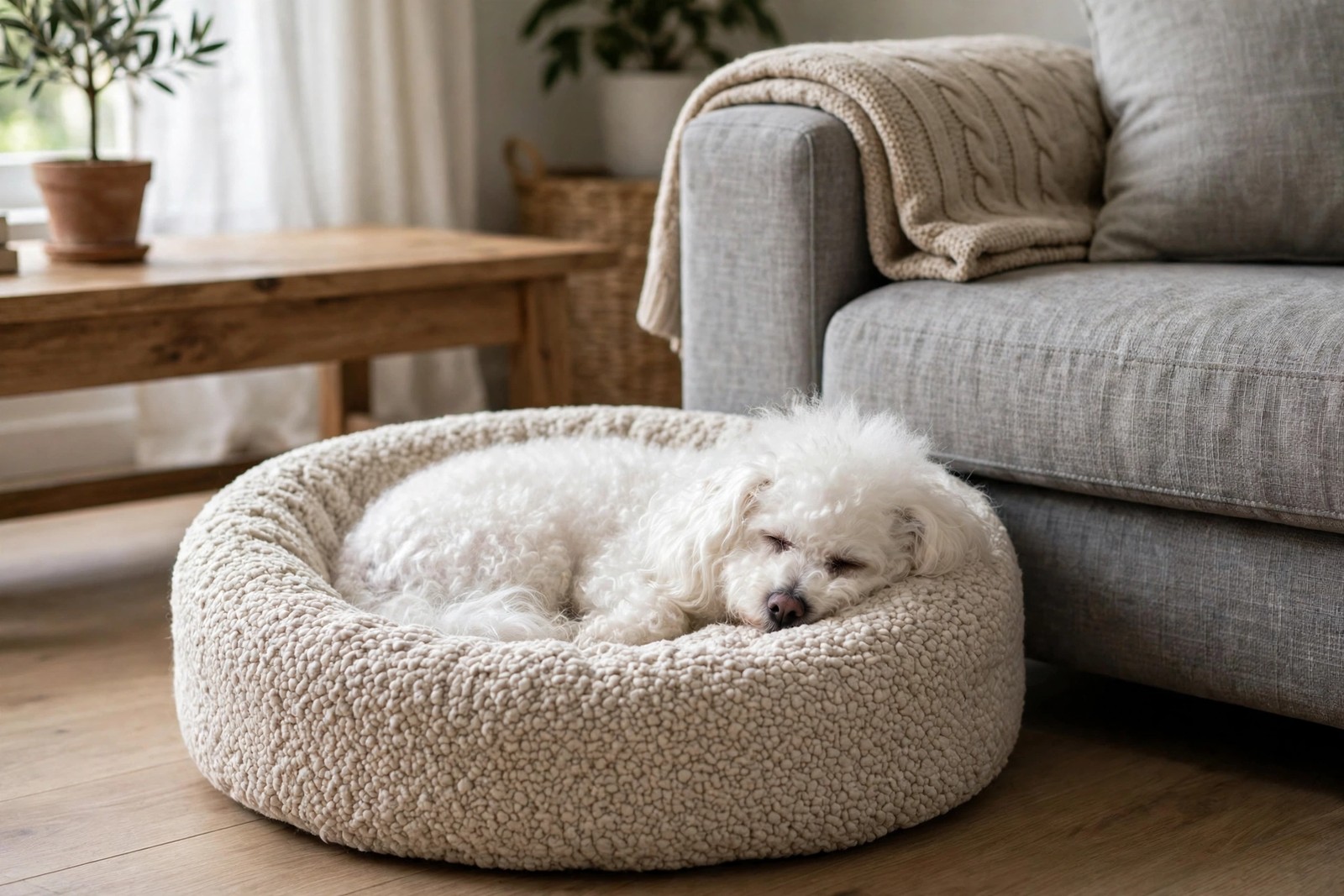
The honest answer for a Bolognese
Of all the breeds you might ask this question about, the Bolognese gives the least comfortable answer. This small white companion dog from Italy was shaped over centuries for one job: being with a person. A full, unbroken workday alone is therefore too much for many of them, especially youngsters and dogs rehomed as adults.
That does not rule out working ownership. It means the day needs designing rather than assuming. A Bolognese who has been taught alone time gradually, who gets a genuine midday visit, and whose mornings are calm and predictable can settle surprisingly well.
Why this little dog feels absence so sharply
The Bolognese is not a busy working breed burning off energy; its need is contact. Bred as a household companion rather than a hunter or herder, it bonds closely and reads household moods closely too. Owners often describe a dog who is cheerful and playful at home yet reserved with strangers, and who treats the family's presence as the background condition of a good day.
Distress in this breed tends to show as persistent barking or whining that neighbours hear, indoor toileting from a dog who is clean when people are home, licking at paws, or frantic, spinning greetings that take a long time to come down from. Those are anxiety signals, and they call for shortening the alone stretch, not for firmer discipline.
Designing a workday a Bolognese can accept
Start teaching alone time long before the first full working week if you can. Brief absences behind a door, then out of the house, lengthened only while your dog stays relaxed, build the idea that departures are ordinary and always end. Keep real departures and returns deliberately dull: no long goodbyes, no excited reunions, just a quiet hello once four paws are on the floor.
Build the day around a midday visit as a permanent feature, not a temporary training wheel. A family member, neighbour, or sitter who can offer a toilet break, a gentle garden wander, and twenty minutes of company splits the day into two stretches most Bolognese can handle. Leave a worn item of your clothing in the dog's bed, a safe chew and a lick mat for the leaving moment, and a small, enclosed resting area rather than the run of an echoing house, which many small companion dogs find harder, not easier.
Puppies, new dogs, and the limits to respect
A Bolognese puppy cannot manage a workday, full stop: bladders are small, alone skills are unbuilt, and early long isolation can set anxiety patterns that take months to undo. Take leave, work from home, or arrange near-constant cover for the early weeks, then stretch gaps slowly.
Some individual Bolognese, often those raised with steady routines and another calm dog in the home, do learn to nap through longer days.
When to get more help
If your Bolognese barks for long stretches whenever left, toilets indoors only during absences, refuses food until you return, or injures himself scrambling at doors, the alone time is beyond what he can currently do. Shorten the day with help first, then rebuild gradually. If there is no improvement over several weeks of staged practice, or the distress is severe from the start, talk to your veterinarian, who can check for underlying health issues and discuss behaviour support suited to separation problems.
The goal is not a dog who silently endures the day but one who genuinely rests through it, and for this breed that almost always means people sharing the day between them. KinsLe supports that arrangement through Family Sharing, so family members and helpers can all see your Bolognese's visiting times, feeding notes, and settling routine in one shared profile.