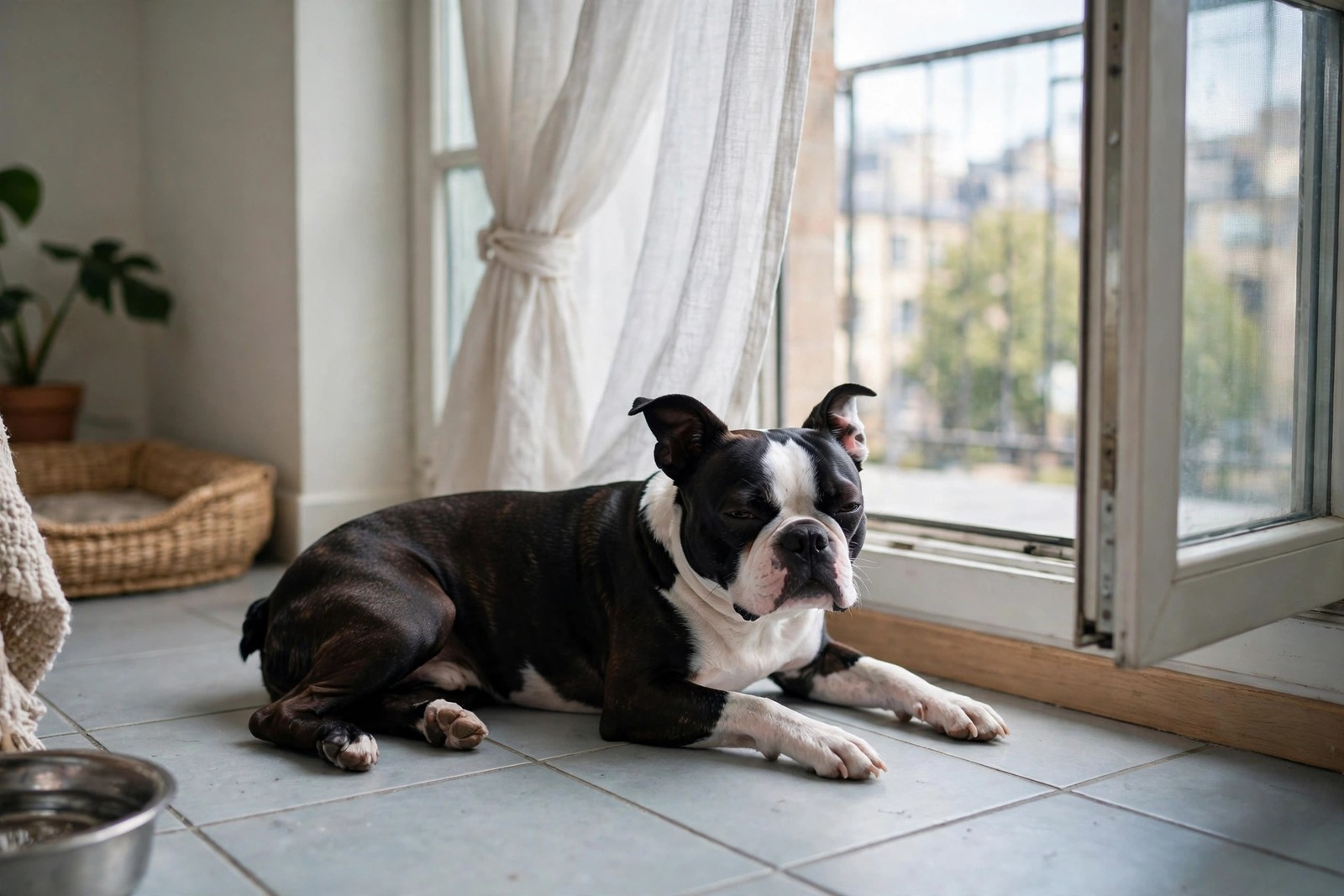
Yes, a Boston Terrier can live happily in an apartment, and many do. The breed is small, sturdy, bred purely for companionship, and usually content to match the household's pace — a game in the living room, a sociable walk, then a long nap. What apartment owners must plan around is not space. It is breathing, temperature, and noise.
A flat face changes the exercise rules
Boston Terriers are brachycephalic, meaning their shortened muzzle makes breathing less efficient. In practice that means exercise in shorter, more frequent bouts rather than one long hike, particular care in warm or humid weather, and a firm rule against vigorous exercise in the heat of the day. In a flat without a garden, build the day around early-morning and evening walks in summer, with brief toilet trips in between, and watch for noisy, laboured breathing, drooling, or slowing down — signs to stop, cool the dog gradually, and contact your vet promptly if breathing does not settle quickly.
Air conditioning or a cool room matters for this breed in a heatwave, and a Boston should never be left in a sun-baked flat while you are out.
Noise: the sociable snorer
Bostons snore, snort, and reverse-sneeze, and thin apartment walls carry those sounds at night. Most neighbours tolerate a dog they barely hear in shared spaces, so focus your training on the corridor and the front door: reward quiet behaviour when the lift arrives or voices pass, teach a settle away from the door, and keep greetings with neighbours brief and calm so your dog does not practise barking and bouncing at every encounter. Inside, expect an audible sleeping companion — owners who are very light sleepers sometimes keep the dog's bed outside the bedroom.
Energy in a small space
Roughly an hour of total daily activity suits most adult Bostons — walks, a game of tug, and training in short bursts. They are bright and clownish, and boredom shows up as chewing skirting boards or pestering for attention, so rotate a few sturdy toys, use food puzzles for one meal, and scatter a handful of treats in a rolled towel for a quiet indoor hunting game. Puppies need frequent toilet trips, so a high floor without a lift will test you for the first months.
Health notes for flat life
Keep your Boston lean — extra weight worsens breathing — and mention any worsening snoring, fainting, or exercise intolerance to your vet. Eyes are prominent in the breed, so take squinting or pawing at an eye seriously and seek veterinary advice the same day.
KinsLe's Care Pass helps when you travel by giving a chosen sitter temporary, time-limited access to your Boston Terrier's feeding, walking, and heat-care instructions, so those breathing precautions are followed even when you are away.