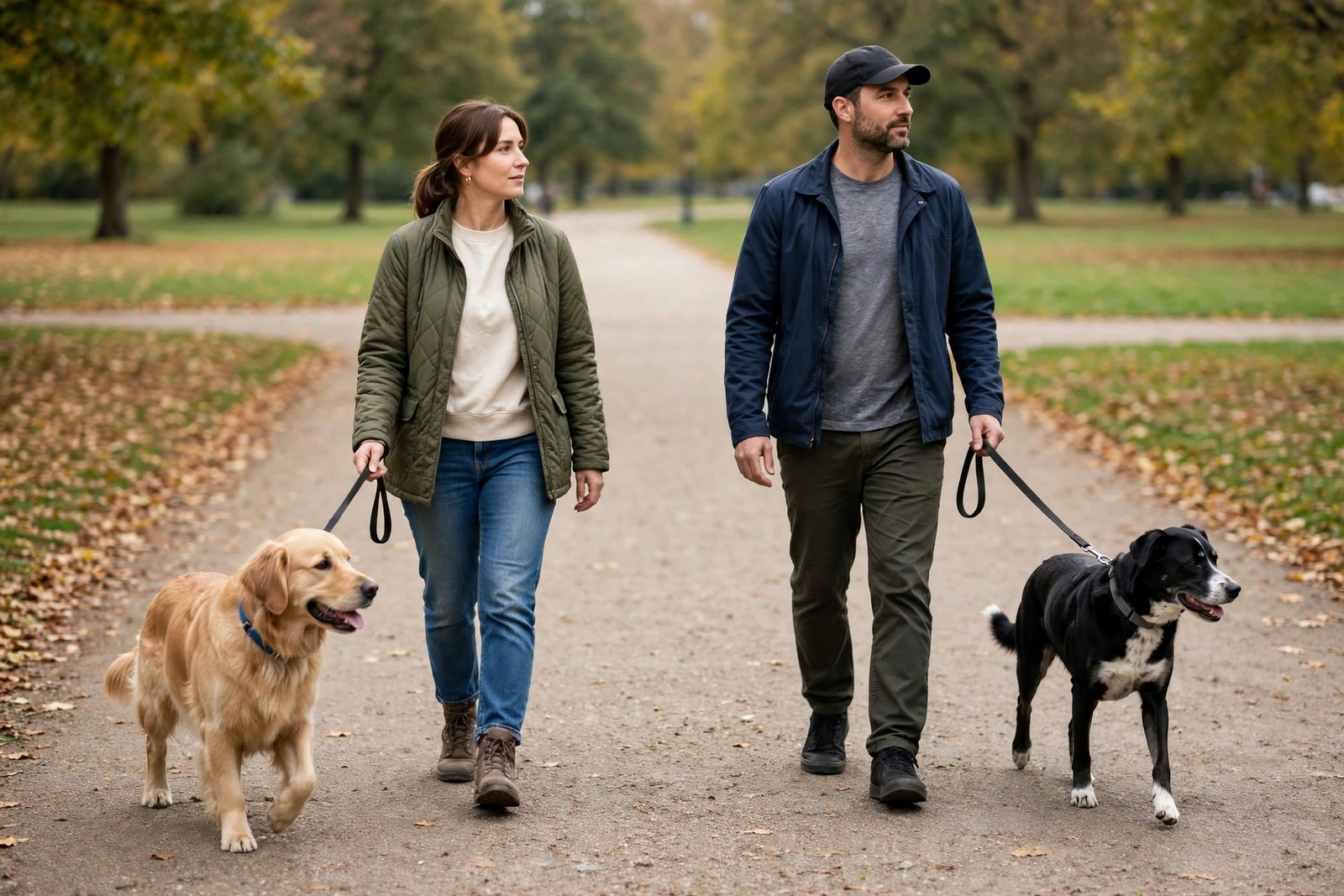
Your existing dog experiences the new arrival as a change to his home, his routines and his access to you, so preparation is mostly about removing the predictable friction points before the dogs ever share a room. The work divides into three parts: set the house up so the dogs are not forced to compete, arrange a first meeting on ground that belongs to neither of them, and run the first days at home as short, supervised, easily ended sessions rather than one long experiment.
Set Up Separate Spaces Before Arrival Day
Feed the dogs separately from the first meal, in different rooms or either side of a closed door or gate, and pick the food bowls up when they finish, because feeding is where tension between two new housemates often shows first. Give each dog his own sleeping space with his own bedding, in an area where he can rest undisturbed by the other; a dog who cannot get uninterrupted sleep in his own home becomes irritable about everything else. Lift away the high-value items your existing dog cares about most — favourite toys, long-lasting chews, bones and anything he has ever guarded from people or other dogs — and reintroduce shared toys later, in the open, with supervision, once the dogs have a history of relaxing together.
Meet on Neutral Ground, Walking in Parallel
Do not introduce the dogs in your front garden or hallway, where your existing dog has every reason to treat the newcomer as an intruder. Meet instead on neutral ground — a quiet street or open space neither dog claims — with one handler per dog. Start by walking in the same direction at a distance where both dogs notice each other but stay loose: soft bodies, easy lead tension, able to look away and sniff. Close the distance gradually while that looseness lasts, walk in parallel for a while, and let the distance open again if either dog stiffens, stares hard, or pulls toward the other. If either dog reacts strongly and cannot settle at any workable distance, stop and seek help from a qualified behaviour professional rather than forcing a home introduction on top of a bad first meeting.
The First Days at Home: Short, Supervised, Separated at Rest
Bring the new dog in after the walk, let him explore while your existing dog is out of the room or behind a gate, then reverse the arrangement, so each dog learns the other's scent in the house without a face-to-face negotiation. Shared time together should start short and supervised, in the roomiest, least cluttered space, with leads trailing only if you can step on one safely and both dogs are calm. End sessions while things are still going well, and separate the dogs for feeding, sleeping and whenever no one can watch them — that separation is not a failure of the introduction, it is what makes unsupervised together-time safe to grant later. Increase shared time as the evidence accumulates: relaxed body language, chosen rest near each other, no guarding around doors, toys or people. Keep your existing dog's own routine — his walk, his feeding order, his time with you — as unchanged as you can, because continuity for him is what makes the newcomer acceptable.
Give Everyone the Same Instructions
Two dogs can be set back by well-meaning inconsistency: one person feeding them together to see if they are friends yet, another letting them share a chew unsupervised. Write the plan down — separate feeding, separate sleeping, supervised sessions, current stage of the introduction — and give each task a name and a time. KinsLe's Care Teams lets you assign the parallel walks, separate feeds and supervised sessions to named helpers in your household, with each task marked complete with a timestamp, so the introduction advances at the pace you set rather than whoever improvises first.