
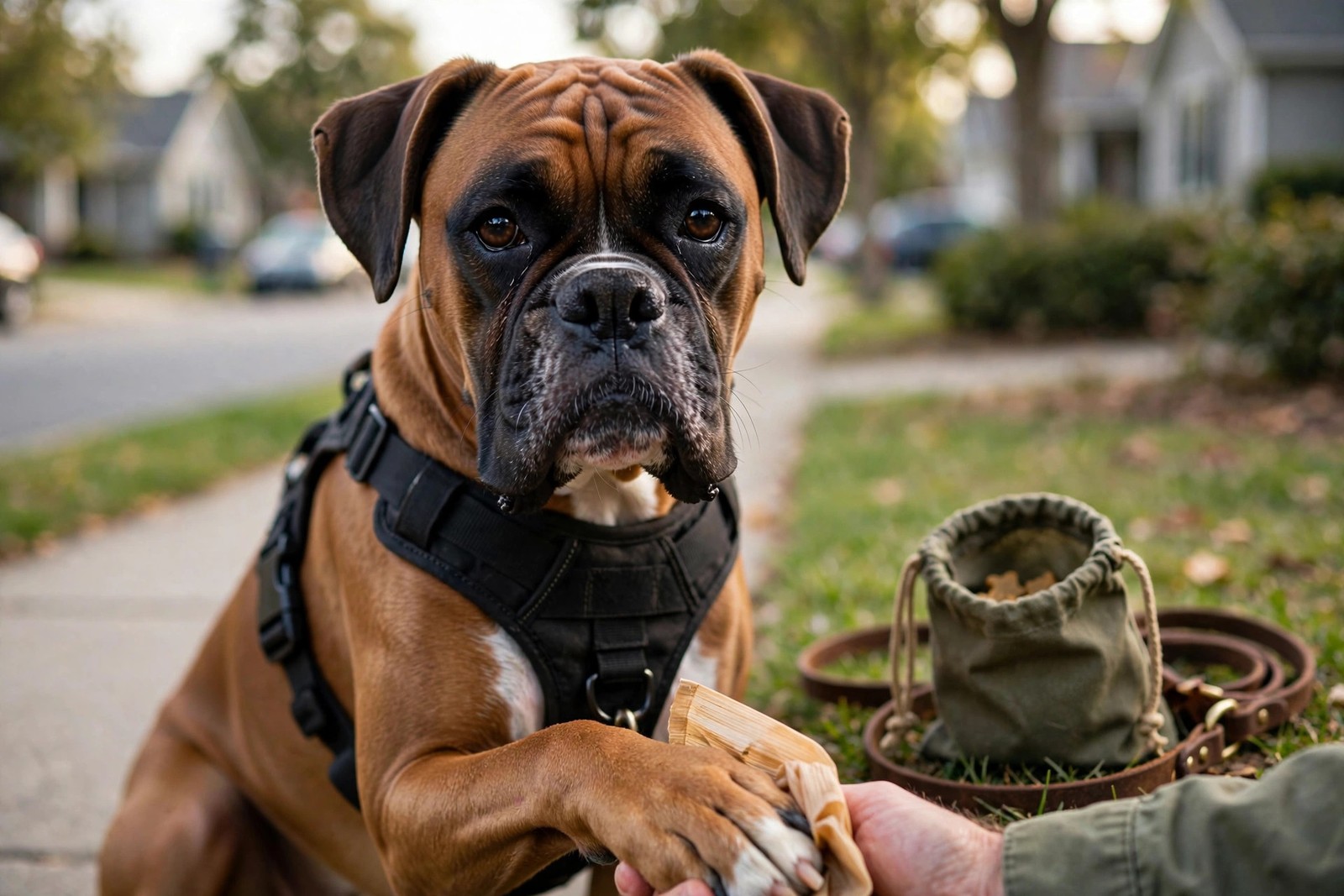
Yes — Boxers are people-oriented dogs who would rather be in a small flat with their humans than in a big house alone. Apartment success with this breed is about managing a large, exuberant, short-muzzled dog in close quarters, not about the dog needing a garden of its own.
Size and Bounce in a Small Space
An adult Boxer is a strong, muscular dog, commonly big enough to clear a coffee table with one wag-powered sweep of its body, and the breed stays playful and puppyish longer than most — many do not fully settle until around three years old. Expect joyful full-body greetings at the door, zoomies that need a clear path, and a dog who believes it is lap-sized. In a flat that means sturdy furniture placement, breakables moved, a non-slip rug where the dog turns and plays, and early training in calm greetings, four paws on the floor, and settling on a mat while you eat or work.
Boxers also snore, pass wind, and drool — strings of slobber after drinking, eating, or excitement are normal for the breed, and they will land on floors, sofas, and work clothes. Owners who find that charming do well; owners who need a pristine flat usually struggle.
Exercise: Plenty, But Watch the Heat
Most adult Boxers need an hour or more of daily activity: a good walk plus play, training games, or a run in a secure space. Without it, the energy comes out indoors as jumping, mouthing, and demolition chewing. With it, most Boxers are contented snoozers for long stretches of the day.
The short muzzle limits cooling, so heat management is a genuine safety issue, not a comfort detail. In summer, walk early and late, avoid midday exertion entirely on hot days, watch for heavy laboured panting, thick drool, or wobbliness as signs to stop, cool down, and call a vet if they do not settle quickly — and never leave a Boxer in a hot car or a sun-baked, airless flat. A top-floor apartment that overheats is a real welfare concern for this breed; check summer temperatures before you commit.
Noise, Neighbours, and Alone Time
Boxers are not usually constant barkers, but they are alert watchdogs who will announce visitors and corridor noises, and their play is thumpy — neighbours below will hear a 30-kilo dog doing zoomies. Ground-floor flats or good rugs help. They are also deeply attached and can become anxious or destructive when left alone too long too soon, so build alone time gradually in minutes before hours, and plan a midday break for full workdays.
Stairs deserve a thought too: fine for a fit adult, but a puppy should not be pounding flights repeatedly while joints develop, and an elderly Boxer with arthritis may one day need the lift you checked existed.
Divide the work plainly if others live with you — who does the morning walk, who plays before dinner, who checks the flat's temperature on hot days. KinsLe's Care Teams assigns and timestamps those Boxer duties for each person, so the exercise, play, and heat checks that keep a big, joyful dog calm in a small home happen on schedule every day.