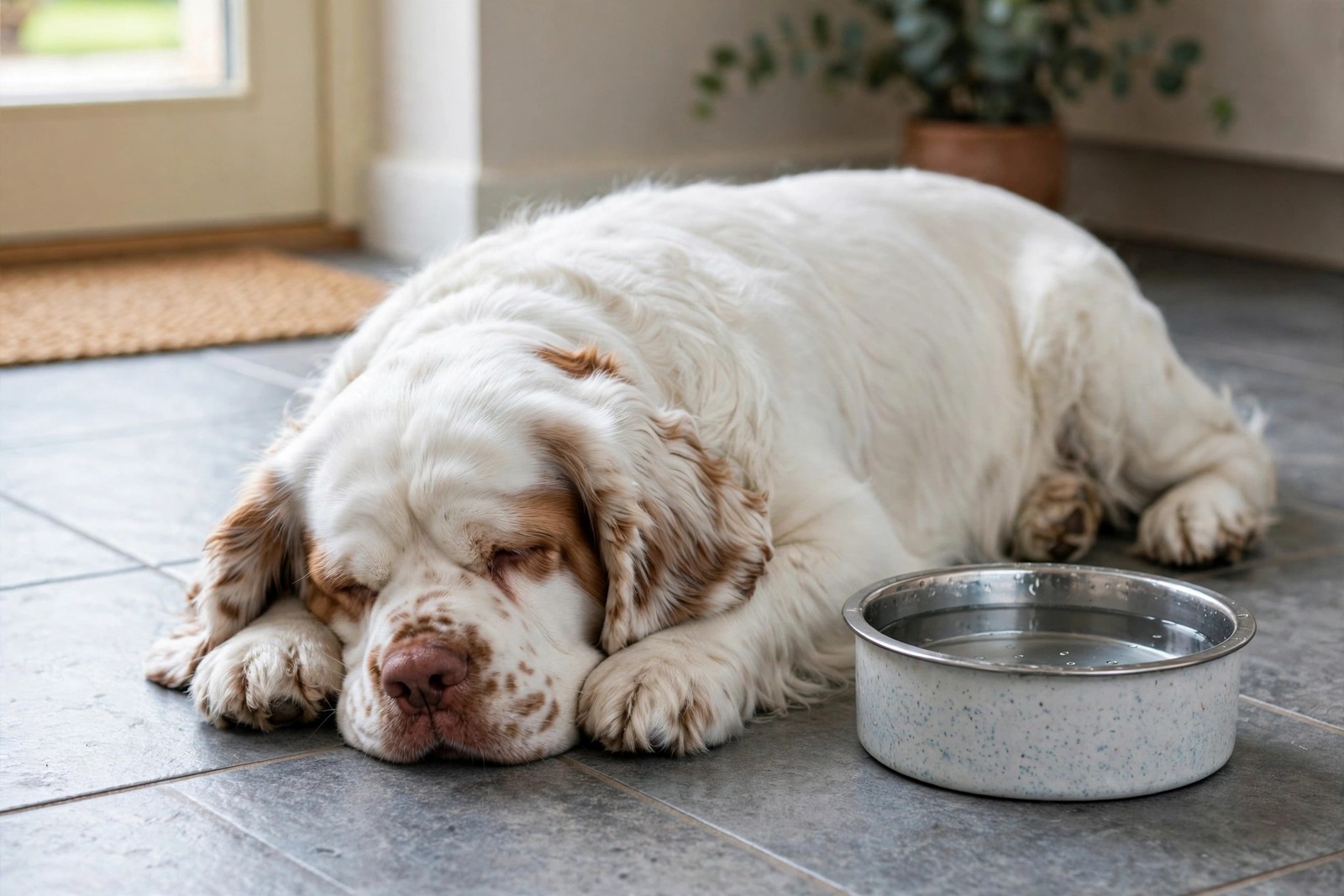
A spaniel that would rather snooze
Yes, a Clumber Spaniel can generally be left alone for a normal workday, and of all the spaniels this heavy, unhurried breed may be the most naturally suited to it. Clumbers are the largest of the spaniels, built low and solid, and indoors most adults are champion nappers who choose a cool floor, sigh deeply, and switch off. That placid temperament means a Clumber is less likely than a springer to spend your absence bouncing off the walls. Suited, though, is not the same as effortless, and the details below decide whether your particular dog thrives or quietly frets.
The morning a Clumber actually needs
Do not mistake a slow dog for a dog who needs nothing. A Clumber's walk should be unhurried but substantial, with plenty of permission to work that excellent nose along hedgerows and verges, because scent is this breed's great pleasure. A plod around the block on a tight lead leaves the body rested and the mind still hungry. After the walk, feed, allow a last visit to the garden, and let the dog choose its sleeping place. Expect drool on the floor and a fine layer of white hair on the furniture; a Clumber resting contentedly is not a tidy housemate.
The midday question
A healthy adult Clumber can usually manage a standard day, but a midday toilet break is still wise whenever your hours stretch, and it becomes important as the dog ages and its bladder and joints change the equation. Clumbers gain weight easily, and a dog alone with nothing to do except wait near the kitchen is a dog thinking about food, so keep bins secured and counters clear. A visitor who offers a gentle garden break and ten minutes of company gives the afternoon a shape, even if the dog simply returns to sleep afterwards.
When a Clumber is not coping
Although they hide it well, Clumbers are devoted, soft-natured dogs, and one who is lonely may become withdrawn rather than destructive, which is easier to miss. Warning signs include a dog who stops greeting you normally, loses interest in food or walks, or begins barking or toileting indoors after being reliable. A bored young Clumber can also chew impressively for such a sleepy breed. If the pattern changes, shorten the alone time, add company at midday, and ask your vet to rule out pain or other health causes, since heaviness and stiffness can masquerade as laziness in this breed.
Youngsters, old dogs, and hot days
Clumber puppies need the usual slow build: frequent toilet trips, short absences, and no expectation of a full day until maturity. Senior Clumbers deserve the opposite adjustment, with softer bedding for heavy joints and more chances to go out. On warm days, remember this is a big, thick-coated dog who feels the heat, so the room left for the day should stay cool and water should be plentiful and fresh.
A routine spread across several family members only works if everyone follows the same version of it, and KinsLe Family Sharing puts your Clumber's profile and care information in front of the whole household, so walks, meals, and midday checks line up without guesswork.