
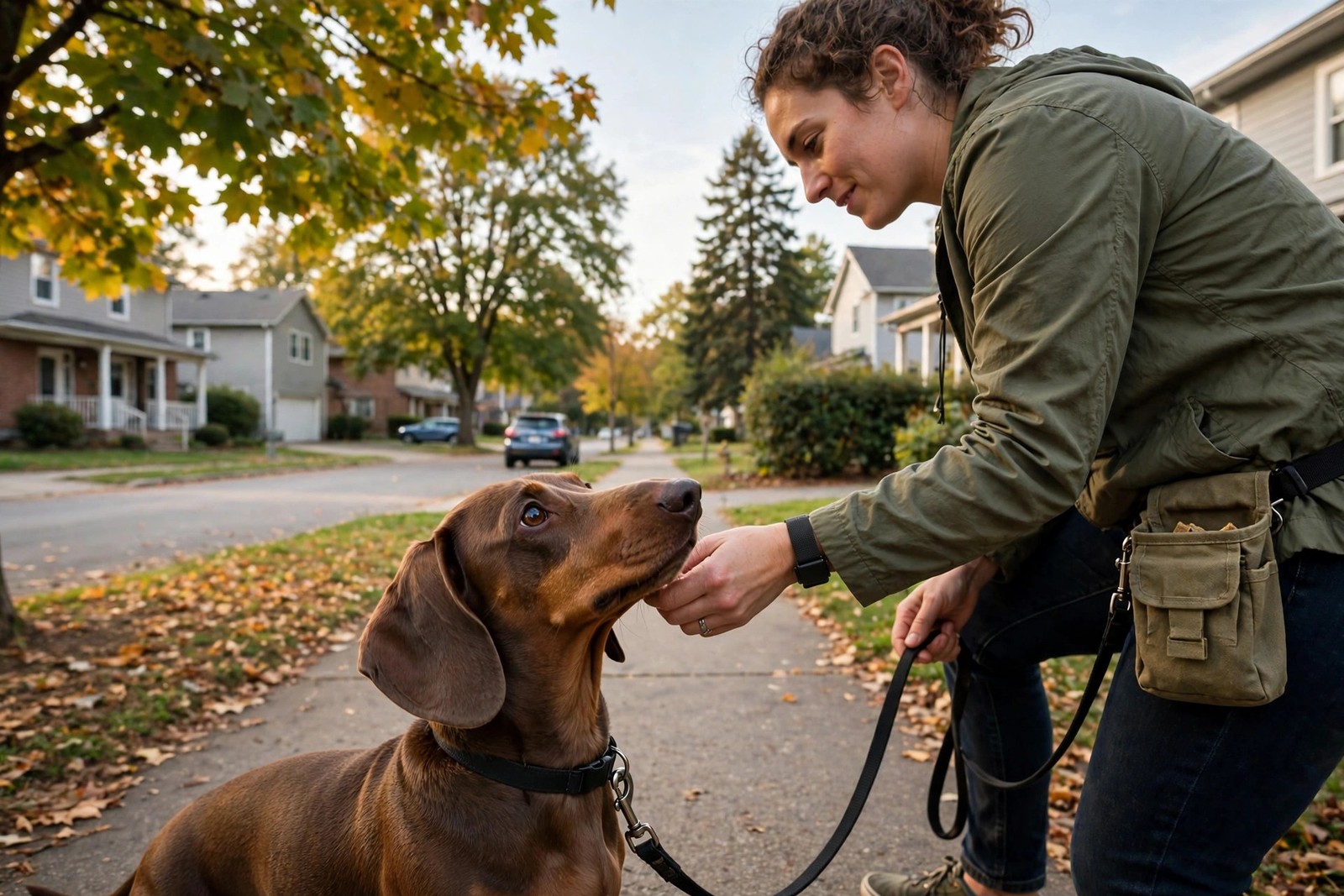
Yes — a Dachshund's size and moderate exercise needs fit apartment living well, and the breed is famously devoted to its household. Two things need planning from the start, though: a bark far bigger than the dog, and a long back that apartment buildings can either protect or punish.
A Big Bark in a Small Dog
Dachshunds were bred to go underground after badgers and announce themselves, and they retain a deep, carrying bark plus a watchdog's instinct to use it. In a flat, expect alerts at corridor footsteps, the lift, neighbours' doors, and sounds from the street — and expect neighbours to hear it. You will not train the instinct away, but you can shrink it: socialise the puppy widely so ordinary noises stay ordinary, reward the quiet pause after an alert instead of shouting over it, keep the dog's bed away from the front door, and make sure boredom is not the trigger. A Dachshund with a worked nose and tired legs barks at far less than one who has spent the day listening at the door.
The Back Rules: Stairs, Jumps, and Weight
This is the section that matters most. Dachshunds are prone to intervertebral disc disease, where a disc in the long spine bulges or ruptures; it is the breed's defining health risk, and lifestyle genuinely influences it. Three apartment factors are in your control.
First, stairs. A fit adult Dachshund can manage some stairs, but repeated flights several times a day, every day, add up — and puppies, seniors, and any dog who has had a back episode should be carried on stairs. A building with a lift, or a ground-floor flat, is a real welfare plus for this breed, so weigh it heavily when choosing where to live.
Second, jumping. Discourage leaping off sofas and beds with ramps or steps the dog actually uses, and a rule everyone follows about not letting the dog launch itself at greeting time.
Third, weight. Extra kilos hang directly on that long spine. Keep a Dachshund visibly slim — ribs felt easily under a thin cover — measure meals, and go carefully with treats.
Exercise and the Hunting Brain
Most adults need around an hour a day of walking and sniffing, split into two or three outings. Dachshunds are scent hounds in miniature: let them sniff, play digging games in a designated box or blanket pile, and use a long line in open spaces, because a Dachshund on a scent may not come back when called. Toilet trips mean four or more building exits daily, in all weather — this breed can be stubborn about rain, so a coat and a routine help.
Know the back-warning signs: reluctance to jump or climb, a hunched posture, yelping when picked up, wobbliness in the back legs, or sudden quietness. Those mean a vet promptly, not rest and hope — early assessment gives the best options.
In a shared home, agree the back rules out loud: who carries on stairs, the ramp routine, and measured meals. KinsLe's Care Teams assigns walks, weight checks, and feeding duties with timestamps, so the whole household protects that long back the same way, every day.