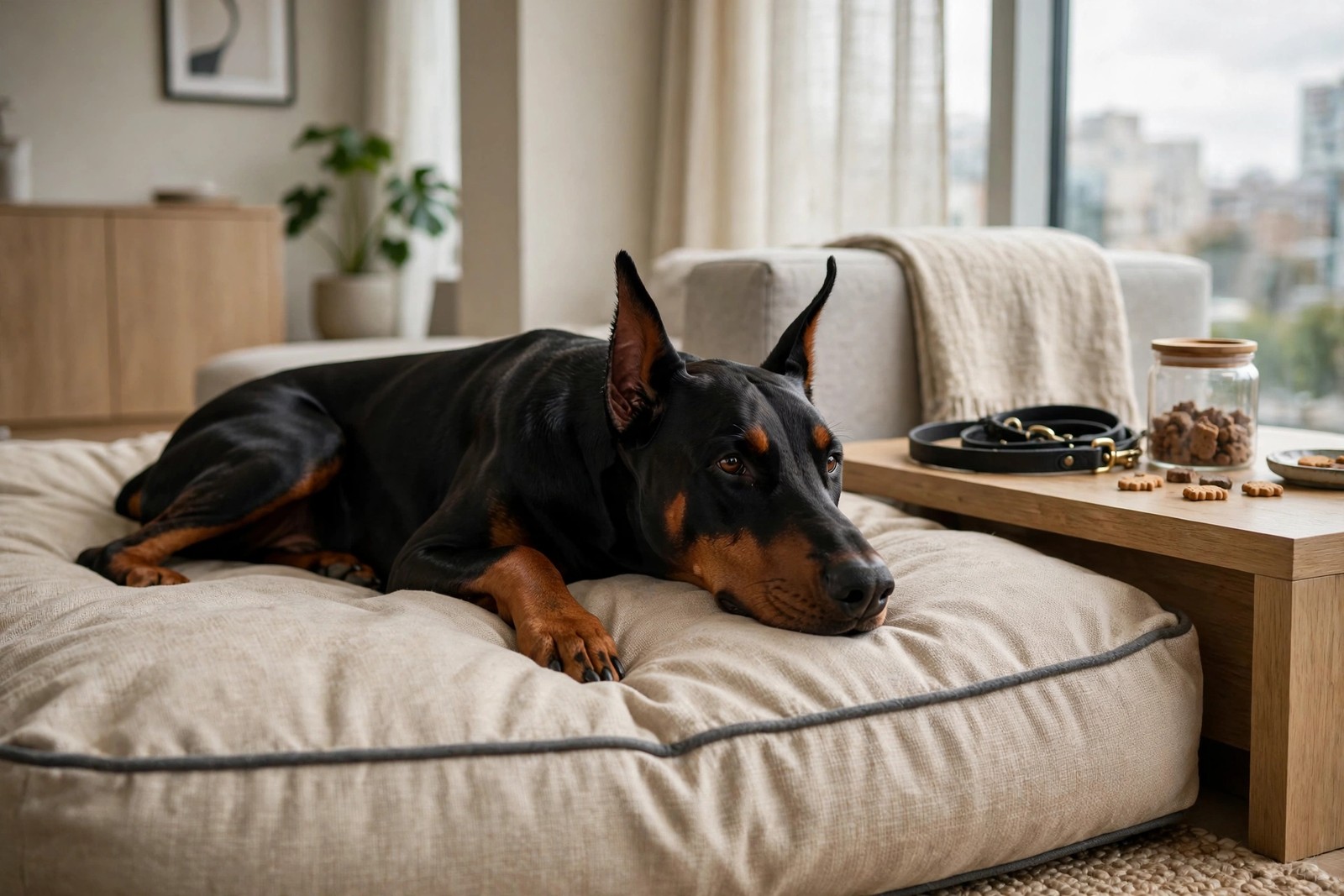
A Doberman in an apartment is possible, but it is an advanced project rather than a casual fit. Indoors, a well-exercised Doberman is often calm, clean, and devoted, happy to fold itself onto a dog bed near its person. The apartment itself is rarely the limiting factor. The limits are exercise, paperwork, and the reactions of other people in shared spaces.
Check permission before anything else
Many leases, building rules, and home insurance policies restrict Dobermans by name, regardless of an individual dog's temperament. Get written confirmation from your landlord and insurer that this breed, at its adult weight, is permitted before you bring a puppy home or sign for a rescue. Being forced to rehome a bonded Doberman because a policy excluded the breed is a foreseeable and avoidable heartbreak. Also confirm weight limits — an adult Doberman will exceed the small-dog limits written into many rental agreements.
One and a half to two hours, every day
Dobermans are athletic working dogs. A realistic day combines long walks, some running or hiking where safe, and structured mental work: obedience training, scent games, or a dog sport. Split it across the day — a substantial morning session before work, a midday walk if you are out, and training or play in the evening. A Doberman who gets two short toilet walks will not be a calm flatmate; expect pacing, whining, chewing furniture, and reactivity at the door and windows. Most apartment Doberman owners rely on a professional walker, dog sport classes, or a very active personal routine, and honest self-assessment here matters more than enthusiasm.
Shared spaces and other residents
You will meet neighbours, children, and small dogs in lifts and corridors at close quarters, with a large dog that some people find intimidating. Train for that environment specifically: a reliable sit and focus cue in the lift, loose-lead walking past people without lunging to greet, a muzzle trained positively if your building or local rules require one, and the discipline to wait for the next lift rather than crowding into a full one. Socialise a puppy broadly and calmly so the adult dog treats building life as background noise.
Health and daily logistics
Dobermans need measured feeding and weight monitoring, and owners should ask their vet what health screening and monitoring they recommend for their individual dog, because the breed has known inherited concerns. Practically, budget floor space for a genuinely large bed and crate if you use one, and plan frequent toilet trips for a puppy in a high-rise, which means many lift journeys a day in the first months.
KinsLe's Pet Services Directory helps by connecting you with local trainers, walkers, and other pet services, so you can build the professional support network a Doberman in a flat genuinely needs.