
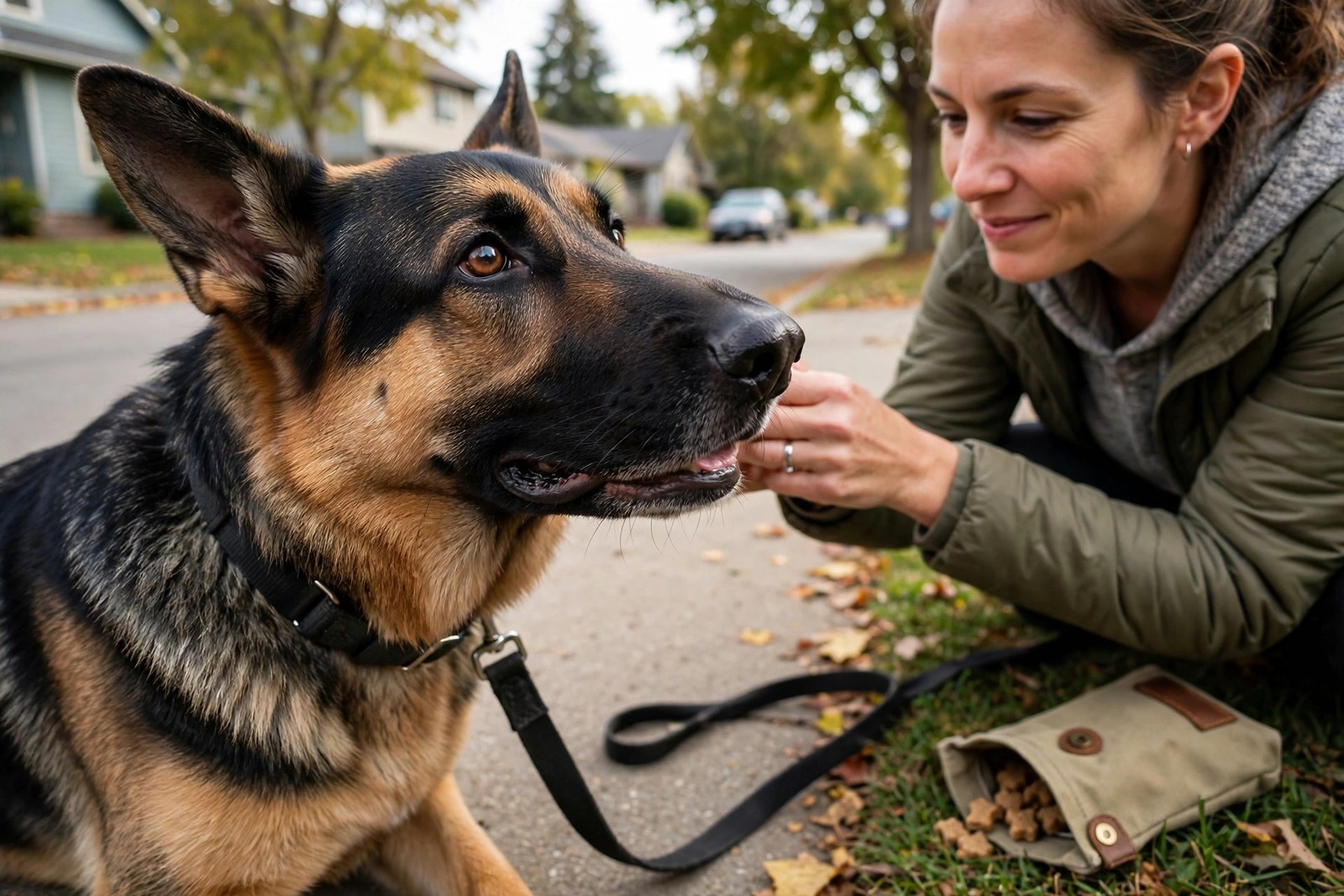
German Shepherds are among the most trainable dogs in the world — and that is precisely why they are a difficult first dog. Trainability means the dog learns everything fast, including the lessons you did not mean to teach. In experienced hands this breed is extraordinary. In beginner hands, its intelligence, size, strength, and guarding instincts combine into problems that grow as fast as the puppy does.
The Ability Is Not the Issue
A Shepherd puppy typically masters basic cues in days, reads its handler's patterns within weeks, and craves structured work — tracking games, obedience, scent puzzles, anything with a job attached. This is the breed selected for police, military, search-and-rescue, and guide work, and it brings that work ethic home. Training sessions are rarely the hard part; a motivated first-time owner using rewards and clear cues will see rapid, satisfying progress on sit, recall, heelwork foundations, and household routines.
What Actually Defeats Beginners
The workload around the training is the real test. A young Shepherd needs roughly one and a half to two hours a day of combined exercise, training, and mental work, every day, or the intelligence turns inward: barking, fence-running, chewing through boredom, and rehearsing its own games. Socialisation is time-critical and unforgiving — Shepherds have a natural suspicion of strangers and a guarding streak, and a puppy not carefully, positively exposed to many people, dogs, places, and sounds in its first months can grow into an adolescent that barks and lunges at visitors and other dogs. Correcting reactivity in a 35-kilogram dog that you cannot physically hold is a professional's job, and it is the most common way first-time Shepherd ownership goes wrong.
Strength is the other multiplier. A forty-kilo adolescent pulling toward another dog, a Shepherd that has learned doors mean excitement, a guarding dog at the front gate — none of these forgive the vague handling, inconsistent rules, and skipped weeks that a smaller, softer breed would absorb. Every adult in the household must enforce identical rules from day one.
Who Succeeds as a First-Time Shepherd Owner
The beginners who thrive with this breed share a profile: they are active daily, they enrol in classes before problems appear and keep going past the puppy course, they treat socialisation as a scheduled project, and they honestly want a dog-centred lifestyle for the next decade or more. If your plan is a well-behaved family pet with moderate effort, choose a breed built for that — you will both be happier. If the Shepherd itself is the point, budget time, money for ongoing training, and humility about asking for help early.
KinsLe's Pet Services Directory helps first-time Shepherd owners find trainers and structured socialisation classes with genuine large-breed experience in their area, so the dog's formidable learning speed is aimed by someone who has shaped it before.