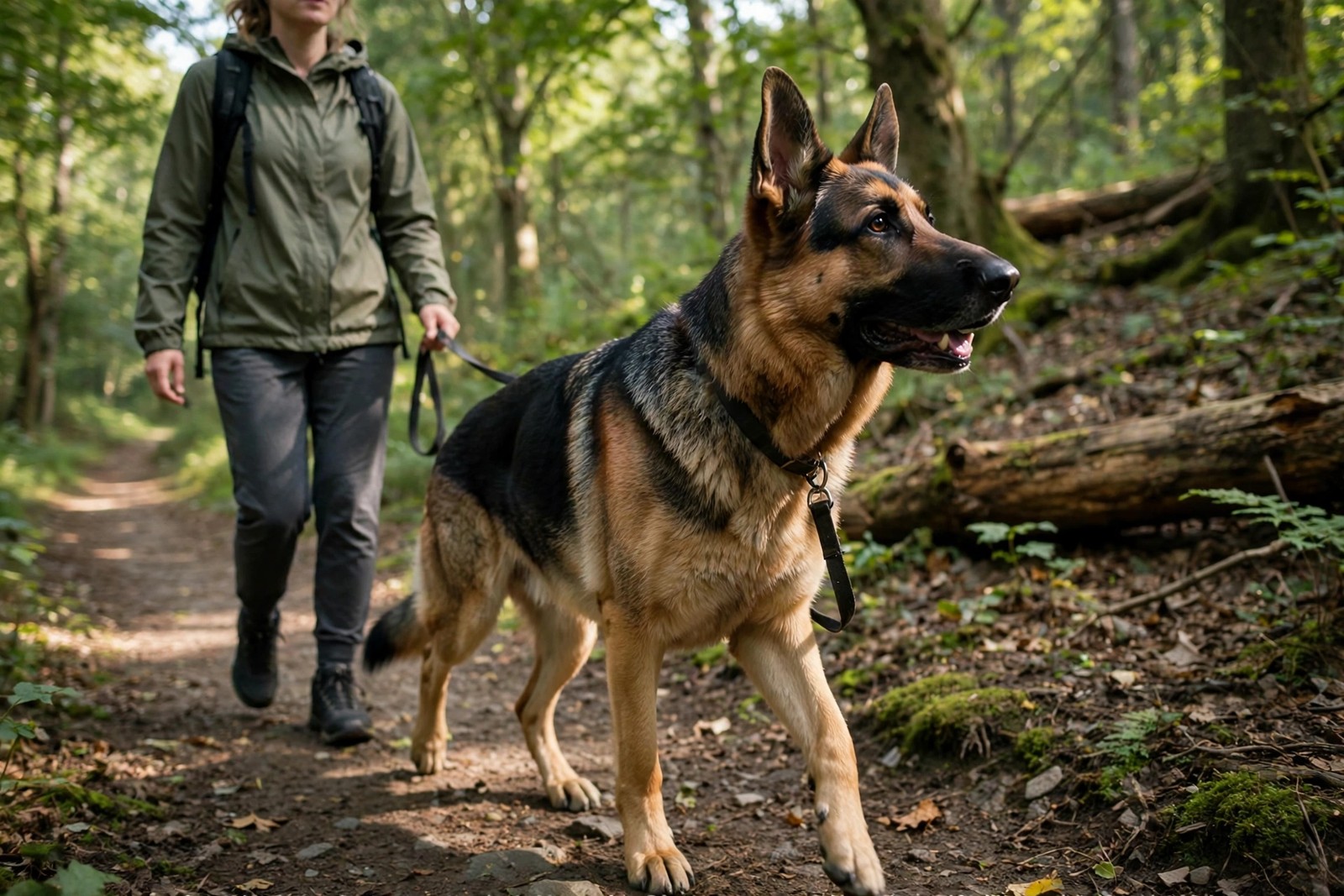
German Shepherds usually live 9 to 13 years. That is a wide range for a large working breed, and where an individual dog lands within it depends heavily on joint health, weight, breeding background and how early mobility changes are acted on. A Shepherd is a serious, athletic dog who matures into a powerful adult and then, often quite suddenly in the owner's eyes, into a senior whose back end needs managing. Planning for the whole arc, rather than just the magnificent middle years, is how owners support the upper end of 9 to 13 years.
Hips, Elbows and the Ageing Back End
Hip and elbow problems occur in the breed, so ask any breeder what joint evaluation both parents have had and expect documented results. Across adult life, keep your Shepherd lean, because a large dog carrying spare weight loads sore joints with every step, and build exercise steadily rather than in intense weekend bursts after quiet weeks. From middle age, watch for the early mobility pattern: stiffness after rest that eases with movement, reluctance on stairs, lagging on walks, scuffed back nails or a swaying hind gait. Report weakness, pain or rapid change to a vet promptly, and discuss exercise adjustment, home grip underfoot and pain management options at that visit rather than simply retiring your dog from activity, since muscle lost is hard to rebuild in an older large dog.
Bloat: The Emergency Every Owner Must Know
German Shepherds are a deep-chested breed, and bloat, where the stomach fills with gas and can twist, is a genuine emergency risk. Learn the signs cold: a swollen or tight abdomen, restlessness and pacing, drooling, repeated attempts to vomit that bring little up, and rapid breathing or distress. Those signs mean an immediate emergency vet trip, not monitoring at home. Ask your vet about feeding routines that may reduce risk for your dog, such as measured meals and calm around mealtimes, and raise the topic proactively at a routine visit rather than first hearing about it during a crisis. Knowing your emergency clinic's location before you ever need it is part of Shepherd ownership.
Mind, Work and Senior Years
A Shepherd's brain needs work across the whole lifespan: training, scent games and purposeful routines support behaviour and keep an ageing dog engaged when physical intensity must reduce. Keep teeth, ears and coat in the routine checks, weigh your dog regularly, and from about seven onward treat vet visits as senior reviews covering joints, weight, lumps, appetite and stamina. Note changes in a dated record, because gradual hind-end decline is easy to normalise week by week and the written trend is what helps a vet judge pace and options.
Joint scores, weight trends, mobility notes and vet findings spread across 9 to 13 years are most useful when a vet can read them as one continuous story. KinsLe's Pet Passport keeps your German Shepherd's health history, screening results and visit notes in a single packet, so senior decisions rest on the full record.