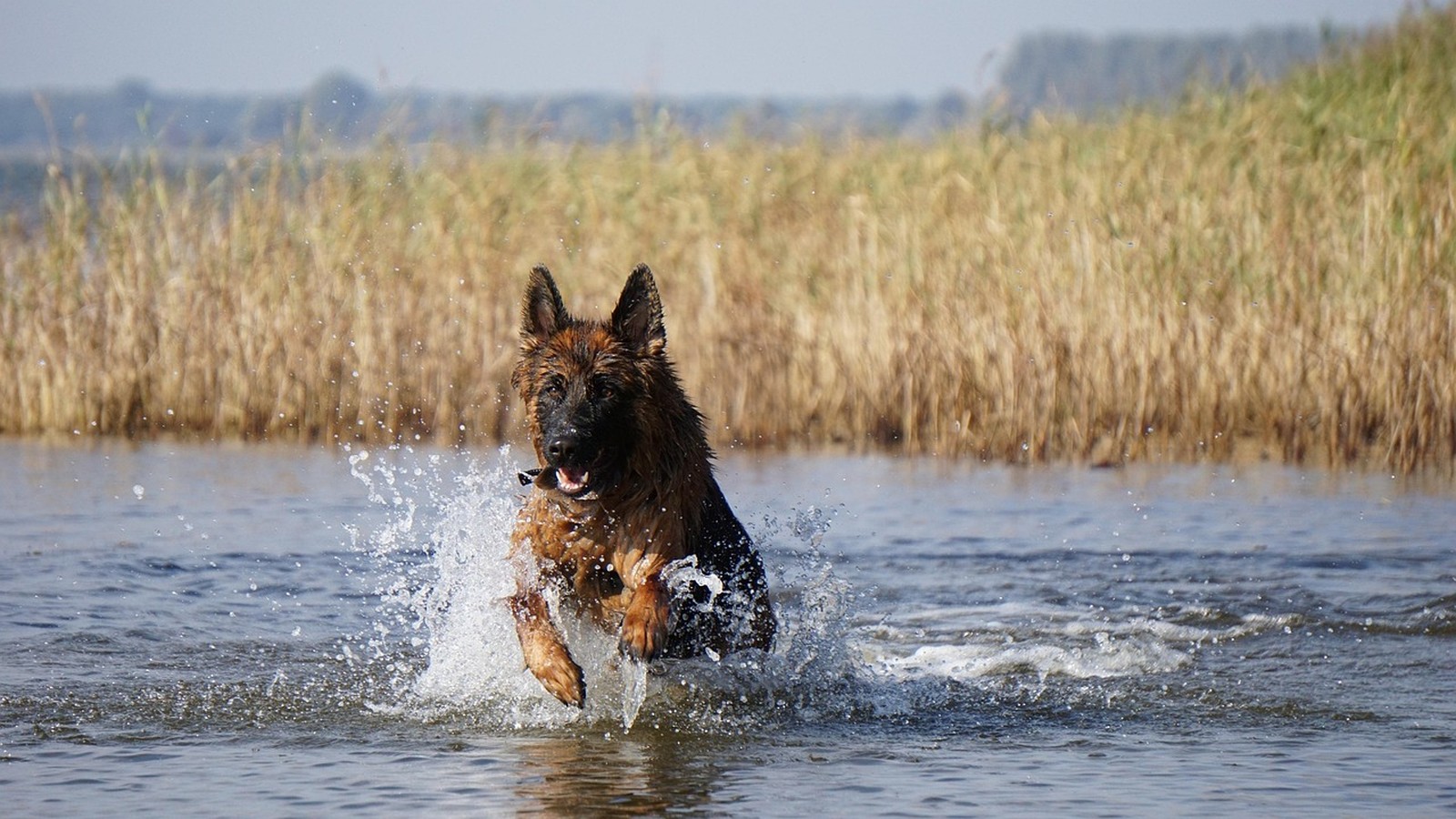
Big dog, fast — judgement, slower
A German Shepherd puppy grows at a pace that surprises most first-time owners. The small pup carried home becomes a strong, tall adolescent within months, yet the brain inside that impressive body is still immature, impulsive, and easily overexcited. Much of your first year is spent bridging that gap: giving a powerful dog the manners, confidence, and self-control to match its size before habits harden.
This breed was developed for demanding work alongside people, and that heritage shows in year one. Your Shepherd will watch the household closely, learn routines after very few repetitions, and bond intensely, often choosing one person as a particular favourite while remaining devoted to the whole family.
Training and socialisation carry the year
With a German Shepherd, early training is not enrichment; it is the foundation everything else stands on. Short, frequent sessions on recall, loose-lead walking, settling on a mat, and greeting people politely pay off enormously, because rehearsing good behaviour with a young puppy is far easier than correcting a strong adolescent who has practised pulling, barking at visitors, or lunging at other dogs.
Socialisation needs equal weight. Shepherds are naturally watchful, and a puppy who rarely meets strangers, children, traffic, or unfamiliar dogs can grow wary and reactive. Aim for calm, positive exposure rather than overwhelming crowds: watch the world from a comfortable distance, reward relaxed attention, and let your puppy approach new experiences at a pace it can handle. Guarding instincts you never trained will appear on their own; confidence and neutrality are the parts you must build.
Exercise, work, and the adolescent storm
Daily walks alone rarely satisfy a young Shepherd. This breed needs a job for its mind as much as movement for its body, so scatter feeding, scent games, training woven into walks, and safe objects to chew will shape your days. A bored adolescent German Shepherd is a formidable home renovator, capable of digging, barking, and dismantling with real commitment.
Growth plates are still developing through much of this year, so exercise should be steady rather than punishing. Repeated jumping, long runs on hard ground, and forced endurance belong later; sniffy walks, play in short sessions, and mental challenges build the dog without overloading young joints.
Coat, stomach, and Shepherd-specific upkeep
Prepare for hair. German Shepherds carry a dense double coat and shed continuously, with heavier seasonal blows that fill brushes and corners alike. Weekly brushing becomes twice-weekly at those times, and your vacuum becomes a close companion. Bathing is occasional; brushing and nail care are not.
Many Shepherds have sensitive digestion, so food changes should be gradual and treats kept simple while you learn what suits your puppy. Ears need routine checks, and because this breed is prone to hip and elbow problems as it matures, keeping your puppy lean and avoiding over-exercise in year one is genuine preventative care, not fussiness. Limping after rest, bunny-hopping at a run, or reluctance to climb into the car deserve a veterinary conversation rather than a wait-and-see month.
What the year asks of you
Consistency across the household matters enormously. A Shepherd learns exactly which person allows sofa-sleeping, lead-pulling, or barking at the window, so agree the rules once and hold them kindly and together. By year's end, owners who invested early usually have a loyal, capable dog whose intensity is channelled rather than chaotic. All of that work deserves a proper record, and KinsLe supports it with Transferrable Profiles, so a German Shepherd's training milestones, health notes, and daily routine can move with the profile to a future owner without anything important being lost.