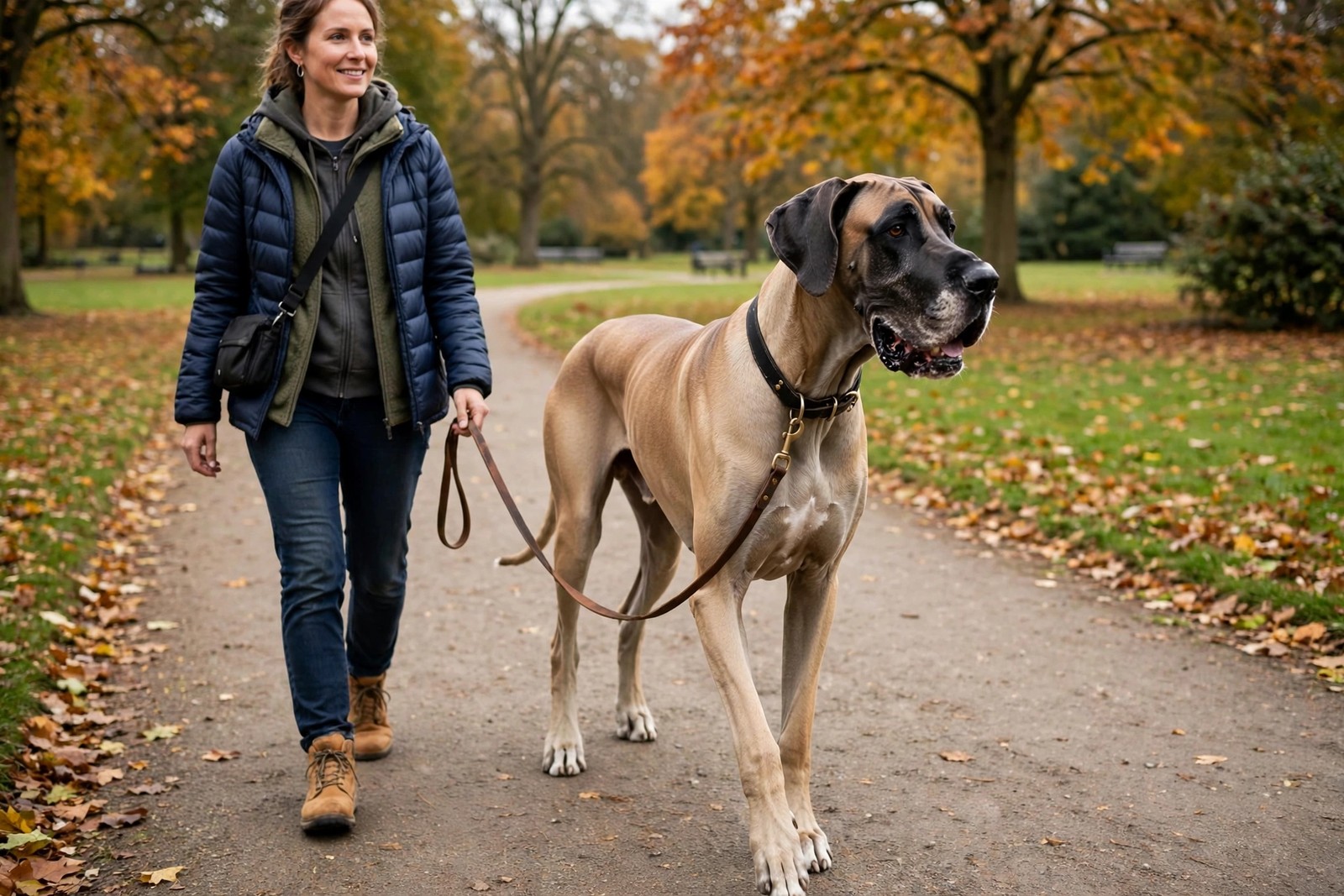
Great Danes usually live 7 to 10 years. That short span follows from scale: a heart, joints and stomach built to giant proportions work under loads that smaller dogs never face. A Dane is therefore a commitment measured differently from other breeds. Seven to 10 good years means senior planning starts early, growth must be managed carefully, and every adult in the household needs to know the breed's emergency signs before the puppy comes home, not after the first scare.
Bloat: The First Thing Every Dane Household Learns
Great Danes are among the deep-chested breeds at real risk of bloat, where the stomach fills with gas and may twist. Learn the signs until they are automatic: a swollen or drum-tight abdomen, restlessness and pacing, drooling, repeated retching that produces little, and signs of pain or rapid breathing. Any of those means an emergency vet journey immediately, at any hour, because bloat is time-critical and cannot be assessed at home. Discuss prevention with your vet at routine visits, including meal size and frequency, calm behaviour around feeding and exercise timing near meals, and whether any preventive procedure is appropriate for your individual dog. Make sure every person who feeds or walks your Dane knows the signs and your emergency clinic's address.
Heart, Joints and the Giant Frame
Heart conditions occur in the breed and can progress quietly in a dog who still greets you enthusiastically, so ask your vet about heart screening for adult Danes and report reduced stamina, coughing, fainting or a racing or irregular-feeling heartbeat promptly. Joints and bones carry enormous weight: keep your Dane lean throughout life, since spare kilograms on a giant frame multiply joint strain, and favour steady, moderate exercise over explosive running or repeated jumping. Growth deserves special care in the first two years, when a Dane puppy is building a very large skeleton quickly: feed as your vet advises for controlled growth, avoid over-supplementing, limit forced long-distance exercise and rough play on hard ground while bones mature, and keep up regular vet checks through the growth period.
Senior Planning Starts Early
From about five or six, treat your Dane as an older dog: senior vet reviews covering heart, joints, weight, lumps and appetite, non-slip flooring where a heavy dog must turn or rise, a supportive bed large enough for the full body, and ramps or steps for the car rather than jumps. Watch for slower rising, reluctance on walks or changes in breathing and report them early, since a giant dog who loses mobility is a serious nursing challenge that planning genuinely eases. Gentle daily movement, company and routine keep an ageing Dane comfortable and engaged, and pain or stiffness should be discussed with a vet rather than accepted silently.
With a giant dog, a feeding mistake or a missed emergency sign by one carer can be the difference between a scare and a tragedy, so shared knowledge is protection. KinsLe's Care Teams lets your household record your Great Dane's meal routine, exercise limits and bloat warning signs as shared duties, ensuring whoever feeds or walks your dog follows the same plan.