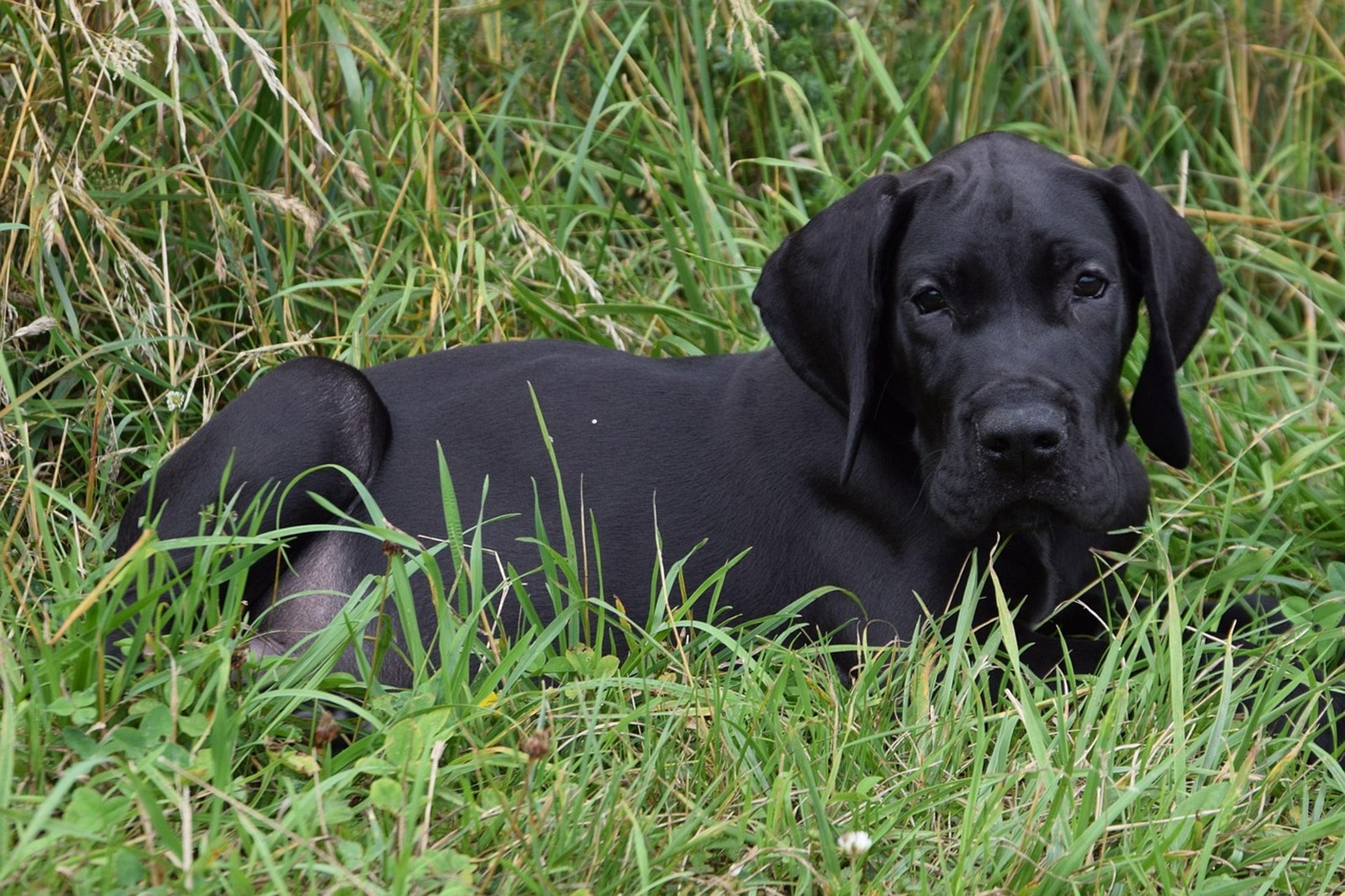
Growing enormous, staying a puppy
Few first years are as physically dramatic as a Great Dane's. Growth is rapid and uneven, with gangly phases where legs, paws, and judgement all seem mismatched, and your puppy may pass through clumsy stages of tripping over its own feet and misjudging doorways. Despite the size, this is still a baby: joints are forming, bones are lengthening, and the dog towering over your sofa may be frightened by a plastic bag in the wind.
That mismatch drives most first-year decisions. Everything that will be hard with a fully grown giant — pulling on the lead, jumping at visitors, refusing the car, fearing the vet's table — must be taught kindly and early, while you can still guide the dog's body as easily as its behaviour.
Feeding for slow growth, not fast
With a Dane puppy, bigger is not better. Overfeeding and overly rich diets push growth faster than developing joints and bones can support, so measured meals of an appropriate large-breed puppy diet, regular weigh-ins, and a lean, rib-feelable body condition matter more here than in almost any other breed. Your veterinarian becomes a genuine growth partner this year, and feeding questions belong to them rather than to the bag's most generous suggestion.
Exercise follows the same restraint. Short, frequent play and gentle walks build coordination, while forced running, repetitive stair climbing, and high jumping wait until growth plates close. Many Dane owners also learn early about stomach torsion, a breed emergency: a restless dog pacing, drooling, and trying unsuccessfully to vomit, with a swelling abdomen, needs an emergency veterinarian immediately — minutes genuinely matter, and no home remedy should delay the drive.
Living with a gentle giant indoors
Danes are famously affectionate, often leaning their full weight against favourite people and attempting to sit on laps that cannot possibly hold them. House life is usually calm once exercise and company needs are met, but the tail clears coffee tables, the counter is within easy browsing height, and a happy, wagging Dane can bruise shins and scatter ornaments. Puppy-proofing happens at a higher altitude than with any other breed: food, bins, and breakables live behind doors and above a steadily rising reach.
Training should be warm, brief, and absolutely consistent. Danes are sensitive and respond poorly to harsh correction, shutting down rather than learning. Settle practice, polite greetings, calm behaviour around food, and comfort with handling paws, ears, and mouth all pay lifelong dividends, because a Dane who resists nail trims or ear checks is a genuine logistical problem.
Costs, coat, and the practical list
The short coat is mercifully easy — a weekly brush and occasional bath, though the bath itself is an event and many owners use walk-in facilities. Drool is part of the agreement, especially after drinking. The real practical weight is cost and space: food in large-breed quantities, beds and crates sized for giants, vehicles that fit the dog comfortably, and routine veterinary care priced by body weight for many things. None of this is a reason to avoid the breed, but none of it should surprise you in month three.
Socialisation deserves a special note: because your Dane will be stared at everywhere, early positive exposure to crowds, children, traffic, and handling by strangers protects you both. A confident giant is a pleasure in public; a nervous one is a great deal of frightened dog.
A short year that shapes a gentle adult
Owners often say the Dane puppy year feels precious partly because this breed's companionship is so whole-hearted. Record the growth curve, the vet partnership, and the routines that keep your giant calm, and KinsLe helps with Transferrable Profiles, which hold a Great Dane's complete first-year profile ready to transfer whole should a new owner ever take over.