
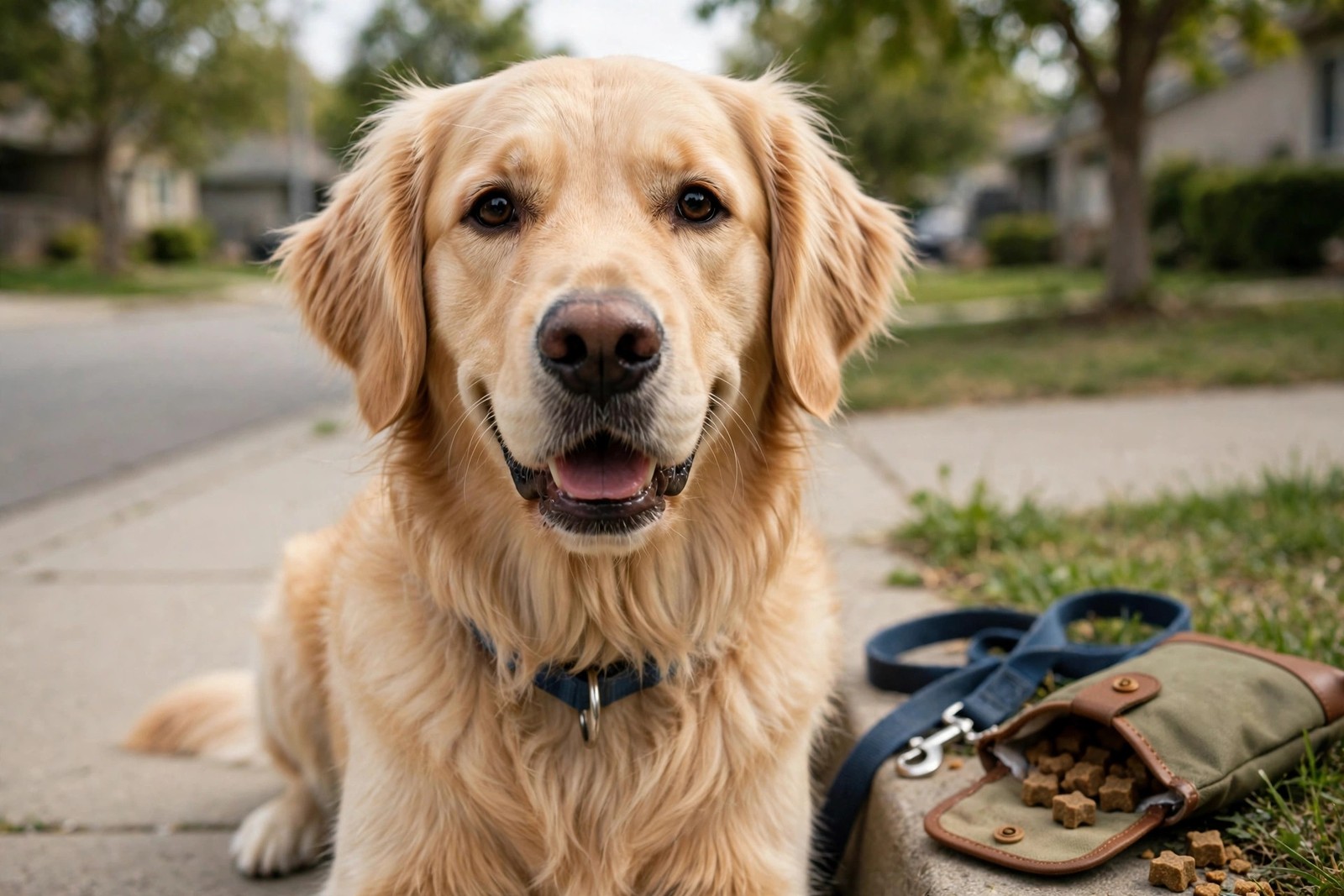
Yes — Goldens are one of the more adaptable large breeds, friendly with neighbours, generally moderate barkers, and happy wherever their people are. Apartment life with a Golden succeeds or fails on three practical things: exercise, shedding, and surviving adolescence.
One to Two Hours Is Not Optional
Most adult Goldens need one to two hours a day of activity: walks, free running in a secure place, swimming if you have access to safe water, fetch, and training games. Puppies need far less at a time, built up gradually to protect growing joints, but adolescent Goldens — from about six months to two years — often need the most management of all. This is the phase owners underestimate. A young Golden is a large, strong, mouthy dog who greets the world at full enthusiasm, jumps up, grabs sleeves, and chews when bored. In a flat, an under-exercised adolescent chews door frames and furniture, practises gymnastics on the sofa, and turns every corridor meeting into a wrestling match.
Tired properly, the same dog is the breed's famous self: soft-mouthed, settled, and asleep on your feet. Structure the day so exercise comes before you need calm — a real morning outing before work, not after the damage.
Shedding in a Small Space
Goldens shed constantly and heavily, with a thick undercoat that releases in drifts, more in spring and autumn. In an apartment there is nowhere for the hair to hide: it will be on clothes, bedding, and guests. A thorough brush two or three times a week, more during coat blows, keeps most of it in the bin instead of the flat, and a washable throw where the dog sleeps saves the sofa. If loose hair genuinely bothers you, this is the wrong breed regardless of housing — the shedding is not a flaw to fix, it is the dog.
Mud is the other apartment reality: a breed that loves water and dirt, living in a home with no utility room, means a towel and paw-wipe station by the door from day one.
Training Priorities for Close Quarters
Four things pay off most in a building: a calm greeting routine so visitors and neighbours are not mugged, loose-lead walking for stairwells and lifts, a reliable settle on a mat while you work or eat, and chew management — legal chew items always available, valuables out of reach, and supervision until the chewing phase passes. Socialise early with the building itself: lifts, stairwell echoes, pushchairs, other dogs at close range. Goldens are usually sociable by nature, which makes them well liked in buildings — a genuine plus when you need neighbours tolerant of the occasional bark or muddy pawprint.
Check the practicalities too: lease rules on larger dogs, lift access for the day an elderly Golden cannot do stairs, and a plan for full workdays, since this people-loving breed does not enjoy long isolation.
Share the routine explicitly — who walks in the morning, who brushes, who runs the evening training minutes. KinsLe's Care Teams assigns those Golden duties to each person with timestamps, so the exercise and grooming that keep a big, hairy, joyful dog easy to live with in a flat happen daily, whoever is busiest.