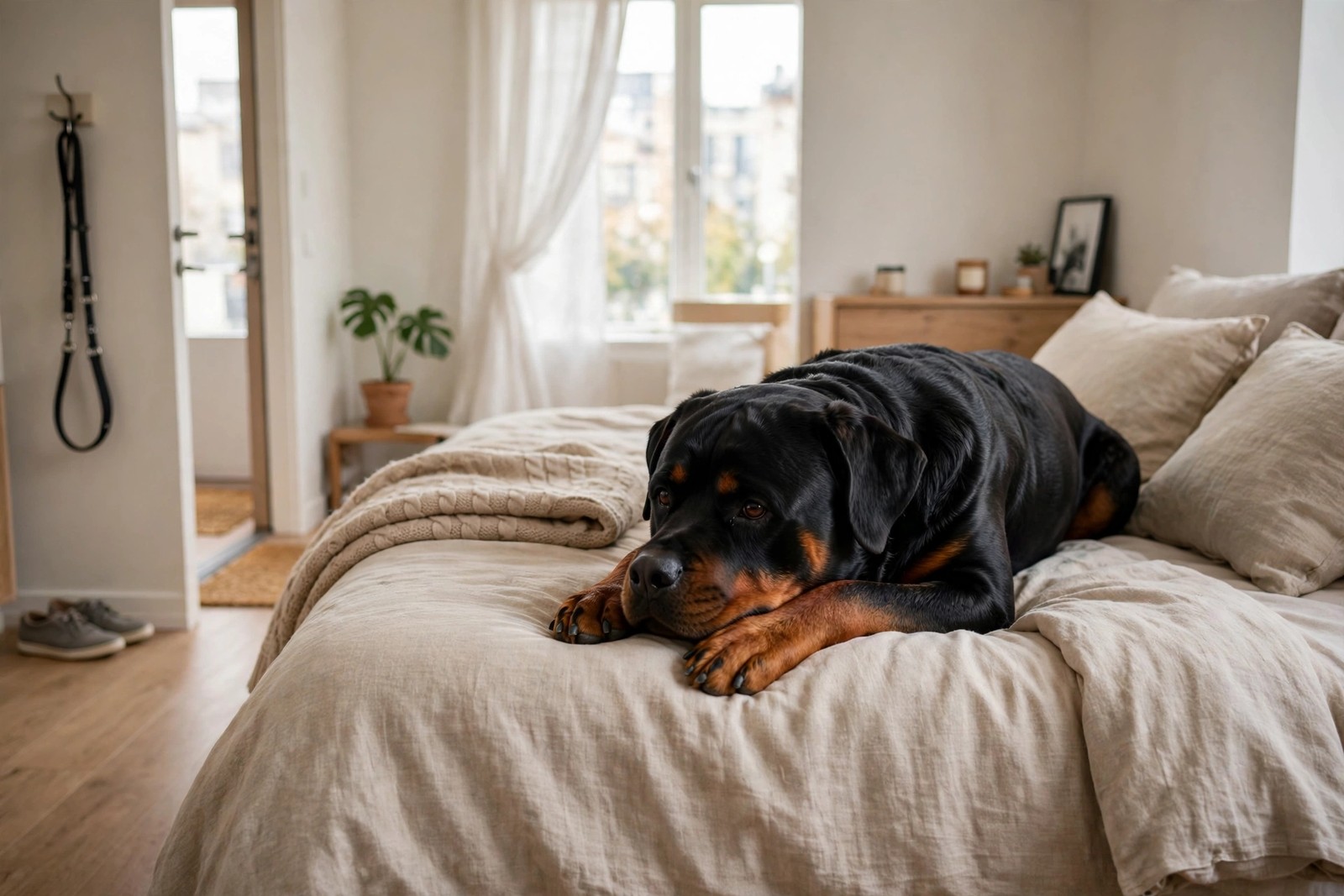
A Rottweiler can live happily in an apartment — many do, especially in places where large dogs in flats are normal — but the margin for error is small. This is a powerful working breed in a forty-to-sixty-kilogram body, with a strong guarding instinct and a teenage phase that tests every boundary. Apartment life succeeds when exercise, training, and paperwork are all handled properly, and becomes unfair on the dog and the neighbours when any one of them is skipped.
Permission and insurance come first
Rottweilers appear on rental restriction lists and insurance exclusion lists more often than most breeds. Before you acquire one, get written confirmation from your landlord or building management that a dog of this breed and adult weight is allowed, and check that your home or liability insurance covers the dog. Verbal reassurance is not enough: being ordered to remove a bonded adult Rottweiler is a crisis that is almost impossible to solve quickly, because rehoming a large adult of a restricted breed takes time. Also check any local rules on leads or muzzles in public and shared spaces, and train your dog to accept a muzzle calmly if one is required.
Exercise and work, not just walks
A Rottweiler needs substantial daily activity — long walks plus training, play, or scent work that uses the brain — typically well over an hour a day for a healthy adult, built up gradually for a puppy whose joints are still developing. The payoff is real: a properly exercised Rottweiler is famously settled indoors, often choosing one spot and staying there for hours. The failure mode is equally clear — an under-exercised adolescent will chew door frames, bark at corridor sounds, and pull an owner off balance in the stairwell. Budget for a professional walker on long workdays rather than letting exercise slide.
Lifts, corridors, and neighbours
Your dog will share tight spaces with strangers, children, and small dogs who may react to its size. Train specifically for that: waiting calmly while a lift arrives, sitting and focusing on you inside it, walking past people without leaning or staring, and taking the stairs or the next lift when a car is crowded. Socialise a puppy widely and positively, and keep adult introductions to other dogs controlled and on neutral ground — a corridor is the worst place for a first meeting between two aroused dogs.
Space and health at home
Reserve floor space for a bed that fits a fully stretched Rottweiler, feed measured meals to keep this deep-chested breed lean, and discuss feeding routines and known breed health screening with your vet. Puppies need frequent toilet trips, which in a high-rise means planning your day around the lift for several months.
KinsLe's Pet Services Directory helps by letting you search for local trainers, walkers, and groomers, so you can put professional support in place before your Rottweiler's size makes any gap in training a serious problem.