
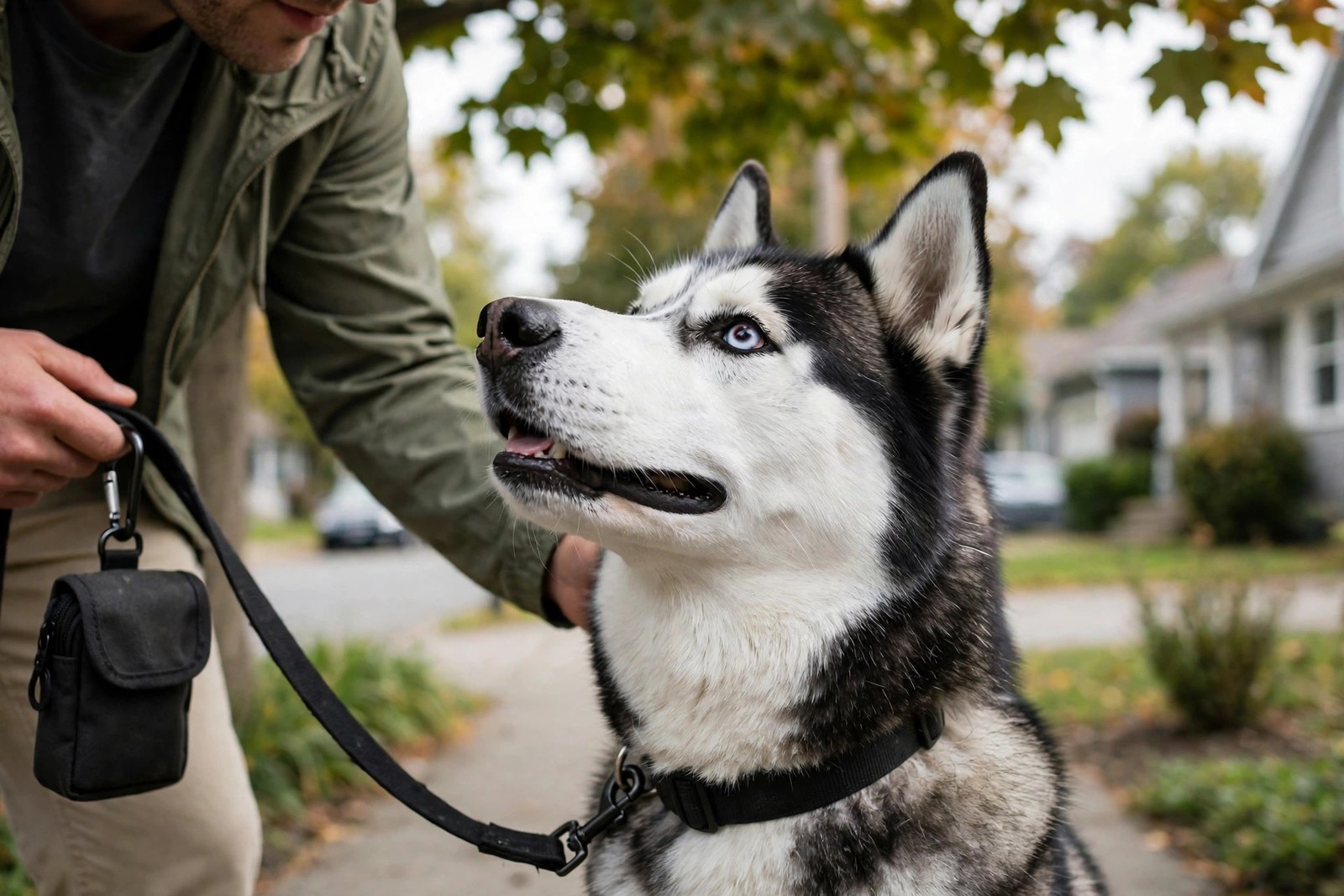
It is possible, and it is rarely wise. The Siberian Husky is consistently among the hardest breeds for apartment living, not because of size — they are only medium — but because almost every breed trait points the wrong way for close quarters. Anyone telling you otherwise is probably about to sell you a puppy.
Noise: Huskies Talk, Sing, and Complain
Huskies bark less than some breeds, but they vocalise far more, and more strangely: howling, yowling, and long argumentative woo-woo conversations, often triggered by sirens, loneliness, boredom, or sheer enjoyment. A howling Husky carries through an entire apartment block, and it frequently happens when the dog is left alone — exactly when you are not there to intervene. Neighbours are the limiting factor in most Husky flat failures, and no training programme can guarantee a silent Husky.
Energy and Destruction
This is a dog bred to pull sleds for hours in brutal cold. Most adults need one and a half to two hours or more of vigorous exercise a day — running, hiking, bike or scooter work where safe, sled-dog sports — and ordinary lead walking does not come close. An under-exercised Husky does not mope; it renovates. Classic apartment damage includes chewed door frames and furniture, dug-up flooring and sofa stuffing, emptied bins, and escape attempts through, under, or over whatever confines it. They are also famously poor off lead: high prey drive and independence mean a Husky who slips a lead may simply keep going.
Shedding and Heat
Expect heavy shedding year-round and a full coat blow once or twice a year that produces bags of undercoat — in a small flat, on everything you own. Huskies also prefer cold. A hot, top-floor apartment in summer is uncomfortable and potentially unsafe for a thick-coated northern breed; cooling, shade, and early-morning exercise become welfare needs, not luxuries.
The Exceptions That Prove the Rule
Apartment Huskies succeed with a specific kind of owner: someone home most of the day, athletic enough to give the dog real work daily, experienced with independent breeds, in a well-insulated building with tolerant neighbours, ideally ground floor. Even then, plan for a midday outing, never leave the dog unexercised before an absence, secure balconies and windows properly, and have a backup plan — a daycare or breed-experienced sitter — for days your schedule breaks. If your life does not already look like that, choosing a Husky for a flat is choosing daily conflict with the dog's nature.
Think hard, too, about security: Huskies climb, dig, and test door handles, and escapes from upper floors risk real injury. KinsLe's Lost Pet Alert System helps if an escape-minded Husky ever does slip out, alerting members across the Circle of Love network nearby so sightings reach you quickly — but prevention, secure doors, and a properly tired dog are what keep an apartment Husky home in the first place.