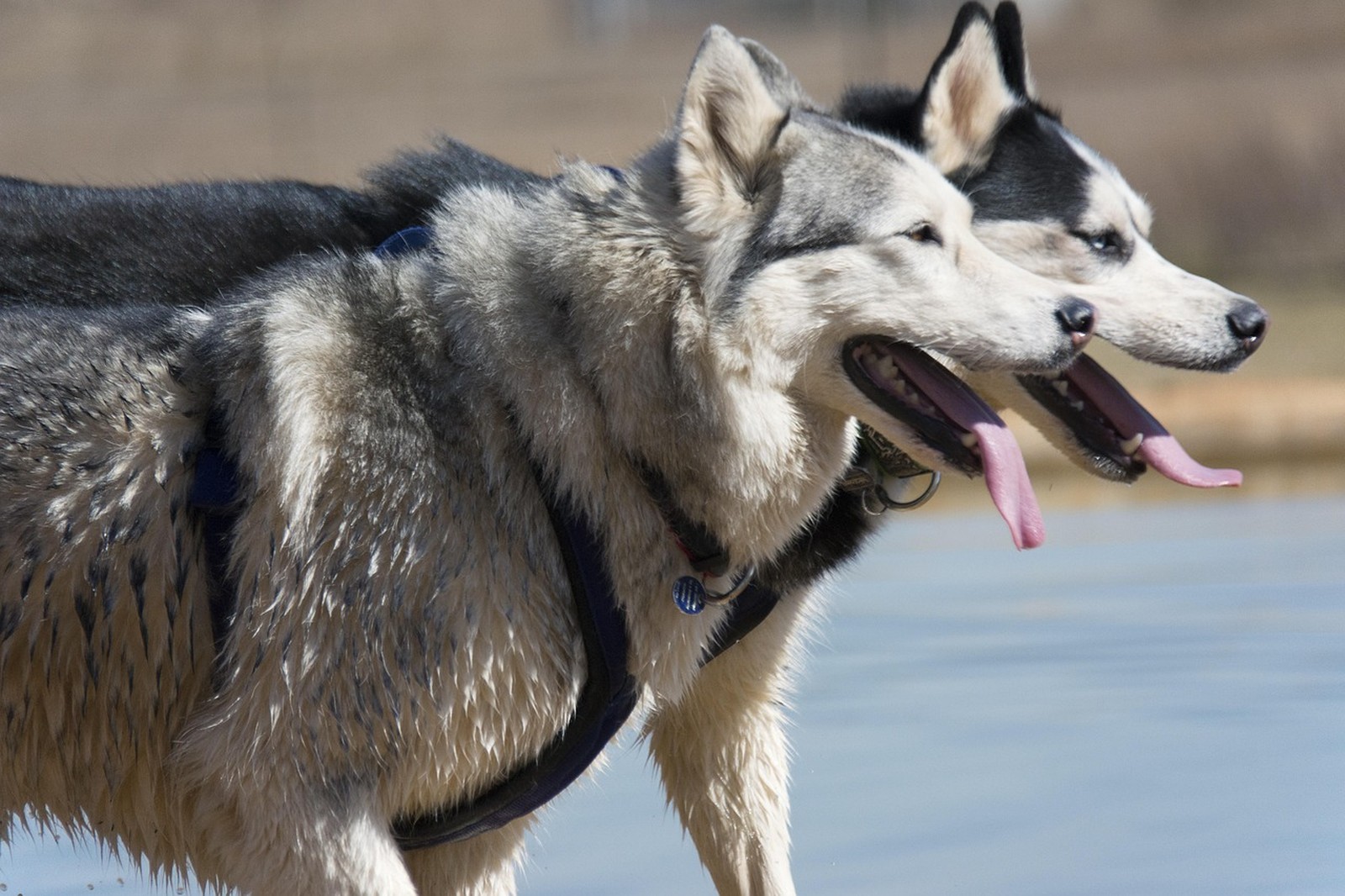
Budget 90 minutes to 2 hours or more every day for a healthy adult Siberian Husky, and understand that for many Huskies that is a starting point. This breed was developed to haul light loads across frozen ground for hours, an engine that does not switch off because you live in a suburb. Owners who underestimate the requirement meet the overflow as escape artistry, excavation, and operatic howling. Owners who meet it get a dog who is calm, companionable, and asleep by evening.
Endurance Work, Securely Delivered
Long hikes, canicross-style running with a proper harness, and steady trotting are the natural fits. Two cautions shape everything. First, recall: a Husky with a head start is rarely a Husky who comes back, so exercise off lead only in genuinely secure areas and use a long line elsewhere. Second, fencing: a bored Husky goes over or under a garden fence, so daily exercise is also your escape-prevention plan. Check gates and dig-prone edges regularly, because the day the routine slips is the day the fence gets tested.
Heat Changes the Whole Plan
That magnificent double coat insulates against cold far better than it copes with warmth, and Huskies overheat readily in summer. Shift exercise to dawn and late evening, carry water, choose shaded and waterside routes, and cut duration on hot or humid days rather than pushing for the usual total; indoor training games can cover the mental side. Never exercise a Husky hard in the middle of a hot day, and stop for heavy panting, disorientation, or a dog seeking shade and refusing to continue. A cool-climate breed earns its rest in summer.
Puppies, Seniors, and Building Up
Husky puppies should not be run or marched to adult distances; their joints are still forming, so short walks and free play, growing gradually over the first year or more, protect the adult athlete you want later. Seniors usually keep a real appetite for walking but at shorter range and slower pace, with stiffness after rest being a sign to shorten sessions and talk to your vet. Any dog new to this workload should build up over several weeks. Sustaining two hours a day is a team effort in most homes, and KinsLe's Care Teams lets you assign the dawn hike, evening run, and weekend trail session across family members with each one logged, so your Husky's engine gets its full daily run even when one person's schedule changes.