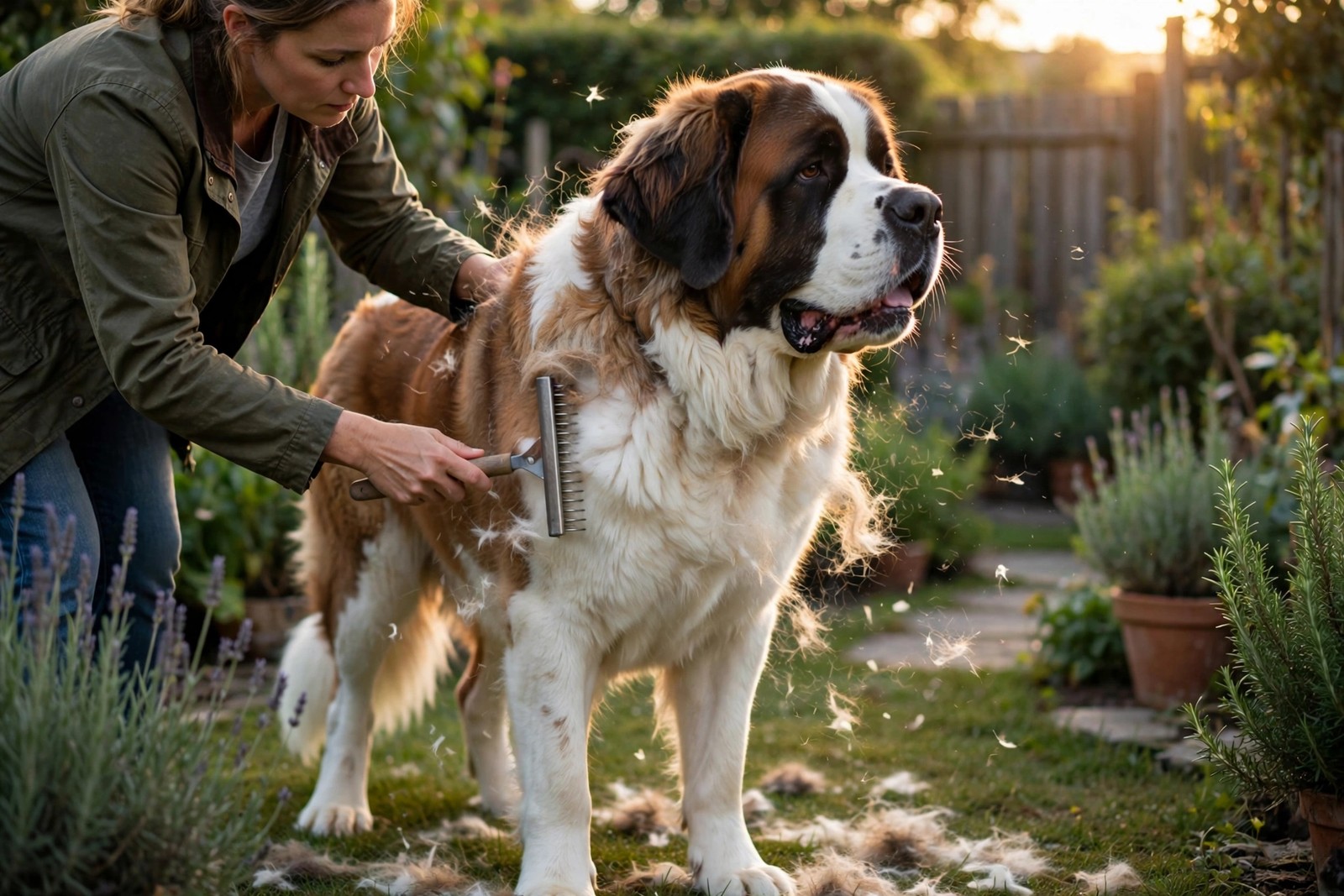
Budget for brushing a Saint Bernard two or three times a week, and understand that each session covers a great deal of dog. The breed comes in a long coat and a shorter, smooth coat, both with a dense undercoat that sheds heavily, and the longer coat carries feathering on the chest, legs, and tail that tangles and collects debris. Long-coated dogs need the full two or three thorough sessions a week; a smooth-coated dog can sit at the two-session end of that range. Either way, this is a substantial weekly grooming load by any standard, and it is paired with daily drool management.
Working a giant coat in sections
Brush in sections with an undercoat rake and slicker brush, down to the skin in layers, and finish areas with a comb. Start with the feathering, because that is where mats form: behind the ears, on the chest, at the backs of the legs, and under the tail. A Saint Bernard who is allowed to lie down mid-session will, so work on a non-slip surface, keep the pace calm, take breaks, and place small treats beside the dog one at a time during pauses. Check the skin at the partings as you go, and check between the large toes for mud and grit after wet walks. Nails on a dog this size need regular trimming, since long nails change how a heavy foot lands. Fold ears and eyes into one of the weekly sessions as well: lift each ear flap and check for redness or a build-up of wax, and wipe normal discharge from the corners of the eyes, mentioning any change in either to your vet at the next visit.
Drool: the daily reality
Saint Bernards drool after eating, after drinking, when warm, and when excited, and a head shake distributes it generously. Wipe the mouth, flews, and chest daily, dry the chest hair after a real soaking, and keep towels at the food bowl, the water bowl, and the front door. A chest that stays damp under a mat of hair and drool is where skin gets sore and the breed's smell concentrates, so the daily wipe is skin care, not housekeeping fussiness. Floors, walls, and car interiors will carry evidence regardless; the goal is a dry, comfortable dog, not a drool-free house.
Bathing and the heavy shed
A bath is a two-person-scale event for a household: the coat wets slowly, washes slowly, and dries very slowly, and it must be brushed out first and dried through to the skin afterwards to avoid a damp undercoat sitting against the body. A Saint Bernard usually needs a bath only when genuinely dirty, with the two or three weekly brushes doing the routine work. In the heavy seasonal shed, those sessions run longer and loose hair still gets everywhere for some weeks; work outside when you can, and keep the comb test honest, since a comb that will not reach the skin means undercoat is packing. This is also the point where a professional groomer with giant-breed facilities earns their fee.
Planning help before you need it
Do not wait for a matted, overdue coat to discover that your nearest groomer cannot take a dog of this size or has no hoist or large tub. Line up a groomer who regularly handles giant breeds while the routine is going well, and agree what a full session with them covers. KinsLe's Pet Services Directory lets you search pet services in one place, so you can find and keep the details of a groomer equipped for a Saint Bernard long before a heavy shed or a mud emergency makes the search urgent.