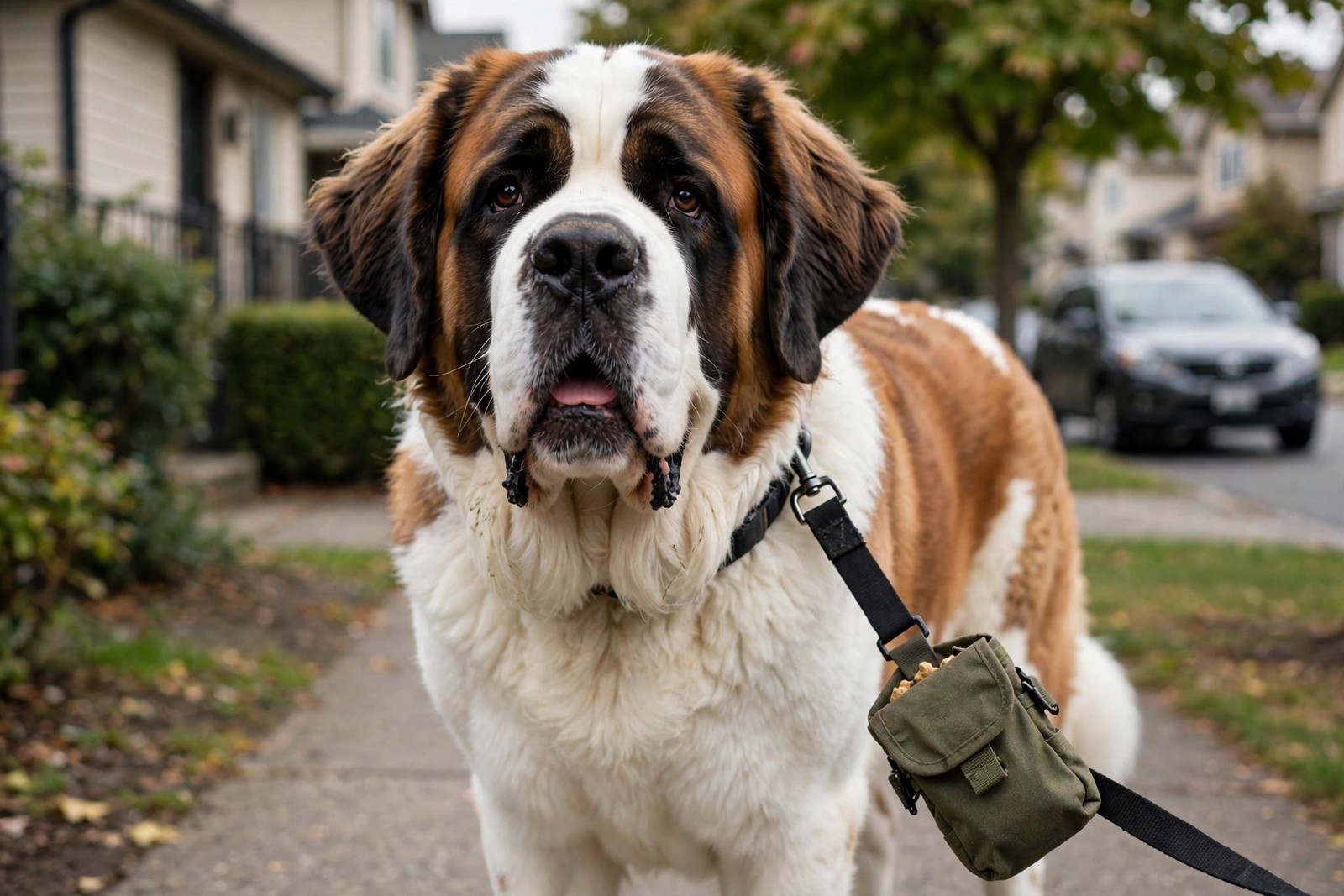
Saint Bernard days move slowly and take up space. A healthy adult typically needs 30 to 60 minutes of moderate exercise, given as steady walks and unhurried play rather than bursts of intensity, because this giant frame was built for sustained work in cold conditions. Morning and evening outings bracket long indoor rests, and warm weather shortens everything, since a huge body in a thick coat overheats readily and needs shade, water and a cool floor for the middle of the day. Puppies are the exception to every shortcut: growth is rapid and prolonged, so youngsters need short, frequent, controlled outings, limited stair climbing and no forced long hikes while joints and growth plates mature, with feeding for growth guided by your veterinarian.
The Physics of 120 to 180 Pounds at Home
Daily logistics scale with a dog of 120 to 180 pounds (about 54 to 82 kilograms). Hallways, doorways and the gap beside the sofa all become measured in Bernard units, and the dog sleeping across a doorway effectively closes that route. Drool is a household system rather than an accident: ropes after drinking, spray when a head shakes, and towels kept within reach in the rooms the dog uses, alongside washable bedding large enough to count as furniture. Vehicles need a ramp or a low entry and room for the dog to lie down, since lifting even part of a Saint Bernard is not a casual act. Food is bought in large sacks, stored in large bins and measured in large but controlled portions, with weight checked by hand and by scale where possible, because surplus pounds load giant joints heavily.
Brushing Several Times a Week, All Year
The coat comes in long and short forms, and both shed heavily, with brushing several times a week as the standing routine. Work through the coat in sections, paying attention behind the ears, along the neck and through the feathering where the long-coated variety mats, and expect seasonal shedding to fill bags over a few weeks. Ears should be lifted, checked and kept clean and dry, paws inspected after muddy ground, and the skin under the collar checked during each session. Bathing requires planning, a large space and a long drying session afterwards, since dampness deep in the coat can leave skin uncomfortable. Start all of this handling gently with a puppy, because cooperation is far easier to teach at 10 kilograms than to request at 70 kilograms.
Evenings of Quiet, Floor-Level Company
Temperament repays the logistics. Evenings typically find the dog resting near the family, patient with household bustle, gentle in greeting and undemanding once exercise, dinner and a final outing are complete. Training should begin early and stay kind and consistent, covering lead manners, polite greetings and settling on a mat, since an untrained giant is a practical problem even when the intentions are friendly. Visitors get supervision rather than concern, mainly because an affectionate lean from a dog of this weight can move furniture and small people alike. Alone time is usually accepted calmly by a mature dog whose needs have been met.
Winter is this breed's favourite season, and daily care often feels lighter then. Cold, bright days suit the coat and the constitution, exercise can use the middle hours that summer forbids, and many Saints show a livelier, more playful register in cold weather. The seasonal swing is worth planning around: grooming volume peaks as the coat changes, mud management dominates wet months, and the dog who seems low-energy in August may simply be a winter athlete enduring the wrong season with patience.
Growth feeding history, coat cadence and drool-management habits move with this dog inside KinsLe Transferrable Profiles at any change of home.