
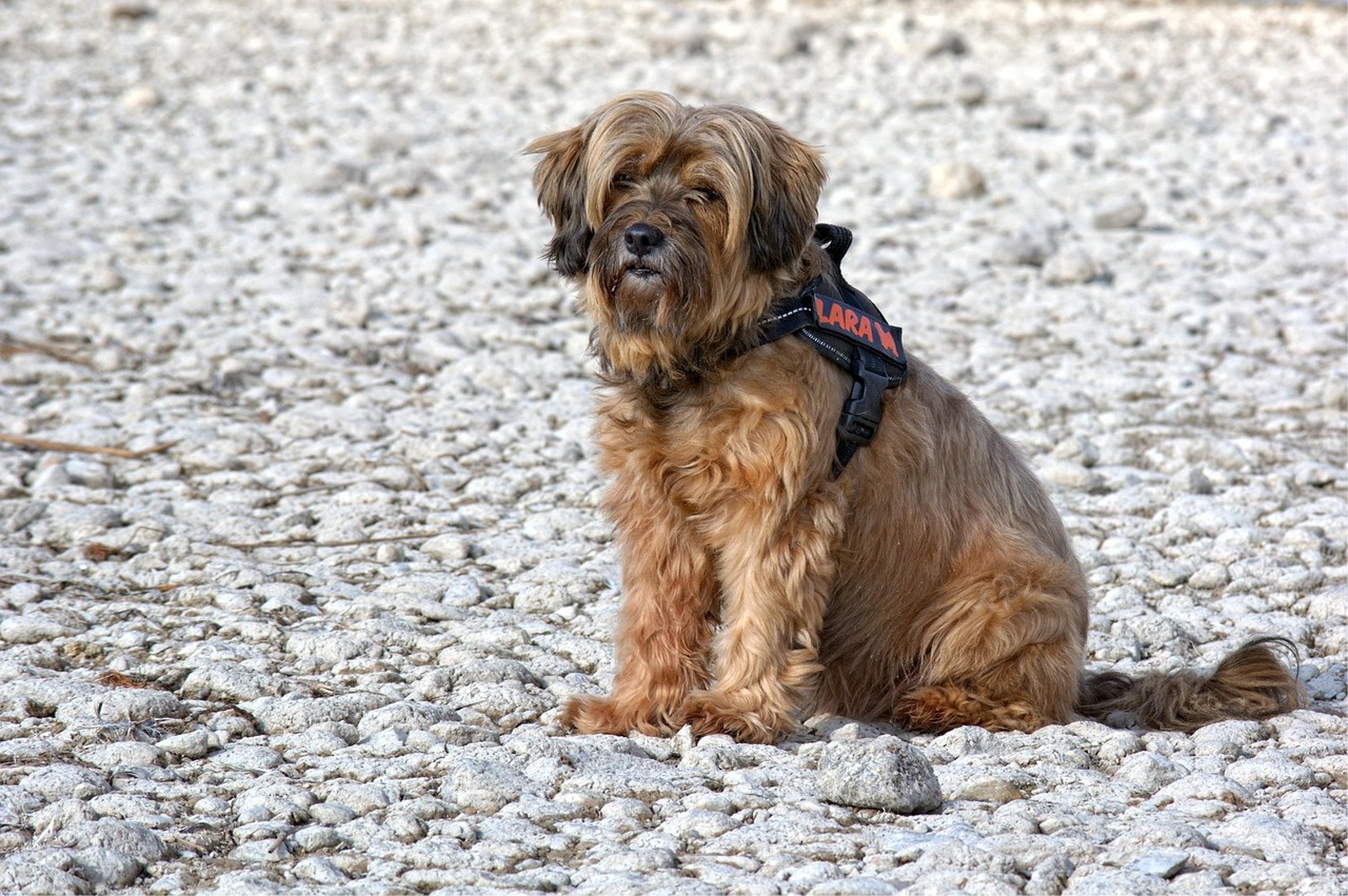
The short answer for a Tibetan Terrier
Yes, a healthy adult Tibetan Terrier can be left during a normal workday, as long as alone time is introduced gradually and the day includes a midday break. Despite the misleading name, this is not a terrier at all but an old Tibetan companion breed, raised alongside monks and families, and companionship is woven into its character. A well-prepared adult usually rests quietly, often in a raised lookout spot, and saves its clownish energy for your return. A puppy, or a dog adopted recently who is still mapping the household, needs the hours built up in stages before a full shift is reasonable.
An affectionate breed with a sensitive streak
Tibetan Terriers are affectionate without being clingy in the happiest cases, but they are sensitive to household mood and routine changes. A dog whose mornings vary wildly, with rushed departures some days and long cuddles on others, gets a muddier message than one whose weekdays always run the same way. The breed is also agile and inventive, originally sure-footed in mountain terrain, so an under-occupied Tibetan Terrier may counter-surf or relocate shoes rather than simply nap. Their hearing is sharp, and a flat with heavy corridor noise can keep a lone dog on alert; a quieter room with a radio left on suits many better than the hall by the front door.
A workday shaped for this breed
Give the morning a proper shape: a walk with some free sniffing, a short play or training game at home, breakfast, and then a calm, identical leaving sequence. Leave the double coat comfortable rather than freshly fussed over, and provide a bed in the elevated spot your dog already favours if it is safe. The midday visitor should offer a garden break or short walk, a water refresh, and a few minutes of actual company, since for this breed the social part of the visit matters as much as the toilet part. Rotate gentle occupation, such as lick mats and hidden treats in a snuffle mat, so the empty hours hold some texture without overfeeding the day.
Judging whether yours is settled
A settled Tibetan Terrier greets you warmly, eats dinner with appetite, and joins the evening without frantic shadowing. Persistent barking reported by neighbours, chewed door edges, toileting from a dog who is reliably clean when you are home, or a new habit of following every household member to the bathroom all suggest the alone stretches are landing badly. Shorten them, add company at midday if it is missing, and rebuild. Because this breed reads tension well, keep your own departure stress out of the performance; if anxiety stays high despite careful steps, a conversation with your vet is the right next move.
Coat, age, and other practical notes
The long Tibetan Terrier coat needs regular grooming, so schedule brushing for evenings rather than letting the midday visitor attempt it, and keep the hair around the eyes tidy so the dog's lookout habits stay comfortable. Seniors may want a midday chance to stretch stiff legs and toilet without hurry, even if they managed without one in middle age. In warm weather, a clipped or well-groomed coat and a cool resting room matter for a dog bred for a cold plateau climate. With routine, company in the middle, and affection banked at both ends of the day, the arrangement usually works happily. KinsLe's Care Pass gives whoever visits your Tibetan Terrier temporary access to the feeding, grooming, and settling notes that keep the day running exactly as you designed it.