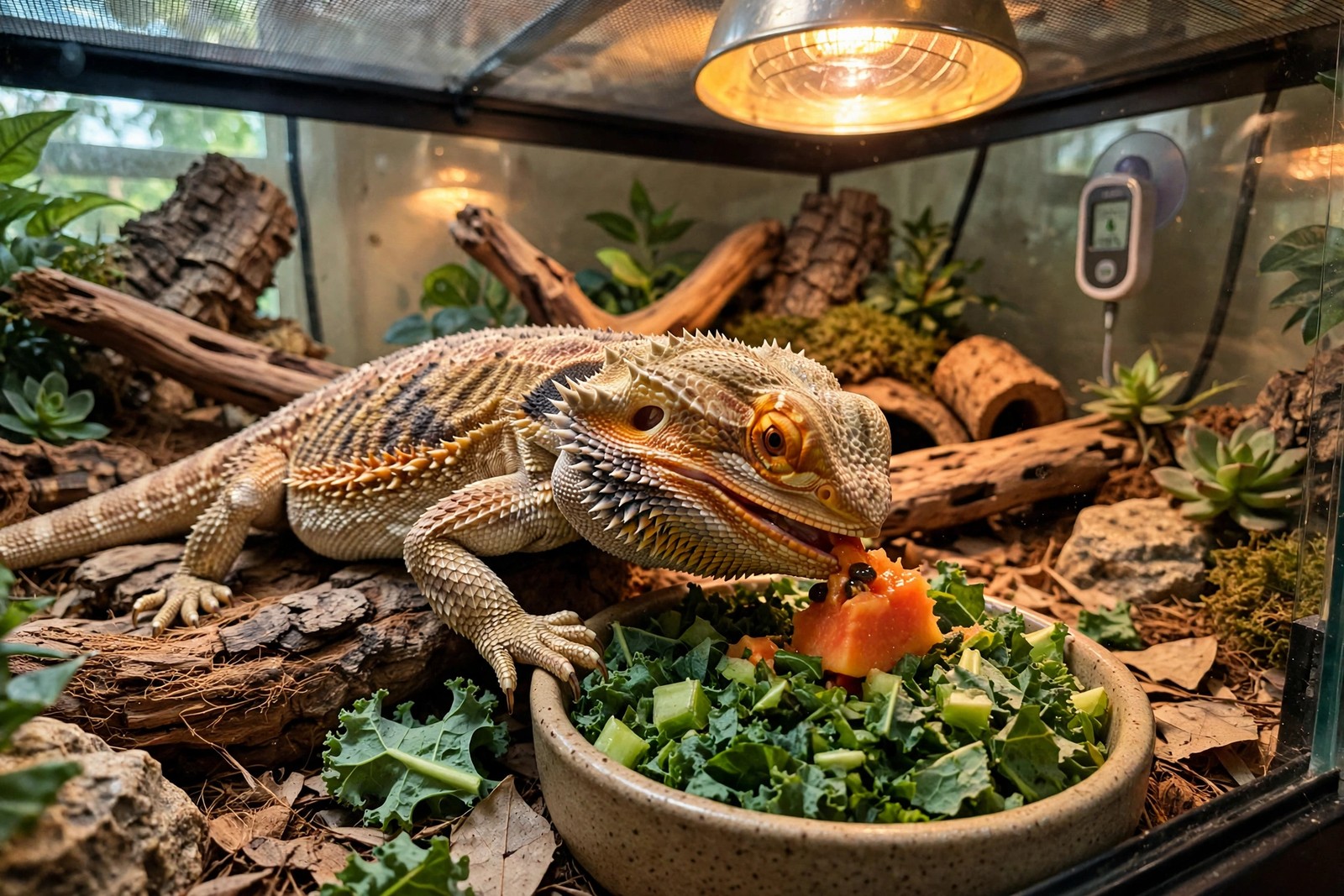
Bearded dragons can eat fruit, but fruit should sit at the edge of the diet, not in the middle of it. A healthy dragon's food is built from leafy greens and vegetables every day, plus live insects in proportions that change with age — frequent for growing juveniles and less often for adults. Fruit is a garnish for variety and enrichment, and treating it as a staple is where owners go wrong.
Which fruits, and how to serve them
Good occasional choices include papaya, mango, blueberries, raspberries, and small amounts of peeled apple, pear, or melon. Wash fruit thoroughly to remove surface residues, peel anything with a tough or waxy skin, remove every seed, pip, and stone, and cut pieces small enough that your dragon cannot struggle with them — roughly no wider than the space between the dragon's eyes is a useful guide for bite size. Serve fruit at room temperature in the feeding area of the enclosure, mixed into the day's salad rather than in a separate bowl your dragon can fill up on first, and remove uneaten fruit the same day so it does not spoil under the heat lamp.
How much and how often
Think in terms of a few small pieces a few times a month for an adult, not a daily portion. A practical approach is to let fruit make up only a small fraction of the salad on the days it appears — a blueberry or two chopped through a bowl of greens, or a couple of papaya cubes — and keep most salads entirely fruit-free. If the stool becomes loose or undigested fruit appears in it, you have offered too much or too often; cut back and return to plain greens.
Juveniles need their appetite spent on insects and greens that support growth, so fruit should be rarer and smaller for them than for adults, never a way to tempt a reluctant feeder away from proper food day after day.
Why restraint matters
Fruit is high in sugar and water and low in calcium compared with the greens a dragon should eat, and many fruits carry an unfavourable calcium-to-phosphorus balance. A dragon who fills up on sweet fruit eats fewer greens, takes in less calcium, and may develop a preference that makes plain salads harder to sell. Citrus fruits are best avoided altogether because their acidity can irritate the mouth and gut, and avocado and rhubarb should never be offered, as both are harmful to reptiles. Dried fruit is also unsuitable — its sugar is concentrated and its sticky texture can cling to teeth and gums.
Fruit as enrichment, not bribery
Used sparingly, fruit has a real role: a new taste on a rotation keeps a curious dragon investigating its salad, and hand-offering a blueberry is a gentle trust-building exercise during handling sessions. Rotate what you offer, note what your individual dragon digests well, and stop any fruit that repeatedly coincides with loose stool or a reduced appetite for greens, mentioning ongoing digestive changes to a reptile vet.
KinsLe Care Teams helps by letting everyone who feeds your bearded dragon log salad ingredients and treat days in one shared record, so fruit stays an occasional extra instead of quietly becoming an everyday habit.