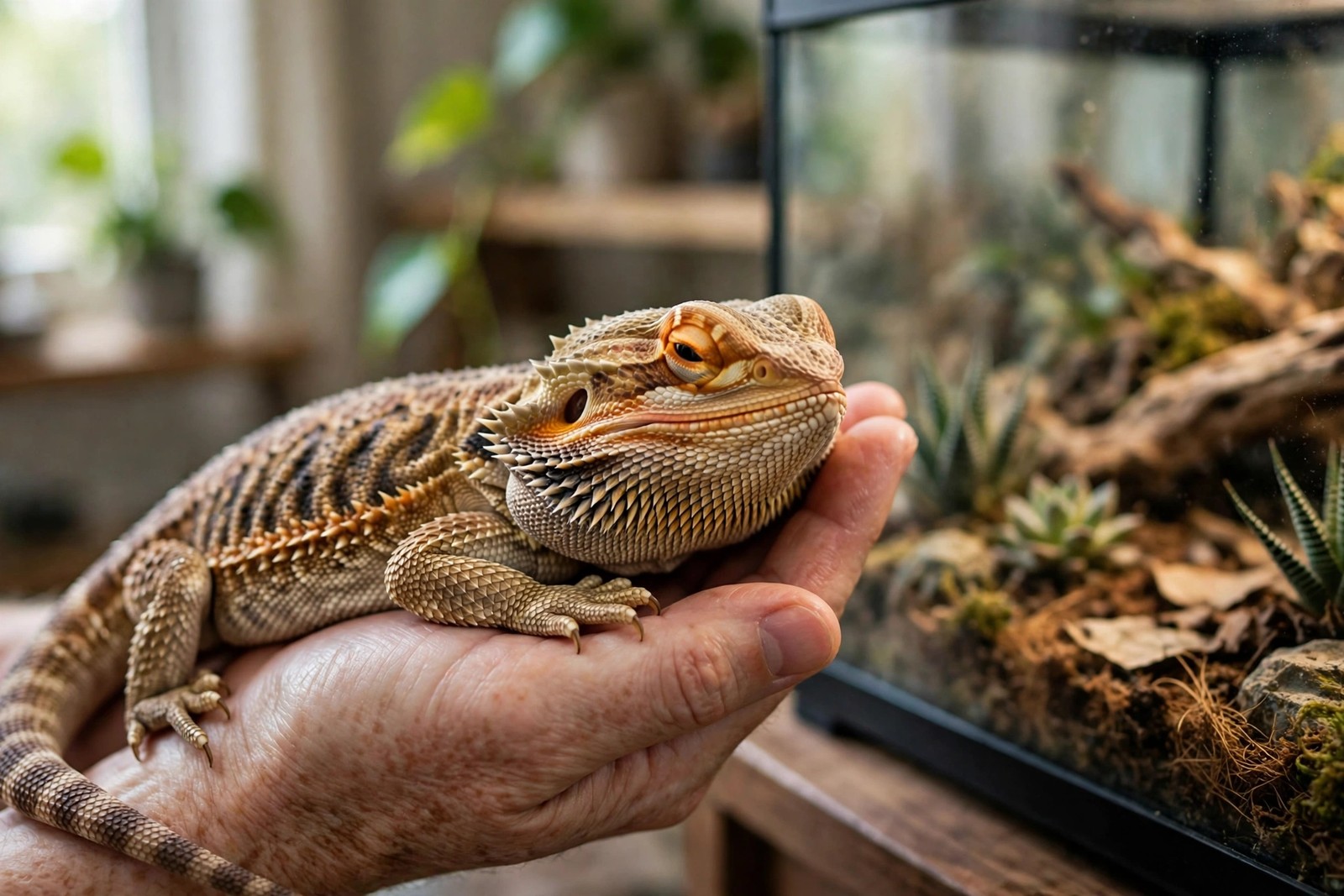
A bearded dragon can recognise its owner, provided you understand recognition in reptile terms. Your dragon is not identifying you the way a dog does, with social bonding and excitement at your return. It is learning, through repeated experience, that one particular large creature predicts food, warmth, and no harm — while unfamiliar creatures are still unproven and potentially dangerous. That learned distinction is real, observable, and worth building deliberately.
What recognition actually looks like
With a familiar handler, a relaxed dragon typically shows a light, even colour, a soft rather than tense body, slow blinking or calmly closed eyes while resting on a warm hand, and a willingness to walk onto the hand or approach the front of the enclosure when that person appears — especially at feeding times. Many owners notice their dragon watching them specifically, tracking their movement around the room while ignoring the television or other pets.
With a stranger, the same dragon may darken in colour, flatten or puff its body, inflate its beard, back into a corner, or refuse food it would normally take at once. That contrast — calm and feeding with you, defensive or withdrawn with someone new — is the clearest everyday evidence that your dragon distinguishes you from other people.
Smell, sight, and routine all play a part
Bearded dragons use a combination of sight, scent, and learned routine. They flick their tongues to sample scent, they learn the look and movement patterns of the person who opens the enclosure, and they strongly associate that person with feeding — insects arriving is a powerful teacher. Consistency amplifies all of it: the dragon handled at similar times, in a similar way, by a person whose movements are slow and predictable learns fastest. A household where five people handle the dragon five different ways will see slower, weaker recognition of any one person.
Build the association on purpose
Handle briefly and calmly most days rather than in long, occasional sessions. Approach from the side rather than looming from above, which mimics a predator, support the whole body including the tail when you lift, and let the dragon end a session by walking back into the enclosure where possible. Hand-feed an occasional favourite insect so your scent and hand predict good things, keep your voice low and familiar around the enclosure, and avoid handling when the dragon is shedding, unwell, or has just eaten a large meal.
Give strangers a role in the process too: a new person should sit near the enclosure, offer food with tongs, and only handle the dragon once it is feeding calmly in their presence — rushing that sequence teaches the dragon that new people predict stress.
Keep expectations honest
A dragon who tolerates strangers equally may simply be an exceptionally calm individual, and one who never relaxes with anyone may be stressed by its setup — temperatures, lighting, enclosure size, or pain — rather than failing to bond. If a previously calm dragon becomes persistently defensive, starts hiding constantly, or goes off its food, have a reptile vet check it rather than assuming a behaviour problem.
KinsLe Family Sharing helps by keeping your bearded dragon's handling approach, favourite foods, and calming routines in one profile every household member can follow, so your dragon experiences everyone as familiar and predictable.