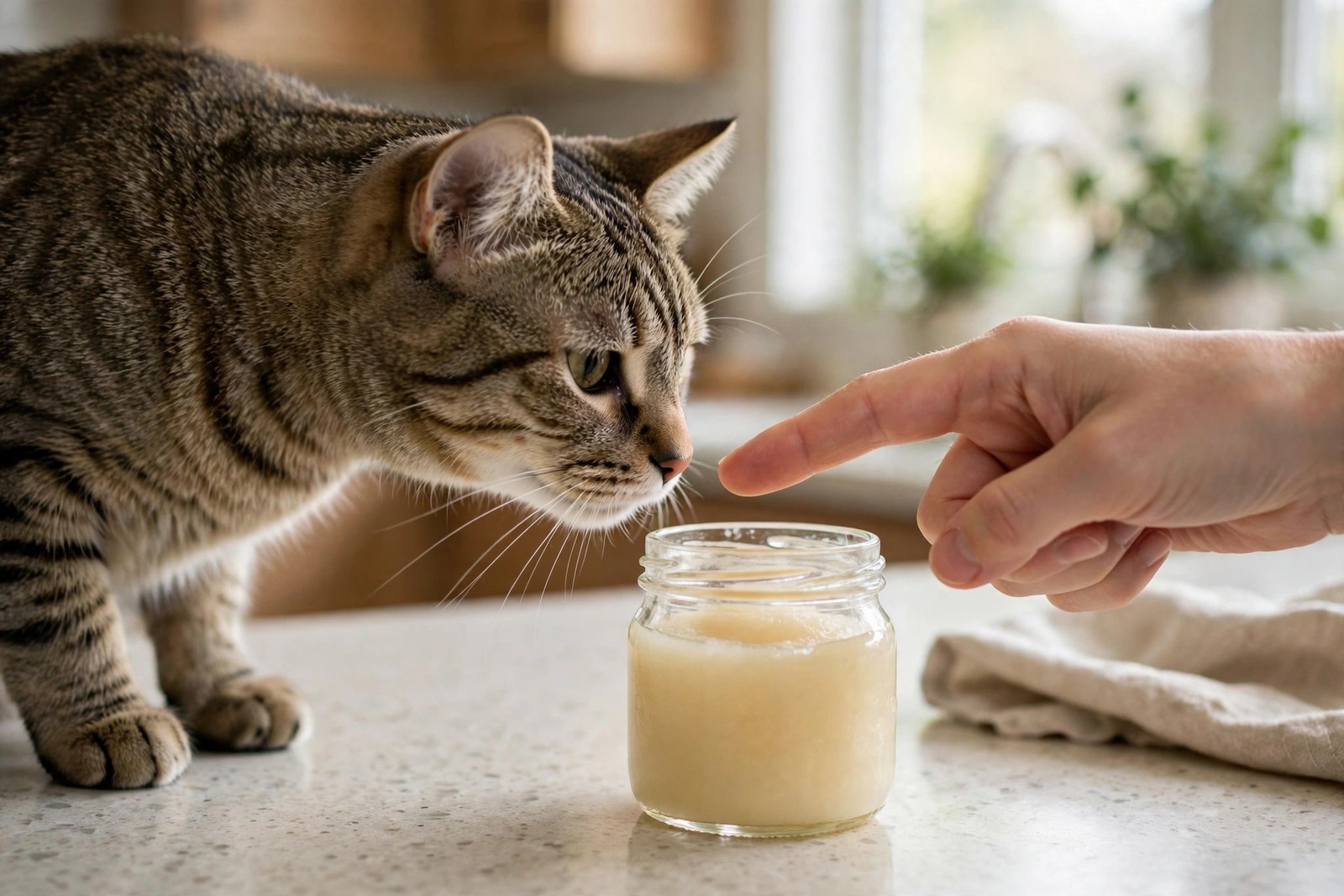
A tiny taste of plain, unsweetened applesauce will pass without trouble for most healthy cats, but applesauce belongs in the curiosity category, never in the feeding plan. Cats are obligate carnivores, they cannot taste sweetness the way people do, and everything applesauce offers beyond water and a little fibre is sugar they do not need.
Reading the Jar Before Any Taste
The word plain has to mean plain. Check the ingredient list for added sugar, honey, cinnamon and other warm spices, and any sugar-free sweetener, and put the jar away if any of them appear. Spiced dessert applesauce and pie filling are different products from the simple cooked-apple purée the question is really about. Homemade applesauce made from apples and water alone is the only version worth considering, and even then only because a lick is harmless, not because it helps.
Apple seeds and cores should never reach a cat, so if you make your own, strain out every fragment. The amount that matters here is a smear on a fingertip or the tip of a spoon, offered once to satisfy curiosity. A cat who walks away has given you the most common verdict; cats who beg for more are usually responding to your attention and the novelty, not to flavour they can properly taste.
Why More Than a Lick Is a Mistake
A tablespoon of sweetened applesauce carries sugar scaled for a person, and on a cat's small frame regular sugary extras push toward weight gain and tooth decay. The natural sugars in unsweetened applesauce still count, which is why frequency matters more than the single taste. Cats with diabetes, kidney disease, or a history of pancreatitis should skip people-food extras like this entirely unless your vet has cleared them, because their diets leave no room for casual additions.
Watch the litter box after any new food. Loose stool, gassiness, vomiting, or a cat who skips the next meal tells you applesauce does not agree with this individual, whatever the general rule says. Kittens deserve extra caution as well; their digestion is unsettled easily and their small size leaves less margin, so keep kitten treats to foods made for kittens.
If Your Goal Is a Fruit-Flavoured Treat
Some owners reach for applesauce hoping to hide medicine or encourage a picky eater. A fingertip of plain purée can work as a one-off smear for that purpose, but ask your vet before making it a routine carrier, especially if the medicine must be taken in full or kept away from certain foods. For regular encouragement, a lick of meat-based purée treats made for cats delivers flavour a cat actually wants, without the sugar question attached.
Keep the household rule simple and visible: applesauce is not poured into bowls, not left on counters in open jars, and not offered by visitors who think a spoonful looks small. Cats learn fast which person is a soft touch, so consistency across the family matters more than the size of any single taste. Log that rule and the one-taste limit in KinsLe Care Teams beside the feeding duties, so a helper covering dinner knows applesauce stays in the fridge for this cat.