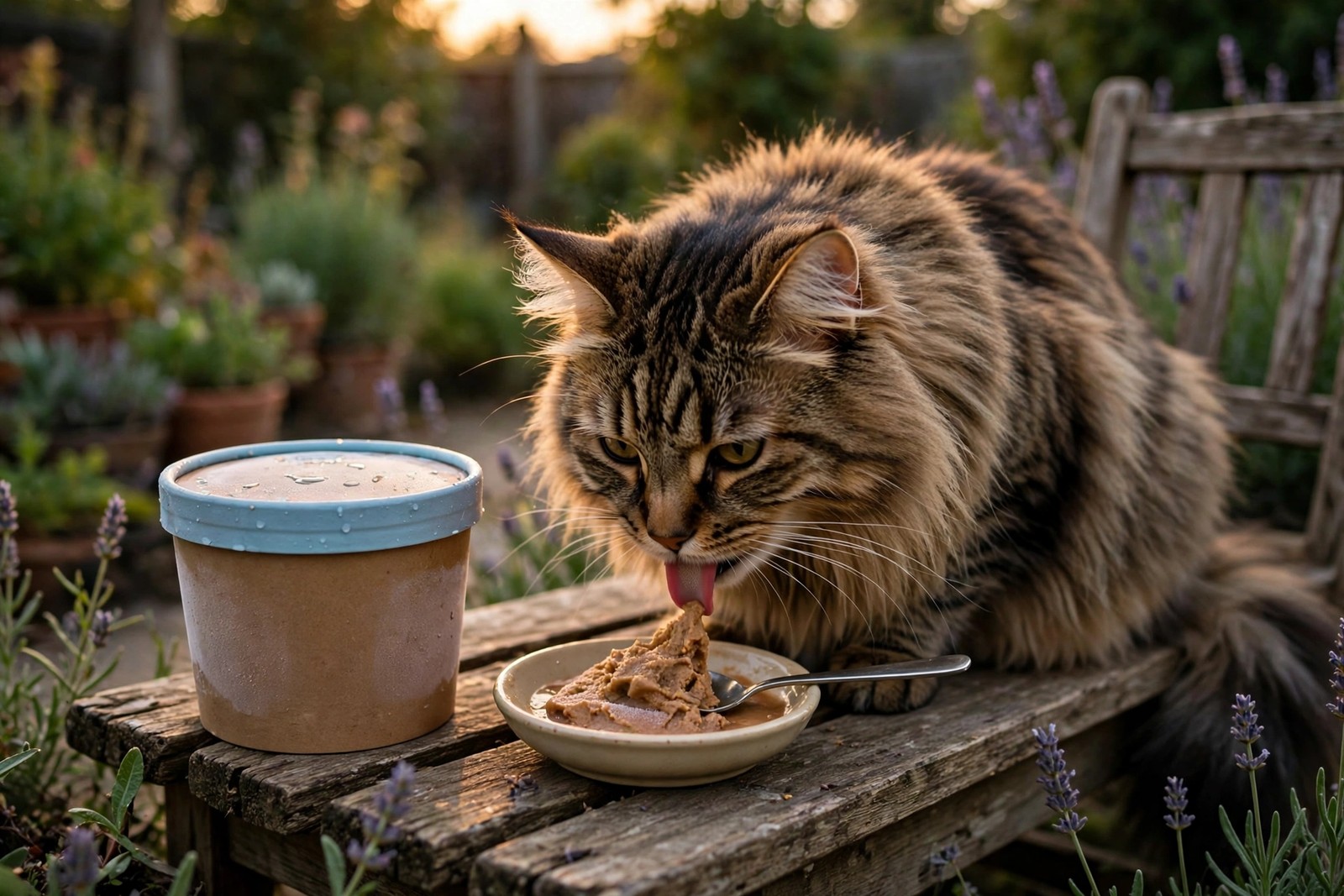
Ice cream should stay a human dessert. Most adult cats cannot digest lactose well, so even a few licks of plain vanilla can mean an upset stomach. On top of that dairy problem, ice cream layers in sugar and fat at levels a small carnivore has no use for, and some flavours and sugar-free recipes carry risks that are considerably more serious than loose stool.
Start With the Lactose and the Richness
After weaning, most cats produce far less of the enzyme that digests milk sugar. Ice cream therefore tends to produce the familiar dairy sequence: gurgling, wind, soft stool or diarrhoea within hours. Its fat content makes upset more likely, not less, because a rich, cold, sweet food is about as far from a cat's normal meal as a food can be. The cat licking the bowl is following fat and dairy smells — cats cannot taste sweetness, so the sugar that defines the dessert for you is not even part of the attraction for them.
Flavours That Change the Urgency
Chocolate ice cream is a different matter from vanilla. Chocolate contains substances that are toxic to cats, and darker, more intense chocolate flavours carry more of them. Coffee flavours, and ice creams loaded with nuts, raisins or alcohol-based sauces, add their own hazards. Sugar-free ice cream deserves special caution: some recipes use xylitol, also listed as birch sugar, a sweetener that is highly dangerous to dogs and treated with real caution for cats too. Do not adopt a wait-and-see approach with these versions. If your cat has eaten chocolate or sugar-free ice cream, or any flavour in more than lick quantity, call your veterinarian promptly and take the tub with you or keep it for the ingredient list — what was in it guides their advice.
What to Do After a Few Licks
For plain vanilla or fruit ice cream, a few licks by a healthy adult cat usually call for calm monitoring rather than panic. Take the bowl away, offer fresh water, and watch over the next day for vomiting, diarrhoea, drooling or a cat who goes quiet and skips meals. Most mild dairy upset passes on its own, but vomiting that repeats, diarrhoea that continues, or any change in a kitten, a senior or a cat with an existing condition is a reason to contact your veterinarian the same day.
Frozen yoghurt, sorbet and non-dairy ice creams are not workarounds. They still bring sugar, flavourings or lactose in varying amounts, and non-dairy bases are built for human tastes, not feline digestion.
A Cooler Treat That Actually Fits a Cat
If the appeal is joining in on a hot evening, freeze a spoonful of your cat's usual wet food in a small lick mat or dish, or offer a few ice-cold pieces of a normal cat treat. The cat gets the cold, slow-lick ritual that interests it, in food its gut already knows.
Dessert sharing is a household habit, and habits need everyone aligned. In KinsLe, Care Teams lets you put the no-ice-cream rule directly in the cat's daily duties, so the person serving dessert and the person clearing up give the cat the same answer.