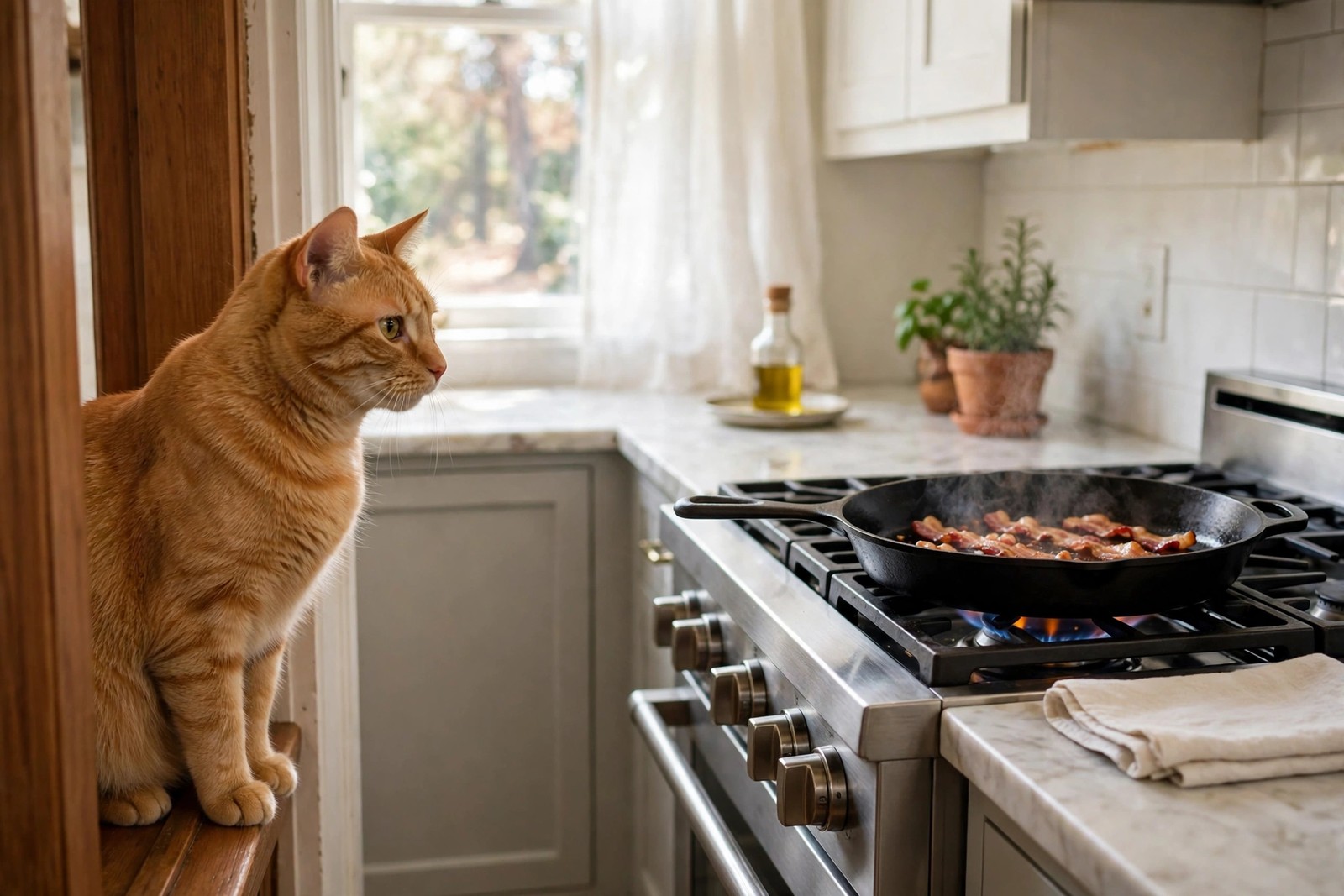
Bacon should not be fed to cats. The flavour that makes it so attractive is exactly the problem: curing salt, rendered fat, and smoke, concentrated into thin strips that a cat can swallow in seconds and an owner can underestimate just as fast.
What Is Actually in the Strip
Bacon starts as fatty pork belly and is then cured, which loads it with sodium. A cat's daily sodium needs are modest and already covered by a complete cat food, so bacon pushes intake sharply upward in a way that matters most for cats with heart or kidney conditions, who should never be offered salty extras at all. The fat content is the second issue. Rich, fatty foods are a recognised trigger for digestive upset in cats, and repeated fatty treats raise concern about pancreatitis, a painful inflammation that can need urgent veterinary care.
Flavourings make some bacon worse still. Maple-cured, peppered, and seasoned varieties add sugar and spices, and bacon cooked alongside onions or garlic in a breakfast pan picks up compounds that are harmful to cats. Raw bacon is not a safer shortcut either, since uncooked pork carries the usual raw-meat bacteria risks for both cat and household.
If a Piece Disappears
A stolen crumb or a small corner is most likely to produce nothing worse than thirst and perhaps a loose stool, so remove the rest, refresh the water bowl, and watch for the next day. Signs that deserve a vet call include repeated vomiting, diarrhoea that does not settle, refusing food, drooling, or a hunched, uncomfortable posture that suggests belly pain. Tell the vet it was bacon, roughly how much, and whether it was cooked in a pan with anything else, because those details shape the advice.
The bigger behavioural risk is a cat who succeeds once. Bacon fat left in a cooling pan, grease splashes by the stove, and plates left on low tables all teach a cat that the kitchen pays out, and counter-surfing escalates from there. Pour cooled grease into a sealed container for the bin rather than leaving it accessible, and wipe surfaces after frying.
A Better Answer to the Begging
When bacon is cooking, offer the approved alternative at the same moment rather than after the begging peaks: a few shreds of plain cooked chicken, a small piece of cooked salmon, or a meat treat made for cats, served in the cat's own bowl away from the stove. That timing teaches the cat that breakfast smells mean its own treat arrives in its own place.
Agree the rule with everyone who cooks in the house, including guests making their own breakfast, because one person slipping a rasher undoes the training for weeks. Post the never list where the cooking happens, not just where the feeding happens. Note bacon on that household never list in KinsLe Care Teams alongside the morning feeding duty, so whoever covers breakfast knows the smell in the pan is not a treat for the cat.