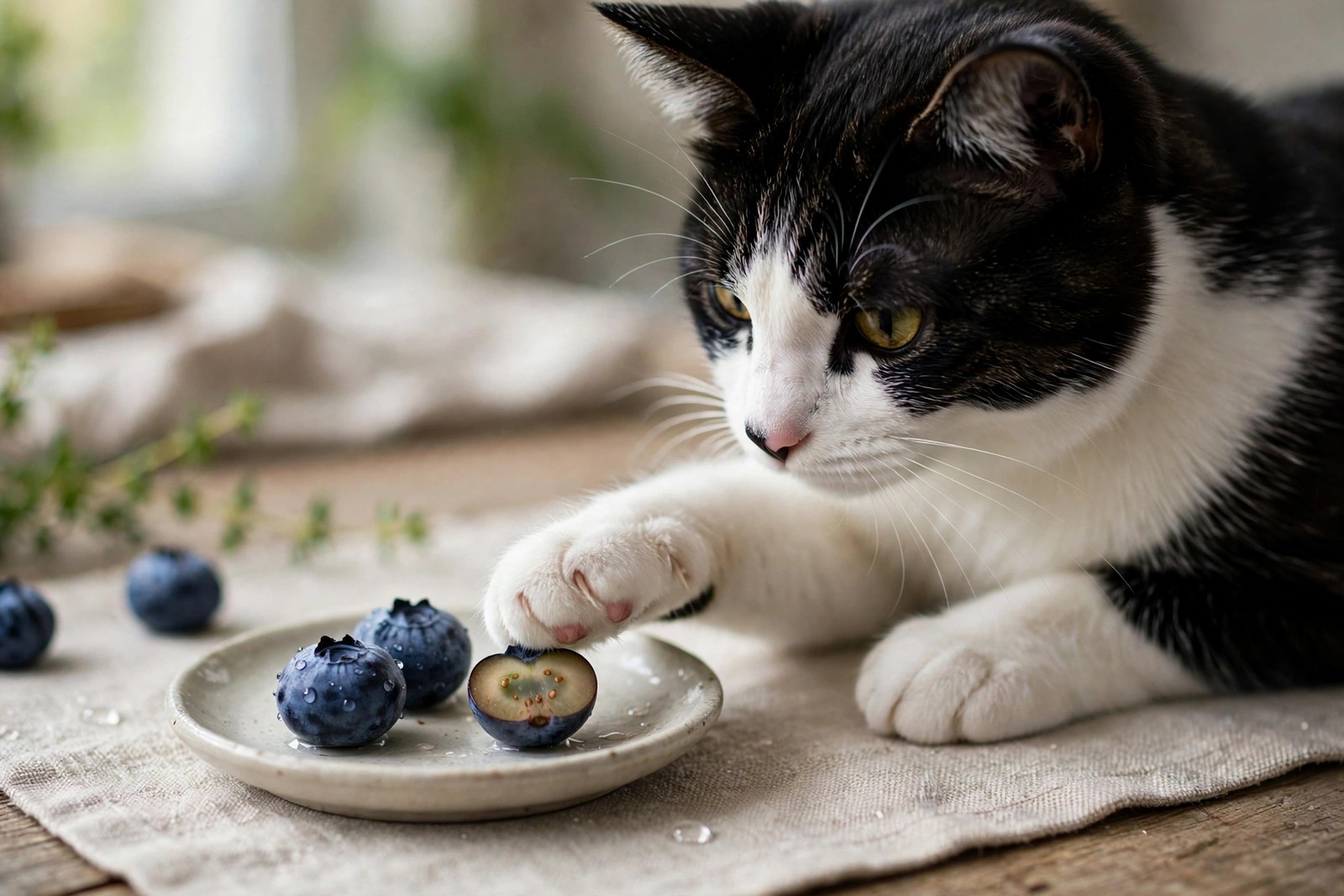
One or two blueberries suit a cat as a novelty treat: washed, halved, and offered by hand or in the bowl as something to investigate. They will never be a nutritional need for an obligate carnivore, but among fruits they sit at the low-risk end, with no pit, no peel to remove, and no preparation beyond a rinse and a cut.
Sorting Hype From Helpfulness
Blueberries are praised in human nutrition for antioxidants, and that reputation follows them into pet advice. A cat eating two berries receives a trivial amount of anything, helpful or otherwise, so treat the berry as entertainment and texture rather than a supplement. The honest benefits are practical ones: a blueberry is portion-sized by nature, soft enough to chew, mildly flavoured rather than intensely sweet, and easy to offer one at a time so there is no open-ended bowl of extras.
Wash berries first to remove surface residues, and cut larger ones in half. A whole round berry can roll, get batted under furniture, and for a small cat or kitten a smooth round shape is a needless choking risk when a cat tries to swallow it in one enthusiastic gulp. Frozen blueberries thawed until soft are acceptable, but skip frozen-hard berries, which are too firm for comfortable chewing, and avoid berries baked into muffins, pancakes, or yoghurts, where sugar, fats, and other ingredients change the food entirely.
Watching the First Trial
Offer one halved berry and wait. Some cats lick it, some chew with obvious puzzlement, and many treat it as a toy, which is a complete and acceptable outcome. If the berry is eaten, check the litter box over the next day. A slightly softer stool after any new food is common; repeated looseness, vomiting, or face-rubbing and itching after eating are reasons to take blueberries off this cat's list and mention the reaction to your vet if it does not settle quickly.
Cats with diabetes or on a weight plan can still usually manage a berry within their treat allowance, but confirm with your vet rather than assuming, because their total sugar and calorie budget is managed more tightly than a healthy cat's. Kittens should meet blueberries only in tiny halved pieces and only occasionally, since their calories need to come from food built for growth.
Where Blueberries Fit in the Treat Rotation
Rotate novelties rather than repeating one. Blueberries one day, a cube of banana or a shred of cooked chicken another day, keeps any single extra from becoming a daily sugar or calorie habit and tells you which foods genuinely agree with your cat. Keep count across the household, because two people each offering two berries is how a sensible portion doubles without anyone noticing.
Serve berries in the cat's own spot, not tossed across the kitchen, so they do not stain rugs as they roll or teach the cat to chase food around human feet. Note the trial result, eaten happily, played with, or caused loose stool, where the whole household can find it later. Put that result in KinsLe Care Teams with the feeding duties, and the next person offering treats starts from your cat's actual record instead of repeating the experiment.