
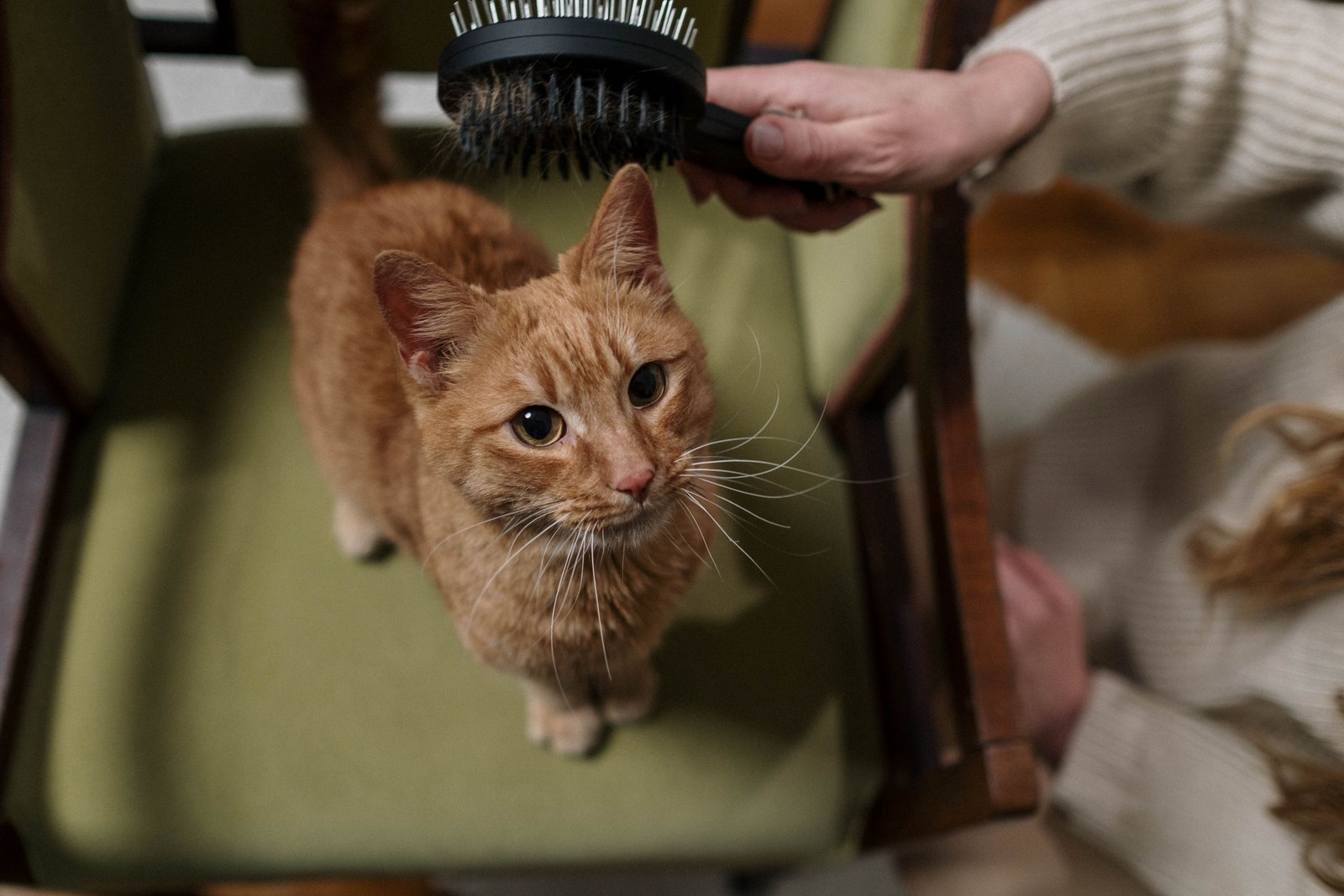
Yes, diet can help with hairballs for many cats, especially when you pair a hairball-formula food with regular brushing. These foods typically add fiber that helps swallowed hair keep moving through the digestive system and pass in the stool instead of building up in the stomach and coming back up. Diet is a helpful tool — it is not the whole solution, and frequent vomiting should never be assumed to be “just hairballs.”
Why hairballs form in the first place
Cats swallow loose fur every time they groom, and long-haired breeds like Persians and Maine Coons swallow a lot more. Most hair passes through harmlessly. A hairball forms when hair collects faster than it moves along, often in spring and fall when shedding peaks, or when a cat over-grooms the same spot. Indoor cats who shed year-round under artificial light and heating can produce hairballs in any season.
You will usually hear the familiar retching and hacking before a compact, tube-shaped wad of fur appears. An occasional hairball — once every few weeks for a long-haired cat — is common. Several a week, repeated retching with nothing produced, loss of appetite, or lethargy are different, and need a vet.
How hairball diets actually work
Hairball-care formulas are complete cat foods with added fiber sources that support gut movement. Some also include ingredients intended to support skin and coat health, so less loose, brittle fur is shed in the first place. Transition to any new food gradually over seven to ten days to avoid stomach upset, and feed measured amounts — solving hairballs while quietly overfeeding creates a new problem.
These diets tend to work best for cats whose hairballs are truly fur-related and occasional. They are less likely to fix vomiting caused by eating too fast, food sensitivities, parasites, or other health issues. That distinction matters, and only an examination can make it if the pattern is frequent.
Brushing does the heavy lifting
Every loose hair you remove with a brush is a hair your cat cannot swallow. Short-haired cats usually do well with brushing once or twice a week; long-haired cats often need brief sessions several times a week, or even daily during heavy shedding, focusing on the chest, belly, and behind the legs where mats start. Keep sessions short and rewarding — a few calm strokes with a slicker brush or comb, followed by praise or a small treat, builds tolerance better than a long forced groom.
Also wash bedding regularly, and note if your cat is over-grooming one area, which can signal itchiness, stress, or pain worth discussing with your vet.
Safety signs not to ignore
Contact your veterinarian if your cat retches repeatedly without producing anything, refuses food, hides, has diarrhea or constipation, vomits food frequently, or produces hairballs more and more often. Frequent vomiting is not always hairballs, and a blocked or struggling digestive system needs prompt care. Do not give human laxatives, oils, or home remedies unless your vet specifically advises them for your cat.
Staying consistent with prevention
Hairball control is a routine, not a one-time fix. With KinsLe, Kinny — the built-in AI assistant — can remind you about brushing days and send nudges so prevention stays consistent even during busy weeks. Set the rhythm that fits your cat's coat, stick to it, and you should see fewer hairballs over time. Kinny at KinsLe can handle additional queries you raise regarding how often a slicker brush should run through your cat's coat and which fiber additions reduce hairball formation, with responses sourced via the library behind KinsLe Answers.