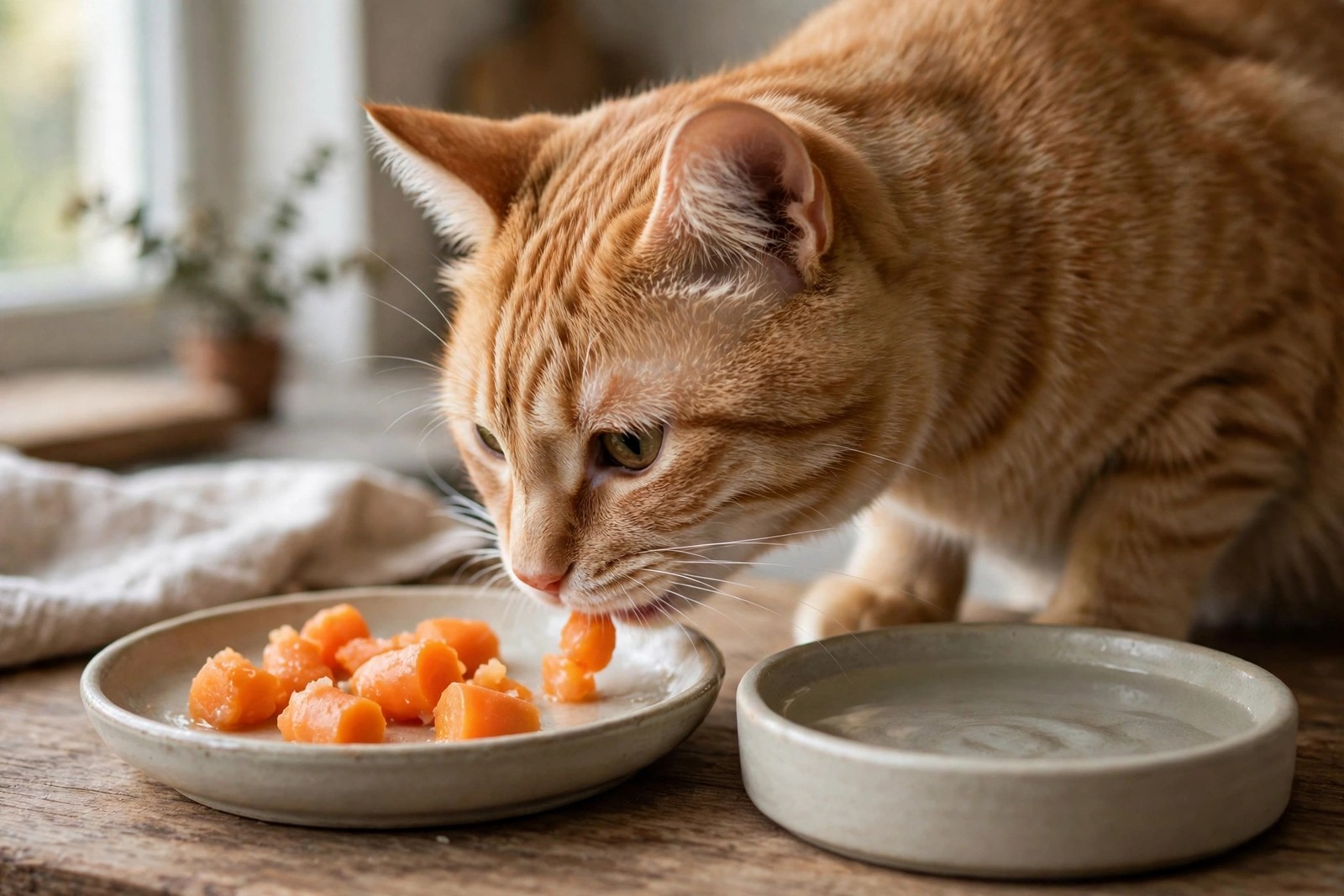
Cats can eat carrot safely in one specific form: cooked until genuinely soft, cut into small pieces, and served plain. Served that way it is a harmless occasional novelty. Served raw, the same vegetable becomes the one version to avoid, and the difference between the two is the whole answer to this question.
Why Cooking Changes the Answer
A cat's teeth are built for shearing meat, not grinding hard raw vegetables, and raw carrot is dense enough to snap into angular chunks. A chunk swallowed whole or lodged while chewing is a choking risk, particularly for kittens, small cats, and enthusiastic eaters who gulp. Cooking until a piece mashes easily under a fork removes that hardness. Steaming or boiling without salt, butter, oil, or stock does the job; drain the pieces and let them cool fully, because a cat will not judge temperature before the first bite.
Raw carrot is not poisonous, and a cat who steals a thin shaving is unlikely to come to harm, but there is no reason to offer it deliberately when the cooked form is simple. Avoid carrot cooked in roasts and stews for sharing, since those pieces carry onion, garlic, salt, and rich fats from the pan. Baby food style carrot purée with nothing added can work for a cat who likes soft textures, provided the ingredient list really is only carrot and water.
Portion and What Carrot Actually Gives a Cat
A few small soft pieces, offered a couple of times a month at most, is the sensible scale. Carrot provides fibre, some vitamin A in a form cats use less efficiently than the animal-source vitamin A in their proper food, and natural sugars. None of that fills a gap in a complete cat diet, so carrot should displace no meals and count inside the day's treat allowance like any other extra.
After a first serving, check the litter box. Loose stool, orange-tinged stool from the pigment, or undigested pieces tell you the amount was too much or the pieces too firm, and the fix is smaller, softer, and rarer rather than persistence. A cat who refuses carrot entirely is making a normal carnivore choice; never hide vegetables in a reluctant cat's main food to force the issue, because that can put the cat off the food it actually needs.
Making Carrot Interesting Without Making It a Meal
Some cats enjoy batting a soft carrot piece before eating it, and that play value is a fair reason to offer it occasionally. Mash a small piece and press it onto a lick mat for a slower, calmer version, or mix two or three tiny pieces with a shred of cooked chicken so the new flavour arrives with a trusted one. Serve in the usual feeding spot and remove leftovers after the meal rather than leaving cooked vegetables to sit at room temperature.
Note which preparation your cat accepted, because soft chunks, mash, and purée get very different reactions from the same cat, and that detail is what the next feeder needs. Record the cooked-only rule in KinsLe Care Teams with the feeding duties, making clear that carrot for this cat means soft, small, and plain, never raw from the vegetable drawer.