
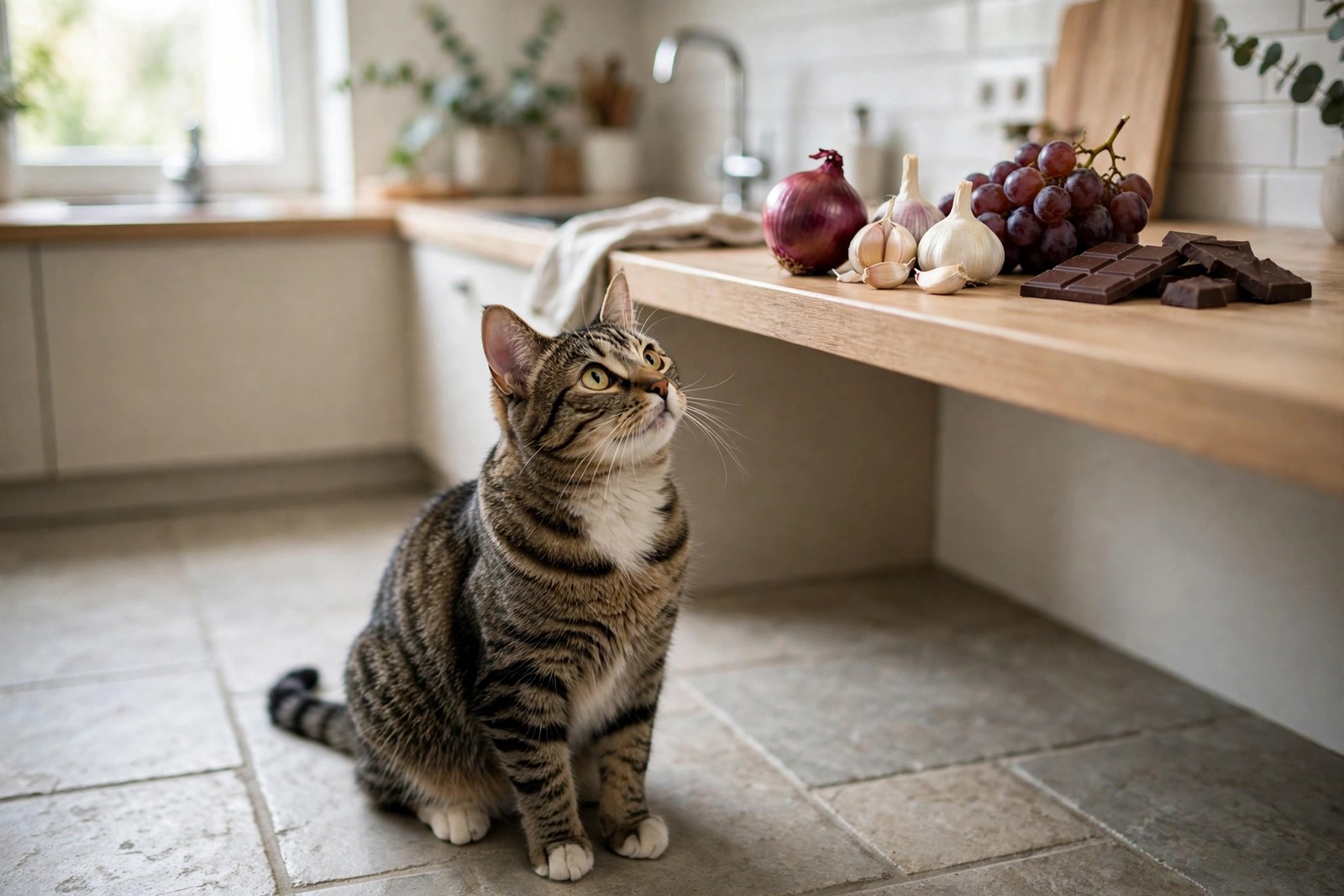
Several everyday human foods are genuinely dangerous for cats — onions, garlic, and their relatives; grapes and raisins; chocolate; alcohol; and anything sweetened with xylitol can all be toxic, sometimes in small amounts. Cooked bones and rich, fatty scraps are hazardous too, so the safest rule is simple: human food stays off your cat's menu unless you have checked it first.
The most dangerous foods
Keep these away from cats entirely:
- Onions, garlic, chives, and leeks — raw, cooked, or powdered (including in stock and baby food), these can damage red blood cells. Powder in a shared sauce counts.
- Grapes and raisins — even small amounts have been linked to serious kidney problems in pets, so treat any ingestion seriously.
- Chocolate and coffee — the darker the chocolate, the more dangerous; baking chocolate is the worst.
- Alcohol — in any form, including foods cooked with it. Cats are small, and small amounts go far.
- Xylitol (also listed as birch sugar) — found in sugar-free gum, sweets, and some peanut butters; check labels before sharing anything "sugar-free."
- Raw dough — yeast dough expands in a warm stomach and produces alcohol as it ferments, a double hazard.
- Cooked bones — they splinter, and can perforate or obstruct. Raw meat and eggs also carry bacterial risks for cats and for you.
Sneakier risks around the kitchen
Some dangers are not foods at all. Lilies deserve a special mention for cat households — true lilies are extremely toxic to cats, including the pollen and the water in the vase, and belong out of a cat's home entirely. Caffeine, macadamia nuts, and rich fatty trimmings that can trigger a painful digestive upset round out the watch list. Even safe-in-theory foods like tuna become a problem as a habit: human tuna is unbalanced as a diet and can make cats refuse their proper food.
Trash and compost bins are where most accidents happen. A determined cat can open a cupboard; few can resist chicken bones in an accessible bin. A lidded bin is cheap insurance.
If your cat eats something dangerous
Act fast and do not wait for symptoms. Note what was eaten, roughly how much, and when. Call your veterinarian or an animal poison helpline immediately and follow their advice — do not try to make your cat vomit unless a professional tells you to, as the wrong intervention can do more harm. Early treatment gives the best outcomes for most of these toxins, and "she seems fine so far" is not a reason to delay the call.
Building a safe kitchen routine
Prevention is mostly habits: food put away rather than left on counters, plates scraped into a closed bin, guests briefed that the cat gets no table scraps however persuasive the performance, and children taught the same rule. One household rule — nobody feeds the cat anything except cat food and approved treats — removes nearly all the risk.
Handing the rules over with your cat
The rule only protects your cat if the person feeding them knows it. KinsLe's Care Pass is a temporary, scoped link you can share with a sitter or boarder — no account or app needed on their end — so you can pass along your cat's must-avoid foods list and feeding instructions before they take over. Through the Care Pass link on KinsLe, the boarder keeping your cat over a long weekend gets just the must-avoid list — onions and garlic, grapes and raisins, chocolate, and anything sweetened with xylitol — plus the rule that nobody offers table scraps.