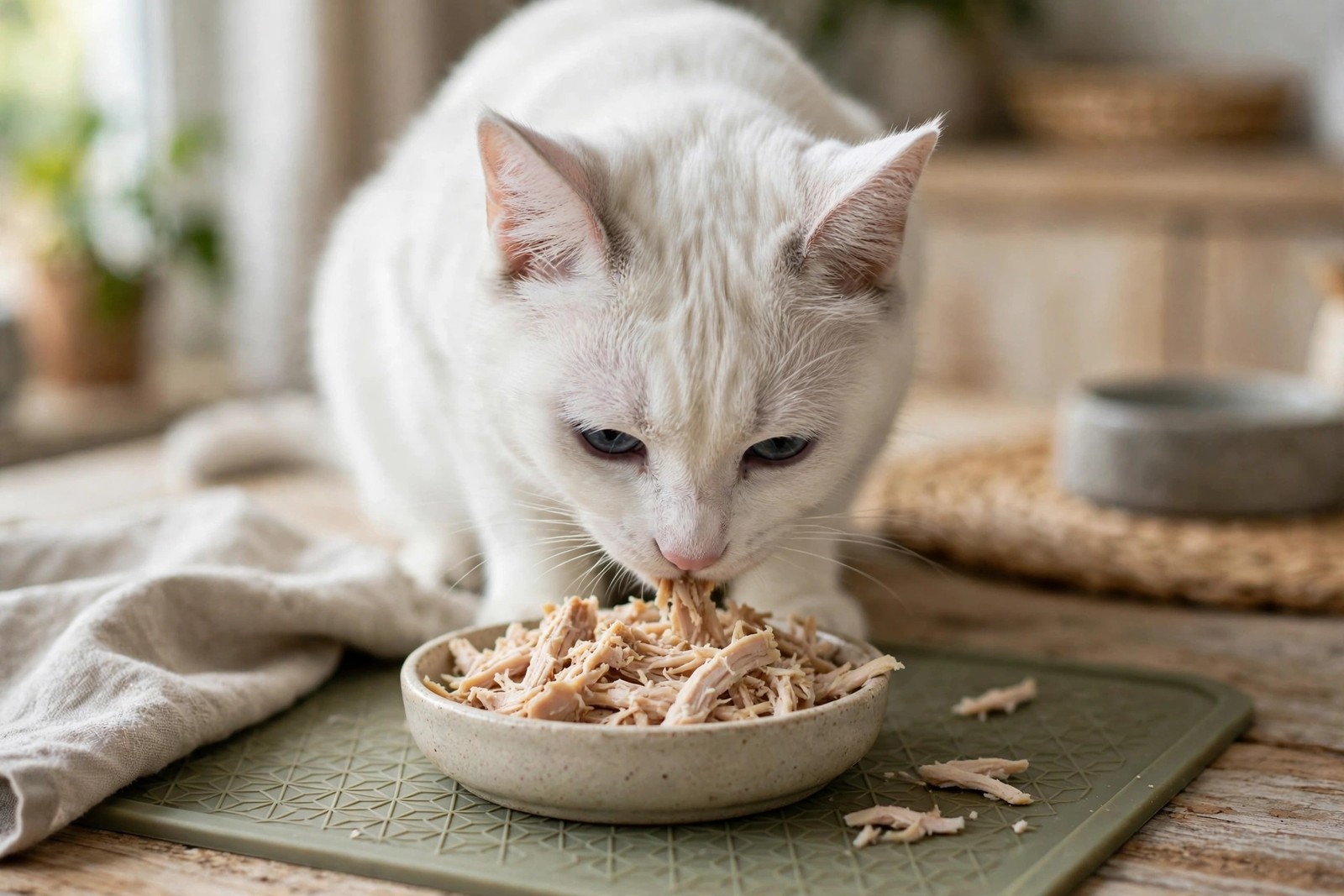
Plain cooked chicken earns its good reputation with cats. Boneless, skinless, and completely unseasoned, it delivers lean animal protein in a form a carnivore's digestion handles easily, and most cats need no persuading. It works as a high-value treat, a training reward, and the protein at the centre of the simple diets vets often suggest for a few days after a stomach upset.
Preparing Chicken a Cat Can Have
Poach, bake, or steam plain chicken breast or thigh until cooked through, with no salt, stock, marinade, garlic, onion, or sauce anywhere in the process. Rotisserie and deli chicken look convenient but are seasoned on the skin and often brined, so they are not the plain food this answer describes. Remove every bone and all skin before serving, shred the meat into short pieces a cat can manage, and let it cool to lukewarm. The cooking liquid from truly plain chicken can moisten dry food for a fussy eater, provided it was never salted or shared with vegetables like onion.
Portion is a few shreds or a tablespoon or so of chopped meat as a treat, scaled down for kittens and small cats. Even excellent treats sit inside the day's allowance, and chicken offered by the bowlful day after day stops being a treat and starts unbalancing the diet it was meant to decorate.
The Bone Rule and Other Hard Lines
Cooked bones are the non-negotiable no. Cooking dries chicken bones until they splinter, and sharp fragments can injure the mouth, throat, or gut; a cat who gets hold of a cooked bone should be watched closely, and any gagging, pawing at the mouth, vomiting, or straining means a prompt vet call. Raw chicken is a different question with a different risk list, including bacteria for cat and household, and this item's yes applies to cooked meat only.
If a vet suggests a bland chicken-based diet during recovery, follow their amounts and duration rather than improvising, and return to complete food as directed, because chicken alone lacks taurine in reliable amounts, calcium, and other nutrients a cat needs long term. Cats can also develop a stubborn preference for chicken over their proper food if it appears too often, which is a training problem disguised as a menu.
Using Chicken Well Day to Day
Chicken's real value is leverage. A shred rewards a cat for entering the carrier, tolerating a groom, or taking a new routine in stride, and a small amount crumbled over a new complete food can ease a transition that would otherwise stall. Reserve it for those jobs rather than scattering it daily, and its power as a motivator survives.
Refrigerate cooked chicken promptly, use it within a couple of days, and do not leave shreds sitting in the bowl between meals. Note any cat who reacts badly even to plain chicken, since poultry sensitivities do occur and show up as loose stool or itchy skin worth discussing with your vet. List plain chicken as the approved kitchen treat in KinsLe Care Teams beside the feeding duties, with the boneless and unseasoned conditions attached, so a helper's good intention cannot turn into seasoned leftovers.