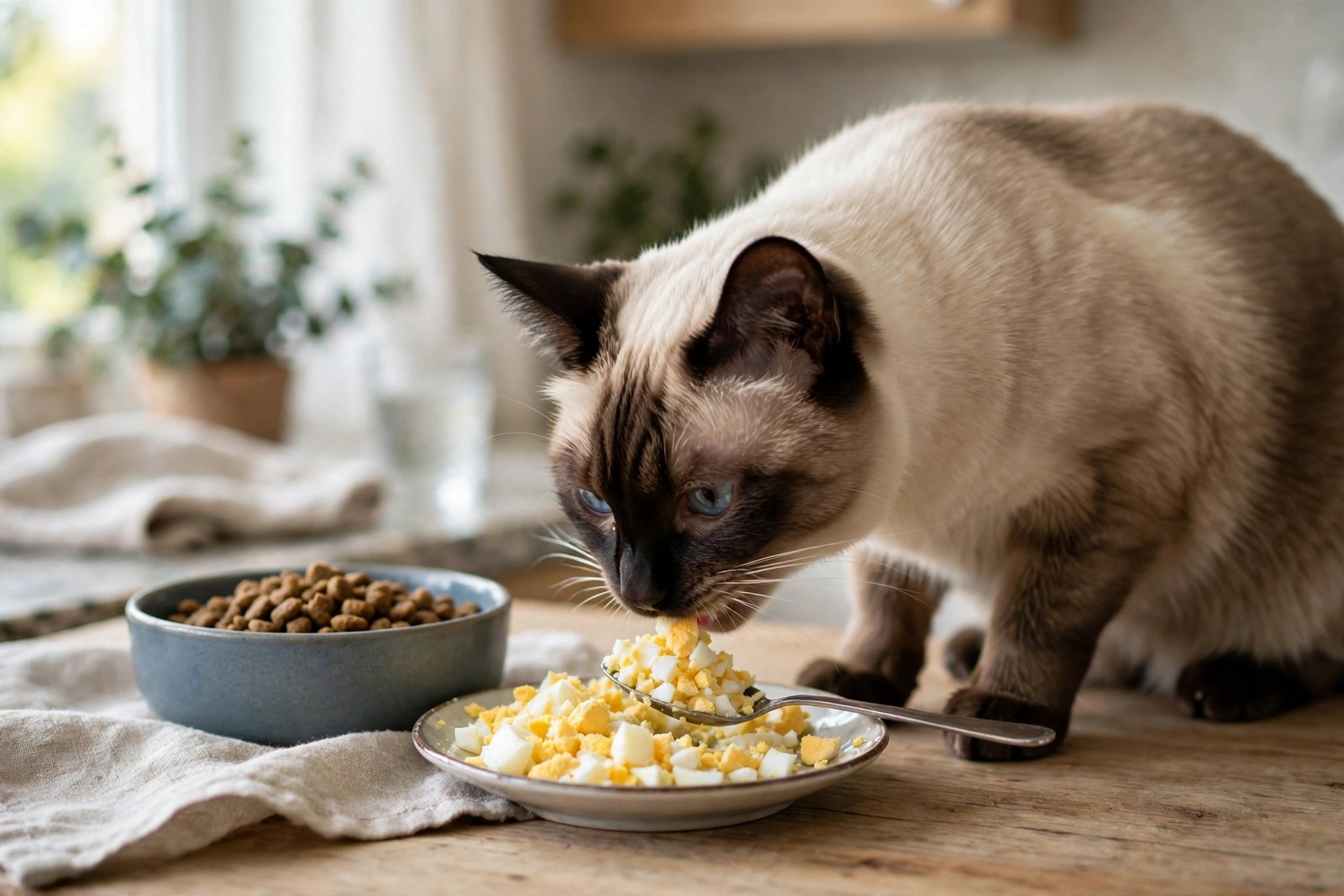
Cooked egg suits cats well in small amounts. It is one of the few kitchen foods whose nutrition genuinely matches a carnivore: complete animal protein, healthy fats in the yolk, and a taste most cats accept readily. The conditions are plainness and portion, and the cooking itself, which is what separates this yes from the raw-egg no.
Why Egg Must Be Cooked
Raw egg carries a risk of bacterial contamination that can make a cat unwell and can spread around the kitchen while you handle shells and bowls. Raw egg white also contains a protein that binds biotin, one of the B vitamins, and regular raw feeding can interfere with its absorption over time. Cooking solves both problems at once: heat deals with the bacteria concern and disables the binding protein, leaving the egg's protein highly digestible. There is no raw preparation that offers a cat anything the cooked version does not offer more safely.
Cook eggs plainly. Scramble in a dry non-stick pan or with nothing added, or boil until the white and yolk are fully set, then chop or mash. No butter, oil, milk, salt, pepper, chives, or cheese should join the pan, because each of those additions imports a separate problem this simple food does not have. Let the egg cool before serving; cats burn their mouths less dramatically than people but a hot centre in a boiled yolk is still a real risk.
Portion, Frequency, and Balance
A spoonful of chopped egg, roughly a quarter to half an egg for an average adult cat, offered once or twice a week, is the sensible scale. A whole egg is a significant calorie package for a small animal, and egg served daily by several admirers becomes a diet rather than a treat. Egg is not a complete food on its own; it lacks the balance a cat food is formulated to provide, so it decorates meals rather than replacing them.
Introduce egg on its own the first time and watch the litter box and skin over the next day or two. Egg is a recognised sensitivity for a minority of cats, showing as loose stool, vomiting, or itchy ears and face; a cat who reacts should not be offered egg again, and persistent signs deserve a mention to your vet. Kittens can have a tiny taste of well-cooked egg once weaned onto solids, but their portions should stay smaller and rarer so growth calories come from kitten food.
Smart Uses for a Spoonful of Egg
Egg works beautifully as a bridge food: a little mashed yolk stirred through a new complete food can persuade a suspicious cat to start, and chopped white makes a clean, odour-manageable training reward that does not crumble into carpets. For a cat recovering appetite after illness, a spoonful of warm plain scrambled egg is often accepted when meals are refused, but tell your vet the cat is off its food rather than simply managing around it at home.
Store cooked egg in the fridge and use leftovers within a couple of days, discarding anything left in the bowl after the meal. Note egg on the approved extras list where the household plans treats for the week. Add that list to KinsLe Care Teams with the feeding duties, noting the plain-cooked rule, so a helper scrambling breakfast never tips half the pan into the cat's bowl.