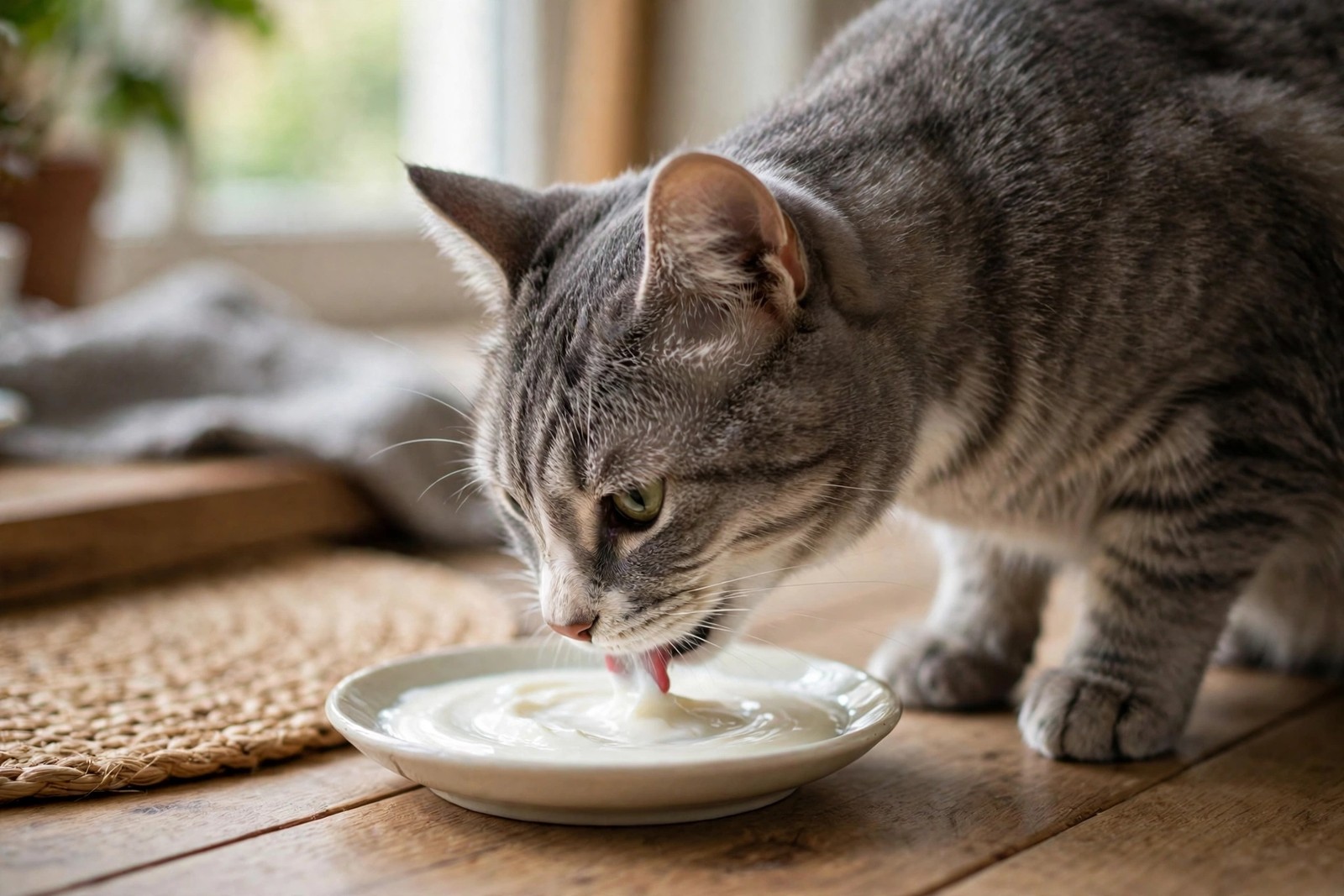
Cream is best kept off the menu for cats. The saucer of cream is a storybook image, not sound care: most adult cats digest lactose poorly, and cream combines that lactose with a very high fat load in a very small body. A few laps can be enough to produce an uncomfortable afternoon and a messy litter tray.
Why Cream Causes Trouble Twice
Kittens are born able to digest their mother's milk, but that ability fades after weaning. In most adult cats the enzyme that breaks down lactose is present only in small amounts, so lactose passes through undigested, draws water into the gut and ferments. The result is familiar: wind, gurgling, soft stool or diarrhoea, sometimes vomiting. Cream carries the same lactose problem as milk and then adds a second one — richness. Double cream is far fattier, spoon for spoon, than anything a cat's normal diet contains, and rich extras are a common trigger for stomach upset even in cats who seem untroubled by a lick of milk.
Tolerance varies. One cat may steal a lick with no visible effect while another is loose for a day after the same amount. That variation is not a reason to experiment; the upside is a taste the cat does not need, and the downside lands in the litter box and on your carpet.
Whipped, Poured or in Coffee: It Is Still Cream
Squirty whipped toppings, a dollop beside dessert, cream stirred into tea and offered on a fingertip, and creamy sauces scraped from a plate all count. Flavoured versions add further problems — sugar a cat cannot even taste properly, chocolate in some desserts, and coffee in others. A cat who begs during dessert is usually interested in your attention, the dairy smell and the ritual, not in cream specifically. A tiny cat treat, a game, or being settled nearby satisfies the moment without the gut paying for it.
Cream is also never a kitten food. An orphaned or rejected kitten needs its mother or a proper kitten milk replacer and veterinary guidance, not cow's cream, which does not match kitten nutrition and can worsen diarrhoea in a fragile young animal.
What to Offer Instead
Water, refreshed daily, is what a cat actually needs to drink. If the milky ritual itself is what you and your cat enjoy, a small amount of lactose-free milk made for cats, offered occasionally in a clean saucer, is the sensible substitute. It is formulated to remove the lactose problem rather than asking the cat to cope with it. Serve a little, not a full saucer, and treat it as an extra within the day's food, not a drink alongside water.
If your cat does lap up spilled cream, remove the rest, offer water, and watch for vomiting, diarrhoea, drooling or unusual quietness over the next several hours. A single mild episode in a bright, eating cat usually settles, but repeated vomiting, diarrhoea that continues into the next day, or a cat who stops eating should be discussed with your veterinarian promptly.
Making the Rule Stick at Home
Cream slips back in through kindness — a grandparent recreating the saucer, a child sharing dessert, a guest who does not know. In KinsLe, Care Teams lets you write the no-cream rule into the daily feeding duties for that cat, visible and timestamped, so the kindest answer stays consistent from everyone.