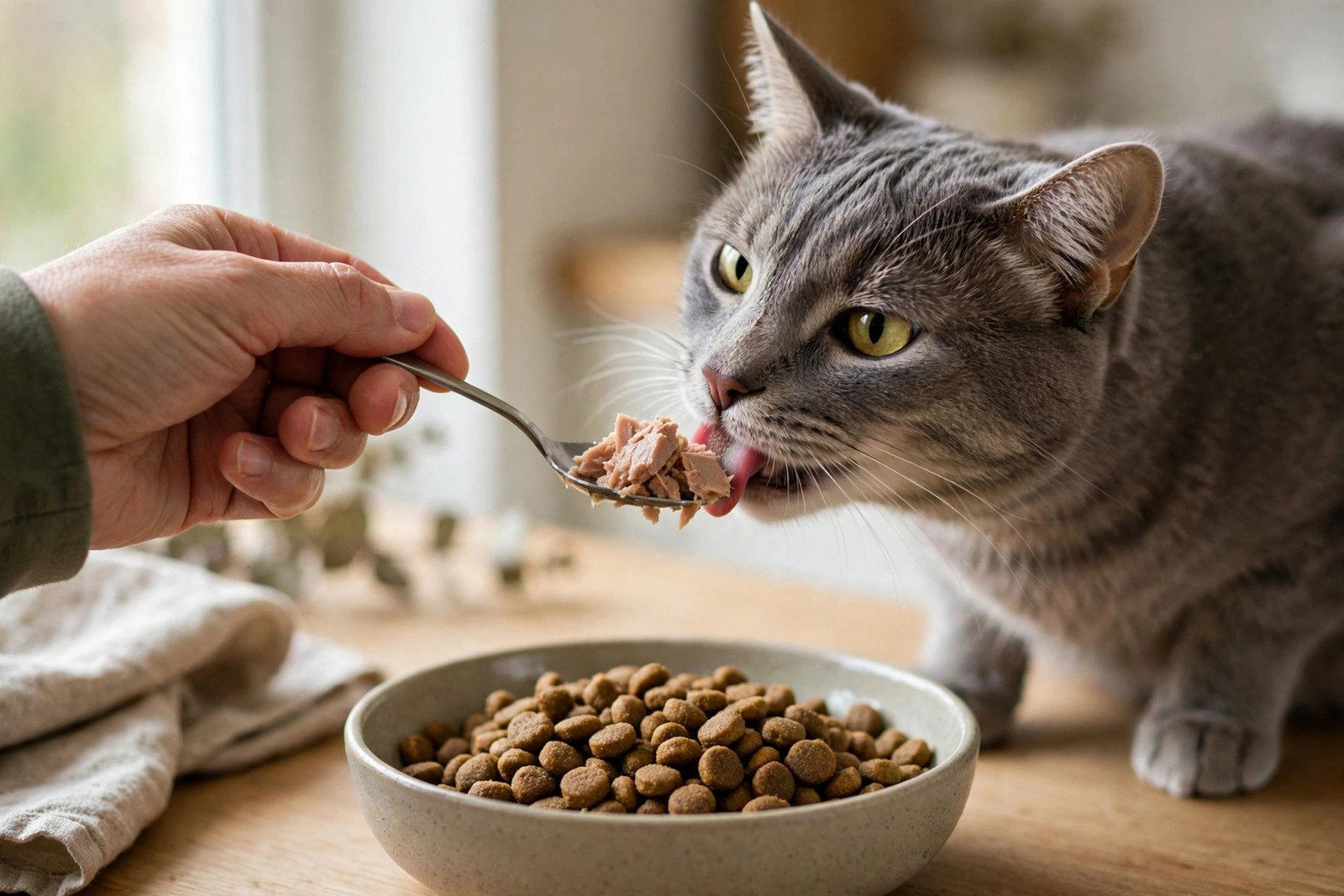
Yes, cats can eat tuna, and most cats need no convincing. The important limit is frequency: tuna works as an occasional treat only. It is not a complete food for a cat, and it must never become a daily habit or the base of the diet. A cat fed mainly on tuna fills up on an unbalanced food, often starts refusing its complete meals, and misses nutrients that a proper cat food is built to provide.
Choosing tuna for a treat
When tuna is the treat, pick the plainest version available: packed in water, with no added salt, no oil, no brine flavorings, and no sauces. Drain it well and offer a small spoonful as a topper, a training reward, or a way to make a medicine moment less dramatic, rather than a bowlful in its own right. Fresh cooked plain tuna, served in the same small amount and fully cooled, fits the same rule. If the label lists seasonings or the fish comes in a dressed salad, skip it entirely.
Why daily tuna backfires
Cats are persuasive, and a tuna habit builds fast because the smell and taste outcompete ordinary food. Owners then face a cat who waits out every proper meal, loses interest in the complete diet it actually needs, and trains the household to open another can. The fix is boring and effective: decide in advance how rare rare is, hold the line through a few days of protest, and offer the treat on your schedule rather than in response to demanding. A cat who has eaten little else for a long stretch, or who shows a falling appetite, weight change, or a dull coat, should be reviewed with a veterinarian.
Better ways to use a small amount
A spoonful of tuna goes further as flavor than as food. Stir a little into a complete meal for a cat who is convalescing and eating reluctantly, use the drained water over regular food as an appetite nudge, or freeze tiny portions for puzzle-feeder games. Keep opened tuna refrigerated and treat it like any perishable food, discarding leftovers that have sat out. Between treats, rotate in other small rewards so no single food becomes the prize your cat organizes its day around.
Breaking an existing tuna habit
If tuna has already become a daily expectation, taper rather than argue. Mix a shrinking spoonful of tuna into the complete food across several days, then switch to tuna water alone over the meal, then to an occasional spoonful on set treat days only. Expect protest at the bowl, hold the schedule anyway, and make sure the complete food is fresh and served at room temperature so it competes fairly. Weigh your cat monthly during the change; steady weight on proper food is the proof the reset worked, and a cat who refuses food entirely for more than a day during the taper needs veterinary advice.
One rule for every feeder
Tuna trouble usually starts with inconsistent people, not with the fish. One person treats daily, another holds the cat to its proper meals, and the cat learns which person to work on. Write the household rule down, name who gives treats and how often, and keep the treat can stored with the rule rather than on the counter as an invitation. Through KinsLe, Care Teams makes that tuna agreement a written feeding duty for every caregiver, so the occasional treat stays occasional in practice, not just in intention.